SpaceX Deploys 20 V3 Satellites on Starship Flight 13
Starship Flight 13 deployed 20 V3 test satellites and ended with an intact splashdown. Ruibao examines what the mission means for SpaceX.

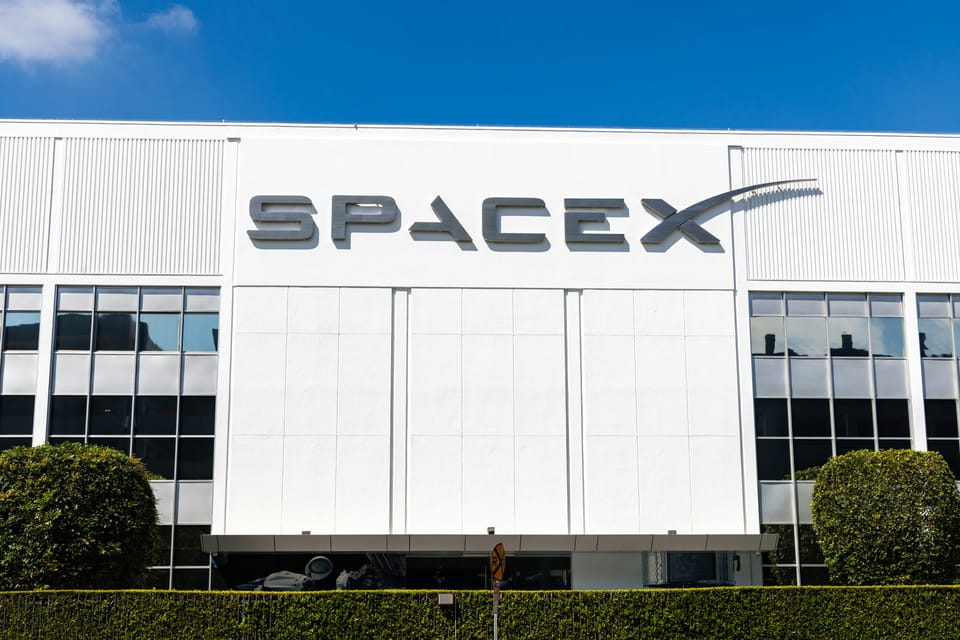
SpaceX deployed 20 Starlink V3 test satellites during Starship's 13th integrated flight on July 24 and contacted every one of them before they re-entered. The ship ended the hour-long mission intact in the Indian Ocean. Super Heavy returned to its offshore target, though it hit the water faster than planned.
The 124-metre vehicle lifted off from Starbase, Texas, at 6:51 p.m. Eastern time. The ship separated from the booster about two and a half minutes later and continued east on a suborbital path. It performed its flip and landing burn over the Indian Ocean, remained afloat after splashdown and continued transmitting data.
About half an hour after launch, the payload door opened and the satellites left the dispenser one by one at an altitude of roughly 200 kilometres. They were not placed in operational orbit and later followed the ship back into the atmosphere. SpaceX said engineers established radio and laser links with all 20 satellites and downloaded telemetry during a test window of about 20 minutes.

Six satellites carried cameras pointed back at the ship during re-entry. Pressure sensors were fitted across the heat shield, and several white test tiles were used to simulate missing sections. Earlier ships had broken apart during re-entry or exploded after reaching the water. Flight 13 stayed afloat, giving engineers a longer record of the shield's performance and the final landing sequence.
An initial launch attempt on July 16 stopped at the final second after several Raptor engines failed to ignite. SpaceX replaced six engines. All 33 fired at liftoff on July 24, but only part of the planned engine set restarted during the booster's landing burn over the Gulf of Mexico. Super Heavy reached the offshore splashdown area at a higher speed than intended. A similar relight problem affected Flight 12 in May.
Filings with the US Securities and Exchange Commission say SpaceX plans to begin deploying Starlink V3 with Starship in the second half of 2026. Falcon 9 and Falcon Heavy cannot carry the full-size V3 design or the next generation of direct-to-mobile satellites. SpaceX says one Starship mission could carry about 60 V3 satellites and add more than 20 times the bandwidth of a Falcon 9 launch carrying V2 Mini spacecraft.
The satellites on Flight 13 were test articles and all re-entered after the mission. Starship has yet to place V3 satellites into a lasting orbit or carry the planned batch of 60. Later flights must also demonstrate returns to the launch site, tower catches and the reuse of a flown ship before the launch system can operate at the cadence SpaceX has advertised.
SpaceX spent about $3 billion on Starship research and development in 2025. Its space business generated $4.1 billion in revenue and $700 million in adjusted earnings before interest, tax, depreciation and amortisation. The connectivity division, led by Starlink, produced $11.4 billion in revenue and $7.2 billion in adjusted EBITDA. Starlink supplies most of the current cash flow, while the next expansion of the network depends on Starship carrying the larger V3 satellites.
The company's prospectus lists Starship's schedule as a material risk. Delays in payload capacity, reuse or flight cadence could hold back V3 Starlink, direct-to-mobile service and proposed orbital computing infrastructure. SpaceX also needs more Raptor engines, launch sites and propellant facilities, as well as Federal Aviation Administration approval for a higher flight rate.
SpaceX listed on June 12 at $135 a share. The stock closed at $115.07 on July 24, about 15% below the offer price, giving the company a market value of roughly $1.5 trillion. Flight 13 launched after the market closed, leaving July 27 as the first full trading session in which investors can respond to the result. The shares had fallen after the aborted attempt on July 16.
NASA plans to use a modified Starship as the lunar lander for its Artemis programme. Before carrying astronauts, SpaceX must complete an uncrewed lunar landing demonstration and transfer propellant between vehicles in orbit. NASA's inspector general warned in March that the lander faced schedule and safety risks. Flight 13 improved the re-entry data set but did not attempt orbital refuelling or a lunar-landing manoeuvre.
SpaceX had not announced a date for Flight 14 by the end of the webcast. Engineers will examine why only some of the booster's landing engines relit and inspect the ship's heat-shield tiles. The company has also given no firm date for the first operational V3 launch, a ship return to Starbase or the first reflight of a Starship upper stage.
Ruibao previously compared the development of reusable launch systems in China, Japan and at SpaceX.
Sources: SpaceX's Flight 13 mission material; reporting by The Associated Press and Reuters; SpaceX's SEC roadshow and risk disclosures, IPO announcement and share-price history; and the NASA inspector general's audit of the lunar-lander programme. Starship remains in flight testing; the completion of test objectives should not be treated as proof of commercial launch capacity.
You read this far. You're not here for noise.
SharpPost delivers one weekly deep dive on geopolitics, finance, and tech — decoded for readers who want signal. Carefully selected, never noisy.