Chinese Detainee Death in Philippines Raises Due Process Questions
A Chinese citizen died in Philippine immigration detention as dozens of workers were released in a separate case, putting custody conditions, fees and due process under scrutiny.

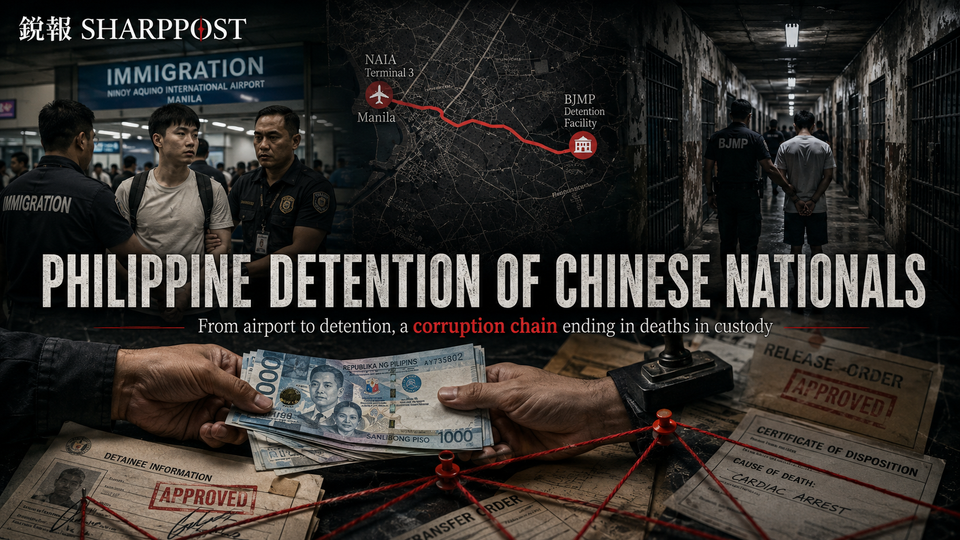
A Chinese citizen died on May 28 inside a Philippine Bureau of Immigration detention facility, according to the Chinese Embassy in Manila. The embassy said the man had been held in connection with an offshore gambling case. His cause of death has not been disclosed.
Beijing asked Philippine authorities to investigate the death and hold officials accountable if mismanagement or negligence is found. In the same notice, the embassy said Chinese citizens had complained of poor sanitation, limited medical care, a drawn-out repatriation process and high costs while in detention.

Only hours earlier, another group of Chinese nationals had begun leaving custody. Xinhua, citing the embassy, reported that 64 people detained after a May 15 raid on a steel plant in Misamis Oriental were released on the night of May 28. Six others were still going through release procedures.
Those two events have turned a series of consular complaints into a wider question for diplomats, lawyers and international monitors: what happens to a foreign worker or businessperson in the Philippines after the passport is taken, the documents are disputed and the release date keeps moving?
A death in immigration custody
The embassy notice did not name the man who died. It said he had been held at an immigration detention facility after being linked to a case involving Philippine offshore gambling operations. Chinese officials said they had raised the matter with Manila and contacted the family.
For organizations that monitor detention, migration and consular access, the first questions are practical. Was the family informed in time? Did the detainee see a doctor? Was there a medical log? Was China notified before his condition worsened? Was the repatriation process delayed by paperwork, fees or pending decisions?

Families and former detainees have described crowded rooms, poor ventilation, skin infections, fever, stomach problems and chronic illnesses left without timely treatment. These accounts are difficult to verify from outside the facilities. They are also close to what the embassy itself said it had received from Chinese citizens.
The steel plant workers were released
The group released on May 28 had worked at a steel plant in Misamis Oriental, in the southern Philippines. Philippine authorities initially linked the raid to alleged illegal work, hazardous materials and environmental or safety concerns.
The Chinese Embassy later said the Philippine Department of Justice found insufficient evidence for the accusations involving nuclear safety, immigration and labor rules. The embassy said those Chinese citizens should be released.
The release did not end the questions. If prosecutors concluded the evidence was insufficient, lawyers and families still want to know what documents justified the detention, who signed the orders, how long each person was held, whether consular access was timely and whether any fees were collected along the way.
A businessman's account
One Chinese businessman who has worked in the Philippines for years described a separate case involving vehicles. He said his company had registration papers, tax records and vehicle documents, but immigration and customs personnel intervened, accused the business of vehicle smuggling and took him to an immigration detention site.
He said he was held for months. Even when some vehicle documents were complete, he said, he was told that additional payments had to be made before the cars could be traded again. He said the combined cost of coordination fees, deposits, taxes and intermediary payments reached tens of millions of pesos.
No public document seen by this article shows where those payments went, and the account could not be independently verified. The businessman said the demands were often relayed by lawyers or intermediaries rather than formal written notices. Several people familiar with the Chinese business community in the Philippines describe an informal practice in which arrangements may be reopened after an agency chief or minister changes. That claim, too, remains difficult to verify.
How complaints describe the process
Several Chinese residents describe similar pressure points: street checks, customs holds, seized passports, delayed deportation and detention fees. Each allegation needs documents, dates and names. For the people caught in the system, the fear is that every step can produce another payment that is not itemized.
Inside the immigration system
The Bureau of Immigration building in Manila is a place where paperwork decides whether a foreigner stays, leaves or waits. In a normal process, the file should show the charge, the official who signed it, the lawyer's access, the consular notice, the fee basis and the date when detention or deportation is due to end.

In the steel plant case, 64 people have already left detention. The original papers have not been made public in full: what the detention notice said, who approved the custody, whether lawyers and consular officials had timely access, and what fees, if any, were formally charged.
The Philippine Department of Justice can examine factory records and worker documents. Once it concluded that the evidence was insufficient, the detention should not continue because of slow paperwork. That principle is simple; the public record still has gaps.
Corruption index
Transparency International's 2025 Corruption Perceptions Index gave the Philippines a score of 32 and ranked it 120th out of 182 countries and territories. The World Justice Project's 2025 Rule of Law Index ranked the Philippines 97th overall among 143 jurisdictions; its criminal justice factor ranked 119th among 143. Those figures do not prove what happened in any single detention case. They do show why unclear fees, shifting deadlines and weak oversight can be especially dangerous for foreigners.
Chinese nationals in the Philippines face another layer of risk. The security debate around offshore gambling and cybercrime, tensions in the South China Sea and local suspicion of Chinese-linked businesses can all fall on ordinary traders, workers and travelers who may lack lawyers, language skills or local contacts.
Street inspections, customs holds, airport checks and immigration detention are all legitimate state functions. They become vulnerable to abuse when the reasons keep changing, deadlines keep moving and payments are relayed without official receipts.
Judicial transparency
Manila does not need to answer every allegation through diplomatic language. It can publish records: detention orders, evidence summaries, custody locations, medical logs, fee schedules, release decisions and the findings into the death at the immigration facility.
The steel plant workers have left custody. The man who died cannot. His case is now a test of whether a foreign detainee in the Philippines can be traced through documents rather than through rumors, intermediaries and late consular notices.
For international labor, migration, anti-corruption and human rights bodies, the pattern is now visible enough to examine. A death in custody, a mass release after insufficient evidence, complaints over detention conditions and repeated claims of informal payments belong in separate files only if the files are open. If they remain closed, they will be read together.
The question for Manila is no longer whether the Philippines has the right to enforce its laws. It does. The question is whether foreigners caught in that system can still find the law on paper before their freedom, money or health is lost inside the process.
Sources: Chinese Embassy in the Philippines, Xinhua, Taiwan Central News Agency, Transparency International 2025 Corruption Perceptions Index, World Justice Project 2025 Rule of Law Index, and accounts from detainees, families and businesspeople. Accounts involving fees, intermediaries and detention conditions have not been independently verified and are attributed to the people making them. Related RuiBao background: Philippine democracy and corruption.
You read this far. You're not here for noise.
SharpPost delivers one weekly deep dive on geopolitics, finance, and tech — decoded for readers who want signal. Carefully selected, never noisy.