Declassified Files Detail Chinese Collection of US Voter Data, but Not Ballot Tampering
Declassified US files show that Chinese actors collected and analysed voter data, including public records. They do not establish that ballots, vote counts or the 2020 result were altered.

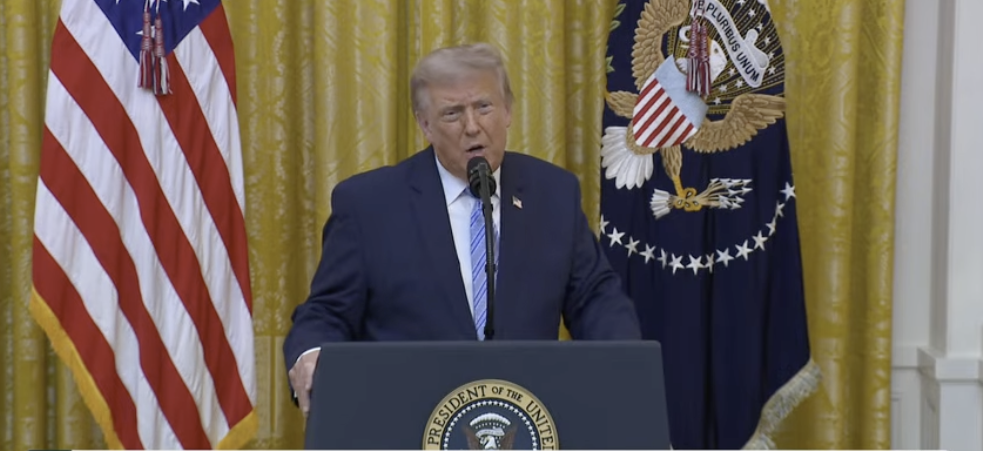
President Donald Trump says China obtained nearly 220 million US voter records and helped produce fraudulent ballots for Joe Biden. A Ruibao review of the newly declassified files found evidence that Chinese actors collected and analysed voter data. The documents do not show that voter registrations, ballots, vote counts or the reporting of the 2020 result were altered.
Trump made the claims in a televised White House address on July 16. He described the records as the largest theft of election data in US history and said real identities had been used to make false documents and mail ballots.
China rejected the allegation the next day. Foreign Ministry spokesman Lin Jian said Beijing had never interfered in a US election and had no interest in doing so, calling the accusation an attempt to smear China.
The White House release contains intelligence summaries, raw FBI reporting, internal messages and review records. They cover three separate subjects: the acquisition of voter information, the possible intelligence uses of that information, and plans that might shape American political opinion. The claim about false driving licences and mail ballots comes from a different category of material: an FBI report that was explicitly marked as unevaluated intelligence.
One document, titled around the exposure of 200 million voter records, lists several datasets believed to have been obtained by Chinese actors. The largest entry contains 204,822,241 records from 2016, totalling 45 gigabytes. The listed fields include names, ages, telephone numbers and addresses.

The document describes the material as possibly breached or compromised, but many details about its origin and acquisition are redacted. The figure is a record count, not a confirmed count of 204.8 million distinct, currently registered voters. The files do not rule out old, duplicated or previously public entries. Trump's figure of 220 million is not presented in the documents as a separately verified total of individuals.
A second report says Chinese analysts examined voter-registration information from 18 states and jurisdictions, including Washington, DC. The fields included names, dates of birth, home addresses, party affiliation, voting history, polling locations and military status. The report says analysts wanted to identify targets, study election sentiment and acquire more state-level data.
Not all of the information came from an intrusion into a government system. A 2022 report says a Chinese-linked cyber actor downloaded complete voter files for Colorado, Connecticut, Florida, Michigan, Oklahoma and Rhode Island from commercial websites, and tried to obtain an Ohio voter-registration application. The report says the files, covering years between 2013 and 2021, were publicly available on those sites.

Public voter files can still be useful to an intelligence service. Names, addresses, phone numbers, email accounts and party affiliation can be combined with social-media profiles, leaked credentials and commercial datasets. That can help identify government employees, military personnel or political organisers, and support more targeted phishing, propaganda or fake accounts. It is not the same as changing a registration, producing a ballot or manipulating a count.
The fraudulent-ballot allegation first appeared in a September 2020 raw intelligence report from the FBI's Albany field office. It alleged that the Chinese government planned to provide false US driving licences to sympathisers in America so that tens of thousands of mail ballots could be cast for Biden.
The same page states that the information had not been finally evaluated. Its source had indirect access, and the source's recent reporting had not been corroborated. The source had heard the claim from a sub-source who in turn said it came from unnamed Chinese government officials.

The FBI identified a specific gap in the account. The source said China had taken real identities and addresses from TikTok accounts, but street addresses were not a valid TikTok account field at the time. The report did not explain how the home addresses had been obtained.
Internal messages released with the report show that FBI personnel disputed its reliability. One official wrote that he was highly sceptical because another part of the same source's reporting on the coronavirus had moved into conspiracy theories. An internal list of questions also asked whether the sub-source had claimed that China operated underground bases in Republican states to spread the virus.
The Albany office tried to add sourcing information and issue a revised report after the original was recalled. On October 8, the FBI's Foreign Influence Task Force declined to approve it because the reporting was not authoritative. Albany's senior official agreed with that assessment. A draft second version was deleted on October 15.

The FBI also asked its Chicago office to check with US Customs and Border Protection on whether false Chinese licences had been used for voter registration. Customs officials said they did not retain a complete list of the names and addresses on seized documents. They believed the overwhelming majority had been ordered by people aged 18 to 20 who wanted an older date of birth to evade drinking-age rules. The released files provide no example of one of those licences being used to register a voter or cast a mail ballot.
An August 2020 intelligence assessment said China had increased cyber collection against candidates, campaigns, donors and voters, including opportunistic intrusions into private organisations. It also judged that large-scale manipulation of voting would be difficult to carry out without detection through security monitoring, paper records and post-election audits.
The intelligence community's final assessment, completed in March 2021, said there was no indication that any foreign actor had altered voter registration, ballot casting, vote tabulation or result reporting in the 2020 election. Most agencies assessed with high confidence that China did not deploy election-interference activity and considered, but did not carry out, an influence effort intended to change the presidential result.
The national intelligence officer for cyber recorded a minority view. That official assessed that China had taken some steps, through social media, official statements and media channels, to weaken Trump's re-election prospects. The officer still agreed that the evidence did not show an attempt to interfere with the technical voting process.
In a public update before the 2024 election, US intelligence officials said China was concentrating on selected congressional and local races and using social media to discuss divisive issues. Their assessment remained that Beijing was not seeking to influence the presidential result.
Trump used the July 16 address to renew his call for federal election legislation imposing tighter citizenship and identification requirements. As of July 18, the White House had not produced evidence that a China-made ballot entered the 2020 count, or shown how the acquisition of voter data affected Biden's 306-vote Electoral College victory.
Sources: Ruibao reviewed 23 documents in the White House Election Integrity declassification library, including the FBI Albany intelligence report and internal review record, the US voter-data inventories, an analysis of records from 18 jurisdictions and the report on six publicly available state databases. This article also draws on the Office of the Director of National Intelligence's 2020 election threat assessment, its 2024 election-security update and The Associated Press report on China's response. Some of the declassified material is raw, unverified intelligence; the article preserves the confidence and sourcing qualifications stated in the files.
You read this far. You're not here for noise.
SharpPost delivers one weekly deep dive on geopolitics, finance, and tech — decoded for readers who want signal. Carefully selected, never noisy.