Yang Shuang-zi and Lin King: Taiwan’s Booker Moment
Yang Shuang-zi wrote Taiwan Travelogue. Lin King carried it into English. Their International Booker Prize win brought Taiwan literature, translation and a noisy idea of democracy onto a global stage.
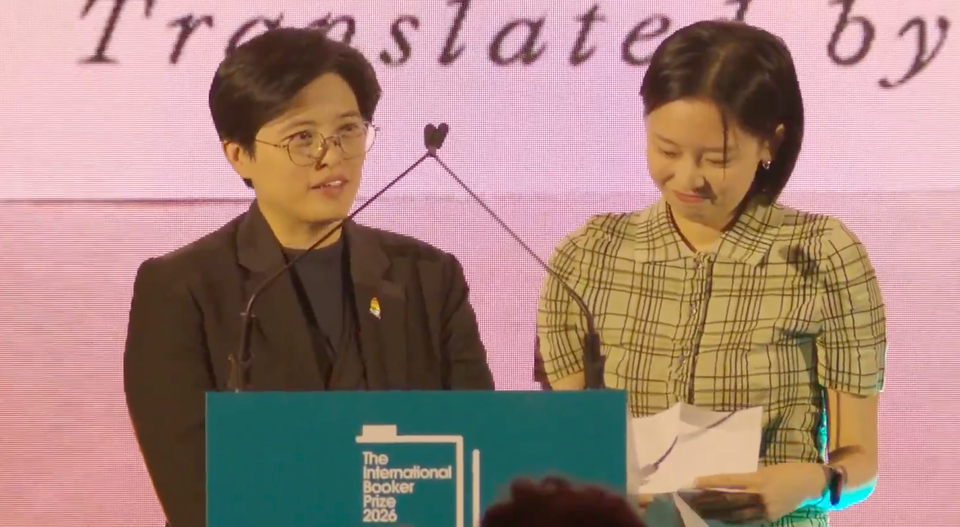
One wrote Taiwan Travelogue. One carried it into English. Together, they brought a novel of food, colonial memory and queer longing from Taiwan to the centre of a global literary stage.
When Taiwan Travelogue won the 2026 International Booker Prize in London, the moment belonged to two people: Taiwanese writer Yang Shuang-zi, who published the original novel in 2020, and Taiwanese American translator Lin King, whose English version appeared four years later. The prize did more than put a Taiwanese book before new readers. It also gave the translator equal standing on the page and on the stage.


The Associated Press reported that Taiwan Travelogue is the first Chinese-language novel to win the International Booker Prize. The Booker Prize Foundation said Yang and King were also the first Taiwanese and Taiwanese American winners of the award.
The prize carries £50,000, split equally between author and translator. For this book, that division is unusually apt. Yang’s novel created the structure, voices and historical disguise. King’s translation made those layers legible in English without sanding them down.
Yang set the novel in Taiwan in 1938, under Japanese colonial rule, following a Japanese woman writer through restaurants, railway journeys and her relationship with a Taiwanese interpreter. King has said that after Russia’s invasion of Ukraine in 2022, she resolved to translate Taiwanese writing for the foreseeable future, until Taiwan’s sovereignty could no longer be treated as provocation or a joke.
“Because we are not a chorus, but a cacophony, self-contradicting and unruly, just like any healthy, robust democracy.”

The Table In 1938
Taiwan Travelogue begins in the everyday texture of Japanese-ruled Taiwan. A Japanese woman writer arrives on the island, samples local dishes and travels through colonial space with a Taiwanese interpreter. The food matters. A dish, a table, a mistranslation: each can reveal where a character stands more quietly than a speech about empire.
Colonial power in Yang’s novel is not confined to offices, laws or schools. It sits in menus, accents, bodily distance and desire. The book borrows the look of a travel record, then lets the reader see the instability of the person doing the recording.
The Booker materials describe Yang’s work as drawing on history, female relationships and popular culture. Those elements help explain why Taiwan Travelogue resists a single account of Taiwan. Japanese observation, Taiwanese response, invented documents and later notes pull against one another.
A Translator On The Cover
In her acceptance speech, King spoke about a detail that rarely receives much attention outside publishing: the British edition struggled to find a publisher willing to put the translator’s name on the cover, until And Other Stories took the book.
Translated fiction is often shelved and sold around the author and title, with the translator moved to the inside pages or copyright line. The English edition of Taiwan Travelogue chose a different route. Its preface, afterword, notes and pronunciation system are part of the reading experience. The translation does not pretend to be invisible.
The Booker Prize Foundation says King worked closely with Graywolf Press editor Yuka Igarashi, preserving the novel’s languages, notes and layered textual forms. King has described the approach as maximalist. English readers are asked to pause over Chinese characters, Japanese, Taiwanese, colonial memory and misread cues.
After the win, much of the coverage placed the book within a story of Taiwan literature being seen by the world. That account is useful, but quick. Yang’s novel does not offer a clean national portrait; King’s London speech did not offer one either. She chose “cacophony”: a set of voices that disagree, interrupt and refuse to settle.
What remains closest to the book is not a convenient image of Taiwan. It is the material that refuses easy sorting: Japanese, Mandarin, Taiwanese, food, colonial memory and a relationship between two women that never fully declares itself.
Power Inside A Travelogue
The original Chinese-language novel was published in 2020. Set in 1938, it appears at first to follow a Japanese writer through Taiwan’s food, trains and hotels. The story keeps returning to language and power: who gets to name what is being seen, and who has to translate for whom.
Natasha Brown, chair of the International Booker judging panel, praised the novel’s qualities as both a love story and a work of postcolonial fiction, and singled out King’s translation for carrying the book’s shifts of voice. AP reported that the judges admired the novel’s treatment of language and power.
Food As Evidence
The meals in the book are not decorative local colour. They are where colonial habits, bodily intimacy and social ranking enter the scene.
Notes That Stay Visible
King’s notes keep friction on the page. Taiwan is not rewritten as a smooth exotic setting for English readers.
Taipei, New York, One Book
Yang’s writing starts from fissures inside Taiwanese history. She works with the Japanese colonial period, female intimacy, popular culture and invented documentary forms, making the novel look like travel writing while repeatedly exposing the position of the observer.
King’s website says she is based between Taipei and New York. Her fiction has appeared in One Story, Boston Review and Joyland, and she has received a PEN/Robert J. Dau Short Story Prize for Emerging Writers. Her translations include The Boy from Clearwater and Cloud Labour.
Her Chinese-language bio adds that she was born in New York, raised in Taipei, holds dual Taiwanese and US citizenship, and speaks English, Mandarin and Japanese. That biography helps explain why she is alert to how Taiwan is carried into another language.
In London, King framed that work as a public commitment. She said she hoped to bring enough Taiwanese voices into English that the outside world could no longer reduce Taiwan literature to one sound. Yang’s novel supplies one of those voices. King’s translation keeps its edges.
More Editions Are Being Prepared
Focus Taiwan reported that Taiwan Travelogue is the first Taiwanese work to win the International Booker Prize. The Booker Prize Foundation says translation rights have been sold or editions are being prepared in several languages, including Japanese, Korean, Norwegian, Ukrainian, Italian, German, Dutch, Danish and Greek.
A literary prize does not change a literature by itself. It changes access. Publishers become more willing to pay for translation. Reviewers make space. Booksellers know where to place a title. For Taiwan literature, wider access brings a familiar risk: one successful book can be asked to stand in for a whole place.
King’s speech pushed against that simplification. The book can sit inside debates over Taiwan’s identity and sovereignty, but its force comes from details that resist being turned into a single message.
After London
The International Booker Prize will bring Yang to more readers outside Taiwan and return Taiwan Travelogue to shelves marked Taiwan literature, East Asian historical fiction and postcolonial writing. The representational burden that comes with a prize is tempting. This novel keeps refusing the easy version of that burden.
King’s website lists two forthcoming projects: her translation of Lee Chia-ying’s novel Good Days in the Oven, and her own debut novel, Weeb. Her position remains mobile: she brings Taiwanese writing into English, while also writing in English from her own experience.
After London, Yang and King will often be described in the same award story. The label is useful and limited. What mattered on that stage was the difference between their roles. Yang did not write Taiwan as an easy history. King did not translate it into a single sound.
You read this far. You're not here for noise.
SharpPost delivers one weekly deep dive on geopolitics, finance, and tech — decoded for readers who want signal. Carefully selected, never noisy.