薔薔Maze Shenzhen Video Puts China’s Day-Labour Gap Back in View
A recent video by Taiwanese YouTuber Qiangqiang Maze follows young men around Longhua, Shenzhen, as they move between day jobs, cheap lodgings and life outside much of China’s formal safety net.
免费微软自然语音 · 推荐使用 Microsoft Edge
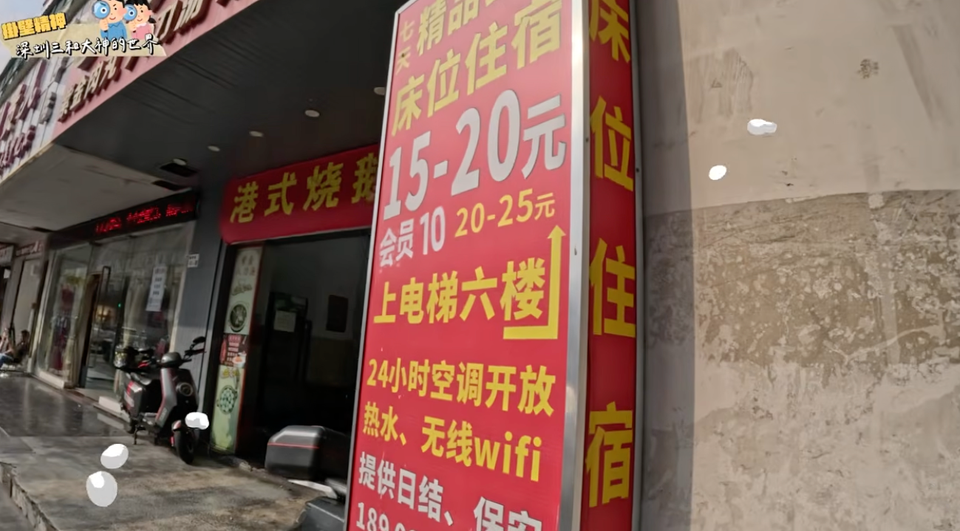
A recent video by Taiwanese entertainer and YouTuber Lin Chia-ling, better known online as Qiangqiang Maze, follows several young men around Longhua in Shenzhen as they look for day jobs, sleep cheaply and spend as little as possible. The video has put a hard-to-measure part of China's labour market back in view: people who work occasionally, earn irregularly and sit outside much of the formal safety net.
The 47-minute video follows Lin and her team as they approach people near job agencies, cheap lodgings, small shops and streets around Longhua. Some of the men talk about temporary work. Others ask for money, offer to guide the crew, or explain why they no longer look for steady employment.


One phrase recurs in the video: "guabi", a slang term for living with costs pared to the bone. Work for a day, live on the money for several more; when there is no work, pass the time in an internet cafe, a dormitory or on the street. The label "Sanhe gods" grew out of the area around Shenzhen's Sanhe labour market, once known for its large pool of casual workers.

Beyond the Jobless Rate
The young men in the video still take work. They mention assembly lines, construction sites, cleaning jobs and other temporary posts, along with layoffs, unstable hiring and a loss of confidence about the future. Some move between work and no work; some take the occasional job; some have stopped looking actively. A single unemployment figure does not capture that condition well.
China's National Bureau of Statistics said in its 2024 statistical communique that the country had 734.39 million employed people at year-end, including 473.45 million in urban employment. The average urban surveyed unemployment rate for the year was 5.1%, the same as the year-end rate. China also had nearly 300 million rural migrant workers, including 178.71 million working away from their home areas. Those figures show the size of the labour market, but they leave less visible the people moving through short-term work, informal jobs, low-paid employment or periods outside active job-seeking.
A Break in Youth Data
China's youth unemployment data has also changed. On Aug. 15, 2023, the statistics bureau said at a State Council Information Office briefing that it would suspend the release of age-bracketed urban surveyed unemployment rates from August. Before the suspension, the last official rate for 16- to 24-year-olds was 21.3% for June 2023.
In January 2024, the bureau resumed publishing age-bracketed figures under a revised definition. The 16-to-24 jobless rate now excludes students. Under the new measure, the December 2023 rate was 14.9%. The pause and the new definition made it harder to compare youth labour pressure continuously across that period.
Insurance Built for Stable Jobs
The same 2024 communique said 245.89 million people were enrolled in unemployment insurance, below both total employment and urban employment. The system is tied to contributions and relatively stable labour relationships. For a day labourer without a continuous contract, a fixed employer or even certainty about the next job, that kind of protection can be difficult to enter.
The "Sanhe gods" label keeps returning because it concentrates several pressures in one place: unstable work, thin protection and the cost of remaining in a city. In the video, the idea of earning for one day and living on it for three may look like a choice. Illness, unpaid wages or an accident can quickly turn it into a crisis.

Source note: This article is based on Lin Chia-ling/Qiangqiang Maze's public YouTube video, "Maze|誤闖深圳最底層的墮落世界!選擇躺平的生活竟比想像更黑暗⋯一場騙局 讓我看清人生|feat.NARUKO", and on data from China's National Bureau of Statistics, including the 2024 Statistical Communique. The timeline on youth unemployment data follows the bureau's Aug. 15, 2023 briefing and its January 2024 resumption of age-bracketed data. Individual cases in the video should not be read as a statistical sample.
You read this far. You're not here for noise.
SharpPost delivers one weekly deep dive on geopolitics, finance, and tech — decoded for readers who want signal. Carefully selected, never noisy.