South Korea Election Protest Youth Scene
Thousands gathered outside a Seoul counting centre after ballot papers ran short at several polling stations. Young protesters say the dispute is about voters being unable to cast ballots, not only the election result.

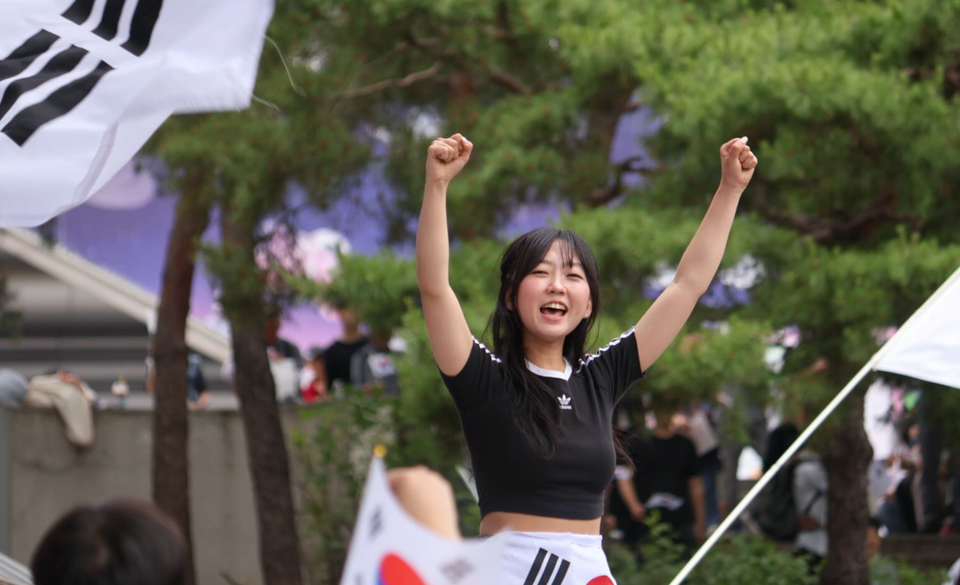
At 2am on 7 June, more than 1,000 people were still outside Seoul's SK Olympic Handball Gymnasium. Yonhap, citing an unofficial police estimate, said the crowd had reached about 10,000 the previous night. Many of those who stayed were in their 20s and 30s, waving South Korean flags and calling for the vote to be rerun.
The protest followed South Korea's 3 June local elections, when several polling stations in Seoul ran short of ballot papers and some voters were unable to cast ballots. What began as a small demonstration grew over several days. Roh Tae-ak, head of the National Election Commission, resigned on 5 June, but the crowd did not disperse. After police cleared another polling site earlier that morning, protesters moved toward the handball arena, one of the election's counting centres.

Those who stayed through the night
The protest had party slogans and national flags, but much of the work at the site was practical. Volunteers handed out water, coffee and chocolate. Some people sat on picnic mats. Others arrived with pets or helped wheelchair users move through the crowd. Several participants told reporters they were not there for one candidate alone. They had come because voters had reached polling stations and found no ballot papers waiting for them.


Seo Jin-hee, 31, became emotional when speaking to AFP. "Regardless of which side you support, being unable to vote is an infringement of our rights under liberal democracy," she said.
Park Sun-ok, 29, said the election commission's explanation was impossible for ordinary citizens to understand. Whether her preferred candidate won or lost, she told AFP, the election should be held again. Choi In-jae, 29, a volunteer at the scene, said conservatives were only a small part of the crowd. She said she had come because people were speaking out over a basic right.
The issue has also surfaced on campuses. South Korean media reported that Seoul National University's student council helped lead a joint statement by student bodies from several universities, asking for a clearer account of what went wrong.
South Korea's street politics
No public authority has determined that the local elections were fraudulent. The National Election Commission has described the problem as a ballot-printing failure. Some conservative figures at the protest have promoted unverified conspiracy claims. But many younger protesters interviewed by media kept returning to a simpler point: voters should not arrive at a polling station and be told there are no ballots for them.
South Korea has a long record of political disputes moving quickly into the streets. The 1987 June Democratic Struggle forced the military government to accept direct presidential elections. The candlelight rallies of 2016 helped lead to Park Geun-hye's impeachment. In late 2024, after then-President Yoon Suk Yeol declared martial law, citizens and lawmakers rushed to the National Assembly and blocked troops from entering the chamber.
For protesters at the arena, that history mattered, but their immediate demand was more ordinary: an explanation of how ballot papers could run out, and why the election body had not satisfied voters who said they were turned away.
At the arena, the protest was made up of smaller scenes. Volunteers passed out drinks. A woman returned with her pet. A wheelchair user held up a sign with help from people around them. Younger people stood near the front, while older participants sat nearby and watched the count continue inside.
The election commission under scrutiny
Attention has now turned to the National Election Commission itself. As a constitutional body, it has limited external oversight, and critics have long questioned its internal discipline and review mechanisms. Political commentator Park Sang-byung told AFP the failure was unacceptable by any standard. He said election integrity was a basic condition of democracy, and called for accountability and stronger checks.
The vote was South Korea's first nationwide election since Lee Jae-myung became president in 2025 and Yoon left office after the martial-law crisis. The ruling Democratic Party won most races, but failed to take the Seoul mayoral contest. The election commission has rejected calls for a rerun, saying a ballot shortage is not a legal ground for holding the election again. Protesters outside the arena were still waiting for a fuller response.
The demonstration may not change the count. It has, however, left election officials facing questions they have not yet answered in a way protesters accept: who decided how many ballots to print, who checked the risk, and what remedy is available when voters say they were unable to cast ballots. For the young people who stayed outside the arena over the weekend, an apology was no longer enough.
Sources: AFP, Yonhap News Agency, Central News Agency, HK01 and public reports. Crowd numbers are unofficial police estimates cited by media. Images are from social media and are used for news reporting. This article is based on public information available as of June 7, 2026.
You read this far. You're not here for noise.
SharpPost delivers one weekly deep dive on geopolitics, finance, and tech — decoded for readers who want signal. Carefully selected, never noisy.