Shanxi Liushenyu Mine Disaster
A gas explosion at Shanxi's Liushenyu coal mine left 82 people dead and two missing after CCTV had earlier reported 90 deaths. The changing count, hidden roadways and prior high-gas risk records point to a longer question about mine oversight.

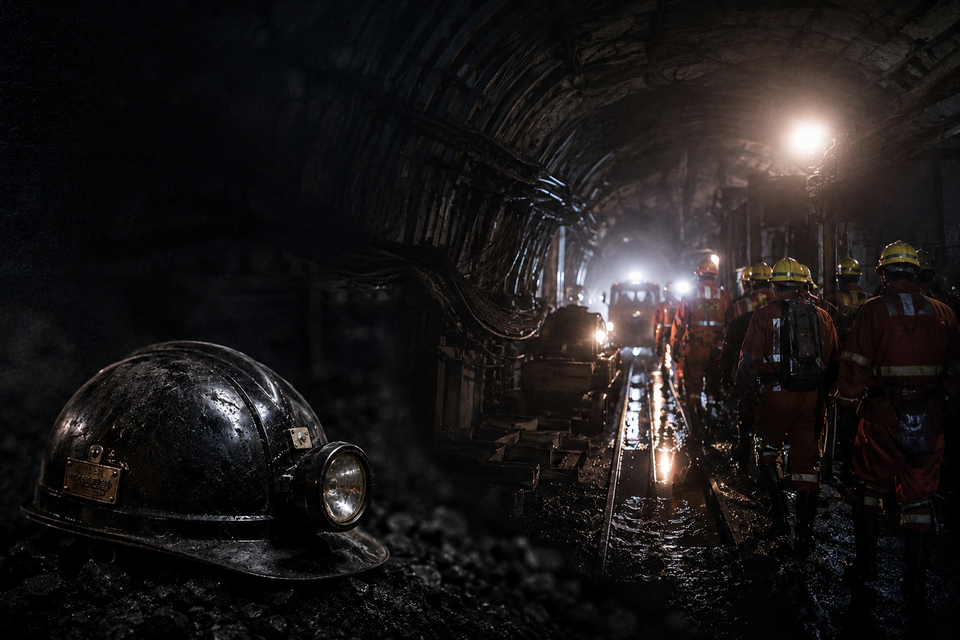
A gas explosion tore through the Liushenyu coal mine in Qinyuan County, Shanxi, on the evening of May 22. State broadcaster CCTV reported the following afternoon that 90 people had died. By the time local officials faced reporters later that day, the official count had changed to 82 dead, two missing, 128 hospitalized and 35 people who had returned home without injury.
There were 247 people underground when the blast happened, according to the press conference. Investigators still have to explain how the mine, hospitals and local authorities counted the workers who went down and those who came back.
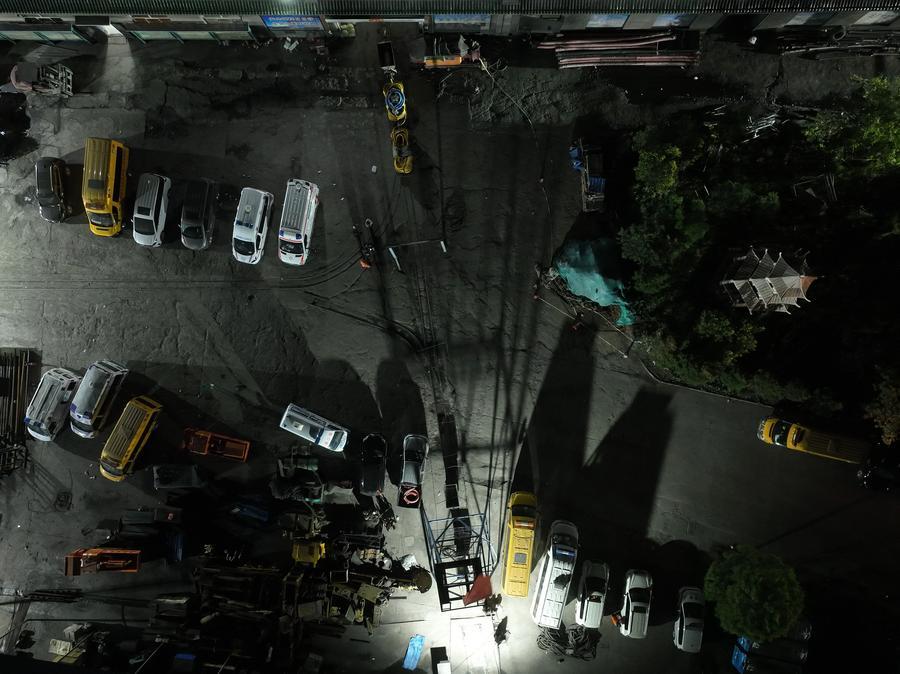
The changing toll
Local officials said 247 people were working below ground when the explosion happened.
CCTV reported that the accident had killed 90 people.
The Changzhi briefing gave a different accounting: 82 dead, two missing, 128 hospitalized and 35 home without injury.
Sources: CCTV, Xinhua, People's Daily, Central News Agency and local briefing reports.
Chinese media reports described families learning about the blast through chat groups before they received clear answers. Phoenix News quoted a man surnamed Zhou as saying he called his father after seeing the news, but no one answered. His father, a Qinyuan local in his 50s, had worked at Liushenyu for more than a decade. The family had urged him to stop going underground; he said he wanted two more years to save money. Caixin quoted another relative as saying her uncle went down during a shift handover to inspect the site. The next morning, his locator still showed him underground.
Survivor accounts carried by Taiwan's Central News Agency described a narrow escape. One worker said more than 20 people from two teams were in No. 1 shaft and only four got out. Another recalled a smell like sulphur, shouting for others to run, and then losing consciousness. Hospitals were watching for delayed neurological injury after carbon-monoxide poisoning.
Minutes underground
In those accounts, gas and smoke arrived before many workers could get out. A mining safety engineer cited by CNA said carbon monoxide binds to haemoglobin far more strongly than oxygen. In a high-concentration environment, miners can lose consciousness quickly.
CCTV said on May 24 that the mine map provided by Liushenyu did not match conditions underground. Rescuers found two hidden roadways, and parts of a water-filled passage near the blast site still had to be checked. CCTV later reported that a third round of search work was continuing and that families of victims had been placed in local hotels with staff assigned to support them.
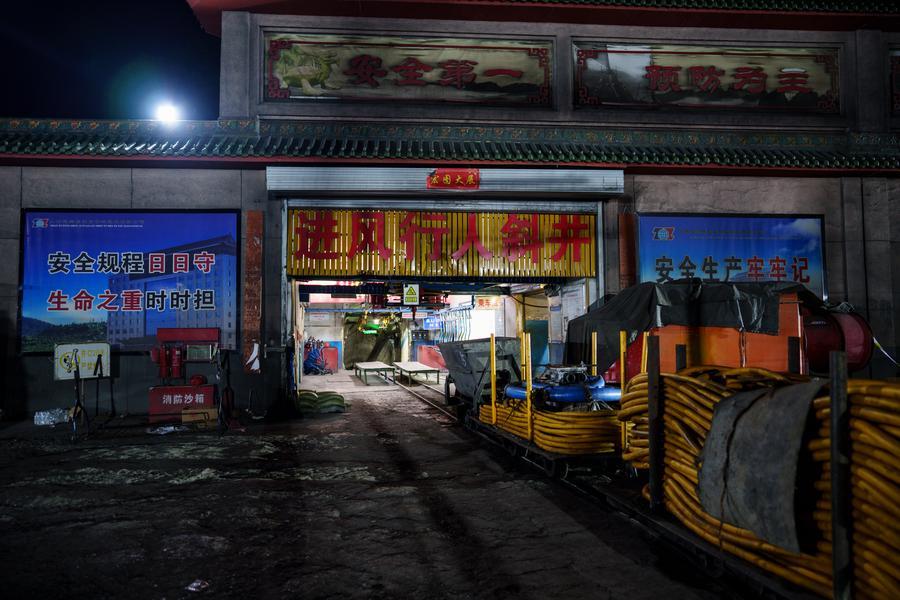
From blast to briefing
A gas explosion hit the Liushenyu coal mine in Qinyuan County, Changzhi.
State media initially reported 82 deaths and nine people missing.
CCTV reported that the death toll had risen to 90.
A Changzhi press conference gave a new count: 82 dead, two missing, 128 hospitalized and 35 home without injury.
CCTV reported a third round of search work and discrepancies between the mine map and the underground layout.
A familiar death toll
In February 2023, a collapse at the Xinjing open-pit mine in Inner Mongolia killed 53 people and injured six, according to a State Council investigation report that cited illegal construction and production, risky subcontracting and weak enforcement. Sixteen people died in a conveyor-belt fire at the Shanjiaoshu coal mine in Guizhou later that year. A fire at a coal-company office building in Luliang, Shanxi, killed 26 and injured 38 in November 2023. In January 2024, a coal-and-gas outburst at Pingdingshan Tianan No. 12 mine in Henan killed 16 and injured five.
Recent coal and coal-company disasters
Sources: State Council investigation reports, Xinhua, CCTV and public case summaries from the National Mine Safety Administration.
China's 2024 statistical communique put coal-mine deaths at 0.059 per million tonnes, down from 0.094 in 2023. The official rate has fallen. The accidents that reach public view still often kill workers by the dozen. For families waiting outside a mine, the national rate is less important than whether a miner comes home at the end of a shift.
The mine was already on a list
The National Mine Safety Administration published a national list of coal mines with severe disaster risks in April 2024. Four mines under Shanxi Tongzhou Coal and Coking Group in Qinyuan County appeared on the list, including Liushenyu. Public records cited by Chinese media described Liushenyu's main hazard type as “high gas.”
In that April notice, the regulator told local authorities to push listed mines to carry out regional, engineering, advance and surface-level hazard controls, with funding guaranteed. In September 2024, the administration said it had identified 1,128 serious-disaster-risk mines nationwide. A special inspection of hidden disaster factors covered 2,339 mine visits and found more than 39,000 hazards, including 410 major accident hazards.
China Newsweek reported that Liushenyu was punished twice in 2025 for safety problems. One penalty involved workers entering the mine without reflective workwear. Another involved a failed emergency-stop system on an underground passenger cable system and a broken roof section in a track haulage gateway without reinforcement. County documents listed the mine as a Class B coal mine under direct county supervision.
Risks recorded before the blast
CCTV's May 24 report said the mine map did not match the actual underground layout, and rescuers found two hidden roadways. Map updates, gas-monitoring data, dispatch calls and evacuation orders will show how much the operator and regulators knew before the blast.
The record that comes next
Xinhua said President Xi Jinping ordered all-out treatment for the injured, scientific search and rescue, proper handling of the aftermath, a full investigation and strict accountability. Premier Li Qiang also issued instructions. The mine operator's responsible personnel have been placed under control, and national mine rescue teams were sent to the scene. Local officials said at the press conference that the company had committed major violations.
The families are waiting for names and for an explanation. Inspection records, penalty corrections, sign-offs and shift dispatches will show whether managers and inspectors had already seen the warnings before the blast.
Information is current through the evening of May 24, 2026. This article draws on public reports from CCTV, Xinhua, AP, Central News Agency, China Newsweek, Caixin, Phoenix News, the National Mine Safety Administration and China's National Bureau of Statistics. Casualty, missing-person and responsibility findings may change as authorities release further information.
You read this far. You're not here for noise.
SharpPost delivers one weekly deep dive on geopolitics, finance, and tech — decoded for readers who want signal. Carefully selected, never noisy.