Huawei US Trial Set for Jury Selection on September 8
Huawei's US criminal case heads to jury selection in Brooklyn on September 8, 2026. The report examines the charges, Huawei's defense and the use of Meng Wanzhou's 2021 statement.
免费微软自然语音 · 推荐使用 Microsoft Edge
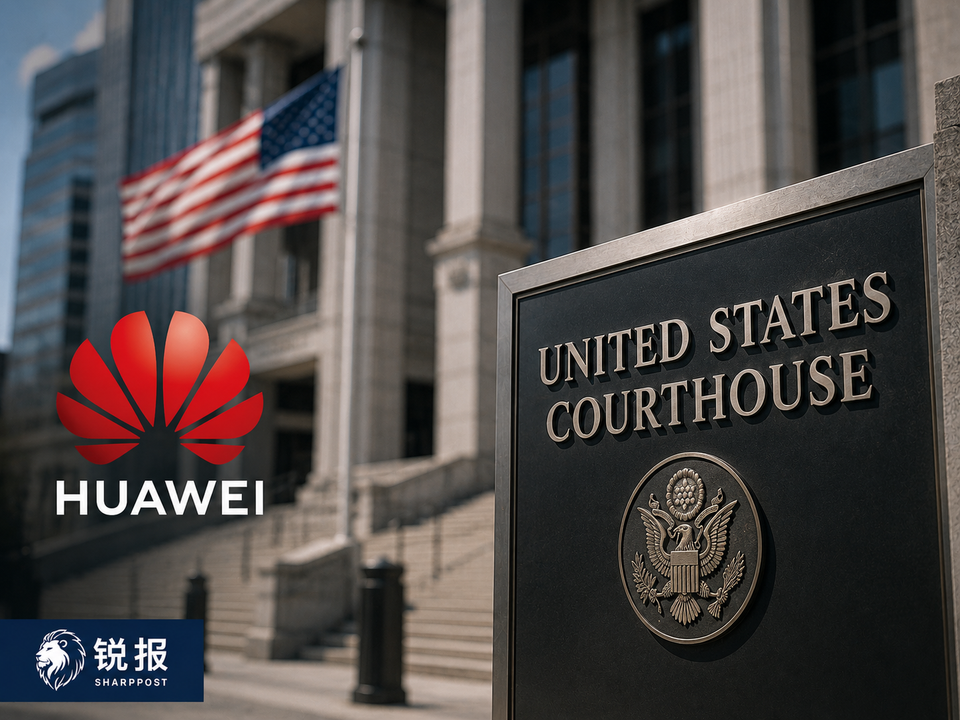
Jury selection in the US criminal case against Huawei is scheduled to begin in Brooklyn on September 8. The nearly eight-year-old prosecution includes allegations of bank fraud, trade-secret theft and racketeering. Huawei denies wrongdoing.
Witness testimony and the presentation of evidence are expected to follow once a jury is seated, according to the schedule in the US District Court for the Eastern District of New York. Huawei Chief Financial Officer Meng Wanzhou is not a defendant at this trial, although a statement of facts she signed in 2021 will be available to prosecutors as evidence.

US prosecutors brought the first indictment in 2018 and disclosed allegations concerning Huawei's business in Iran and its dealings with banks in 2019. A 2020 indictment added trade-secret theft and racketeering charges. US District Judge Ann Donnelly rejected Huawei's bid to dismiss the main charges in 2025. A fourth superseding indictment filed in April removed several defendants' names and dropped two fraud counts while leaving the core of the case intact. The trial was subsequently moved to September.
Prosecutors allege that Huawei played down its relationship with Hong Kong-based Skycom when dealing with a global financial institution, causing the institution to continue processing transactions without a full understanding of sanctions risk. The trade-secret allegations concern the recruitment of competitors' employees, the acquisition of confidential material and Huawei's internal incentive arrangements. Prosecutors will seek to show that conduct spanning different years and jurisdictions formed part of a continuing corporate scheme.
Huawei has argued that much of the alleged conduct occurred outside the United States and lacked a sufficient connection to US banks and communications systems. It also disputes whether some of the information cited in the indictment qualifies as legally protected trade secrets. Donnelly ruled that several of those disputes require factual findings and should be addressed at trial.
In June, Donnelly ruled that prosecutors may use the four-page statement of facts Meng signed as part of a 2021 deferred prosecution agreement. Meng did not plead guilty, but she affirmed several facts central to the prosecution's case, including that she made untrue statements in a 2013 presentation to a global financial institution about Huawei's relationship with Skycom.

The agreement allowed Meng to avoid a conviction while giving prosecutors a formal statement they can use in the case against Huawei. The United States dismissed the charges against her after the agreement expired. Her statement may be used to establish what Huawei management knew about Skycom and how that relationship was disclosed to banks.
The court decided only that the statement is admissible; it did not rule that the document proves Huawei's guilt. Its weight remains for the jury to determine. Public court records do not indicate that Meng will testify as a government witness.
A conviction could expose Huawei to fines and forfeiture, while banks and suppliers outside the United States could reassess the risk of dealing with the company. The Commerce Department's Entity List is a separate administrative measure: an acquittal would not automatically remove Huawei from the list, and a conviction would not by itself impose new semiconductor restrictions.
A verdict for the government would give US officials judicial support for some of their longstanding security and compliance concerns about Huawei. Failure to prove the principal charges would allow Huawei to challenge the factual basis of the US case. Public filings showed no settlement as of August 12. Huawei could file post-trial motions and appeal if convicted.
Sources: the Eastern District of New York docket collected by the US Government Publishing Office; the Justice Department's 2020 superseding-indictment summary; a summary of the April 2026 fourth superseding indictment; Associated Press coverage of the 2025 dismissal ruling; and Reuters coverage of the June 2026 evidentiary ruling. The allegations in the indictment have not been proven. The defendants are presumed innocent unless convicted. The trial schedule remains subject to change.
You read this far. You're not here for noise.
SharpPost delivers one weekly deep dive on geopolitics, finance, and tech — decoded for readers who want signal. Carefully selected, never noisy.