YMTC’s German wins: Risks to Micron shares and earnings
YMTC won German injunctions over 3D NAND technology. What enforcement, licensing costs and memory prices could mean for Micron’s shares and earnings.
免费微软自然语音 · 推荐使用 Microsoft Edge
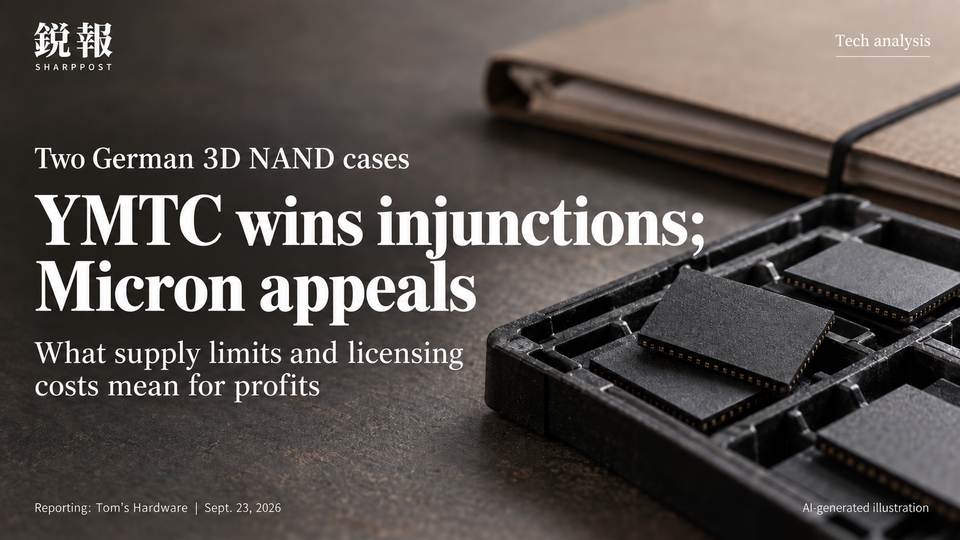
Yangtze Memory Technologies won two first-instance injunctions against Micron at Munich I Regional Court on September 18 in cases concerning 3D NAND flash memory, according to ip fray. JUVE Patent subsequently reported that Micron had appealed.
As of September 25, SharpPost had not obtained the operative judgments, enforcement documents or a complete product list. Whether the injunctions have been enforced and which sales they cover remain unconfirmed. An appeal does not itself establish that enforcement has been stayed.

The German utility models cover a staircase structure in three-dimensional memory and barrier layers for word-line contacts. JUVE reports that judges examined validity during nearly two days of hearings and found both rights valid and infringed. Tom’s Hardware reported Micron’s response that it disagreed with the decisions and continued to challenge the rights.
The German sales at stake
The German rights do not automatically extend the orders across the European Union. Their commercial effect depends on the products covered, defendants bound and sales affected by enforcement.
NAND retains data in solid-state drives, phones and enterprise storage. High-bandwidth memory, or HBM, is a form of DRAM used for rapid data access near processors. The reported rulings concern 3D NAND structures and do not establish that HBM infringes or faces a sales ban.
Micron reported $9.943 billion in NAND revenue for its fiscal third quarter, which ended May 28, 2026, roughly 24% of total sales. That is global NAND revenue; the value of sales covered by the German orders has not been disclosed in the material reviewed.
Licensing costs and replacement time
Paying damages for past infringement does not necessarily secure permission for future sales. A license could preserve supply, but its cost would depend on the products, markets and duration covered. Recurring royalties could reduce profits on subsequent orders long after an initial settlement.
Micron’s quarterly filing lists licensing, settlement, redesign and restrictions on operations in particular jurisdictions as potential consequences of intellectual-property disputes. These are general risks, not confirmation that the German cases have already produced those outcomes.
The filing also says system-level memory and storage products developed to customer specifications require longer design, testing and qualification cycles. If avoiding the disputed technology requires product changes, Micron may need engineering work and renewed customer qualification. Cash can fund that work without guaranteeing a timely replacement.
A supply interruption could disrupt customers’ production and prompt changes to later orders. A stay, license or timely alternative could ease that pressure. The material reviewed does not establish that these cases have already interrupted deliveries or caused customers to switch suppliers.
Profits depend on memory prices
Micron’s latest published results showed quarterly revenue of $41.456 billion and GAAP net income of $28.243 billion. The period ended in May, before the German decisions. Those earnings provide a measure of its financial strength, but cannot show whether September sales were affected.
NAND average selling prices rose by a percentage in the mid-80s from the previous quarter, while shipments measured in bits increased by only a mid-single-digit percentage. Much of the revenue growth came from pricing.
If prices remain high, profits can more readily absorb license fees or a one-off charge. If prices fall, the same expense takes a larger share of earnings. Restrictions that prevent sales would also affect revenue, regardless of Micron’s ability to pay damages.
Micron is scheduled to report fourth-quarter results on September 30, US time. Any disclosure of affected sales, supply adjustments or recurring costs would provide a firmer basis for estimating the German cases’ effect on earnings.
You read this far. You're not here for noise.
SharpPost delivers one weekly deep dive on geopolitics, finance, and tech — decoded for readers who want signal. Carefully selected, never noisy.