HKT Agrees to End Authorized U.S. Telecom Services by September 2027
HKT must end services under its U.S. telecom authorizations by September 1, 2027. The FCC deal sets customer notice duties and conditions for a return.

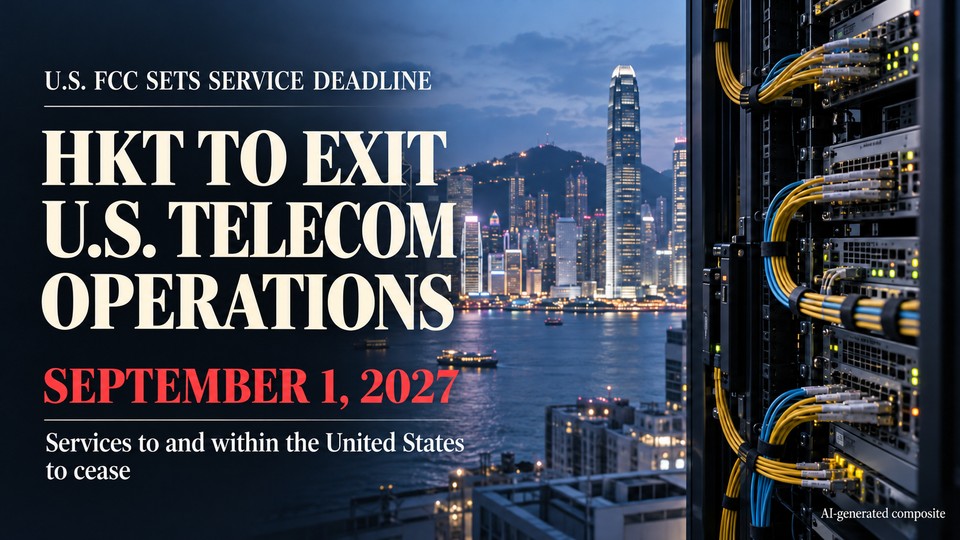
Hong Kong-based HKT (International) and four subsidiaries have agreed to end services covered by their existing U.S. telecom authorizations by September 1, 2027. The Federal Communications Commission (FCC) released a settlement on October 30 requiring them to surrender those authorizations and ending its review of their eligibility to operate.
The agreement covers services between U.S. states and those connecting the United States with other countries. HKT holds 12 international authorizations, which its four wholly owned subsidiaries, including PCCW Global, also use. All five companies must give up their domestic interstate operating authority.
PCCW Global provided businesses and other carriers with voice services, internet access, backbone connections, private lines and corporate networks, some under the Console Connect brand. Company filings from 2023, cited in the FCC’s 2025 review order, described domestic operations in 30 states, the District of Columbia and Guam. They reported no residential or mobile wireless services.
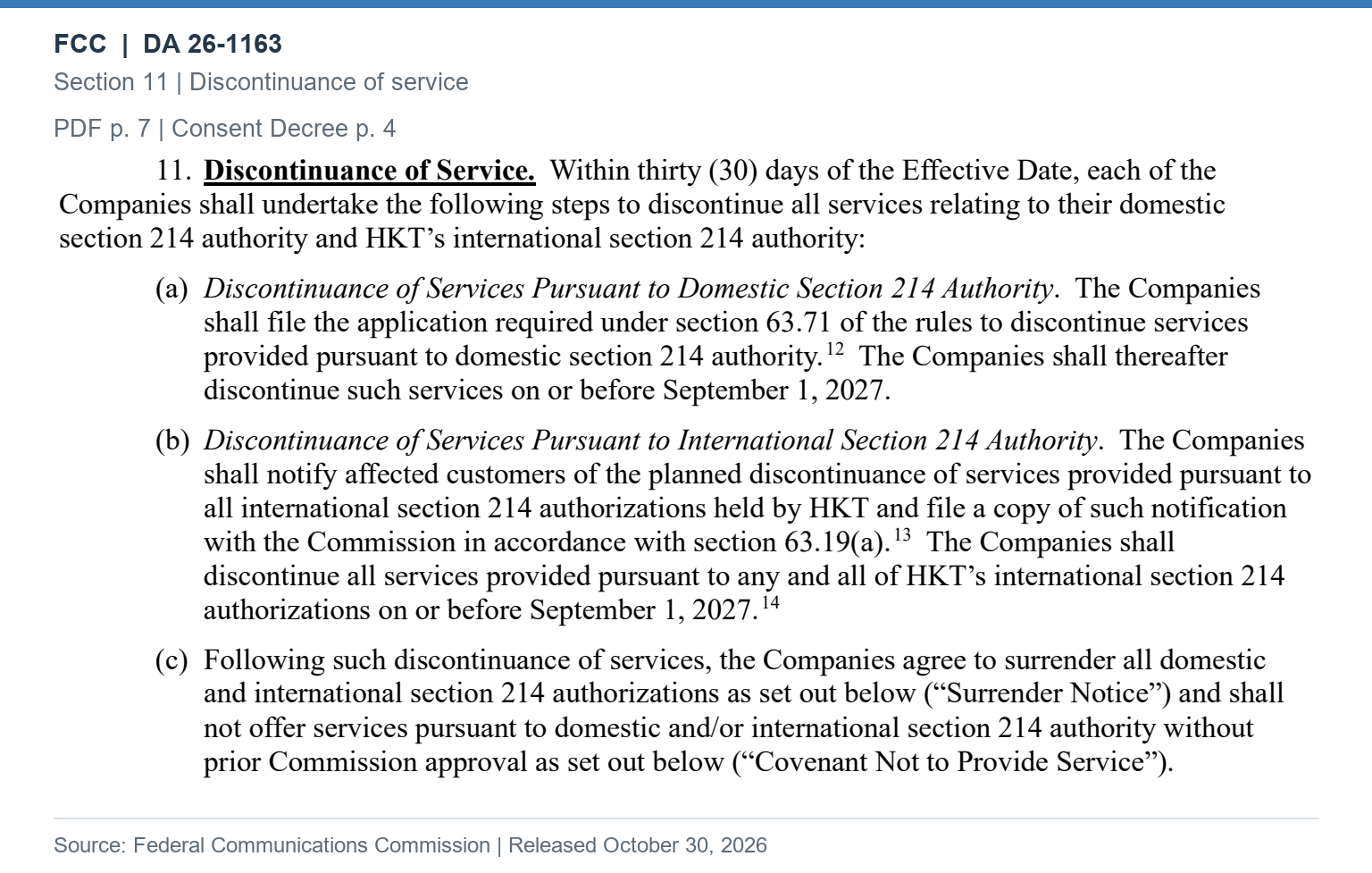
Within 30 days of the settlement taking effect, the companies must apply to end their domestic services. They must also notify affected customers of their international services and file copies of those notices with the FCC. Switching to another carrier may require customers to have new connections installed and tested before moving their traffic. The agreement does not specify how customers will be transferred or who will pay the costs.
The FCC ordered the companies on October 15, 2025, to explain why it should not begin proceedings to revoke their authority. It cited China Unicom’s stake in HKT’s parent, PCCW, along with concerns about Chinese law and possible government influence. Ownership records cited in that order put China Unicom’s equity and voting interests in PCCW at about 18.41%, held through a British Virgin Islands company.
The agency also asked where network facilities were located, who could access customer records, which suppliers provided equipment, and whether the companies had complied with a 2001 security agreement and its amendments. According to FCC records, the companies responded on December 1, 2025, and submitted additional material and a confidentiality request on December 17. Their filings included both public submissions and confidential business information.
The FCC said the companies’ responses, the facts before it and the settlement terms supported ending the review and avoiding further use of public resources. Under paragraph 9, if the companies comply and there is no new material evidence, the FCC will not use the existing case record or the settlement itself to take further action against them on the issues covered by the review.
The companies make no admission of the earlier allegations, including that a “foreign adversary” owns or controls them, or exercises jurisdiction over them or directs their activities. The FCC also agreed that the companies are not named on its Covered List, which identifies communications equipment and services deemed to pose unacceptable security risks. The settlement makes no finding that the companies did or did not violate communications law.
Before resuming domestic interstate services, the companies would need fresh FCC approval. An application must specify the services and locations proposed and identify individuals and entities holding, directly or indirectly, at least 5% of the companies’ equity or voting rights, as well as any other party with control. The required details include identity, citizenship, principal business and ownership stakes. Applicants must also explain how approval would serve the public interest and provide any further information the FCC requests.
The FCC would automatically approve a domestic application 120 days after accepting it for filing, provided it had neither denied the application nor removed it from streamlined processing for further review. Any new domestic application rules in force when the companies file would apply. Services between the United States and other countries would require a separate application and approval.
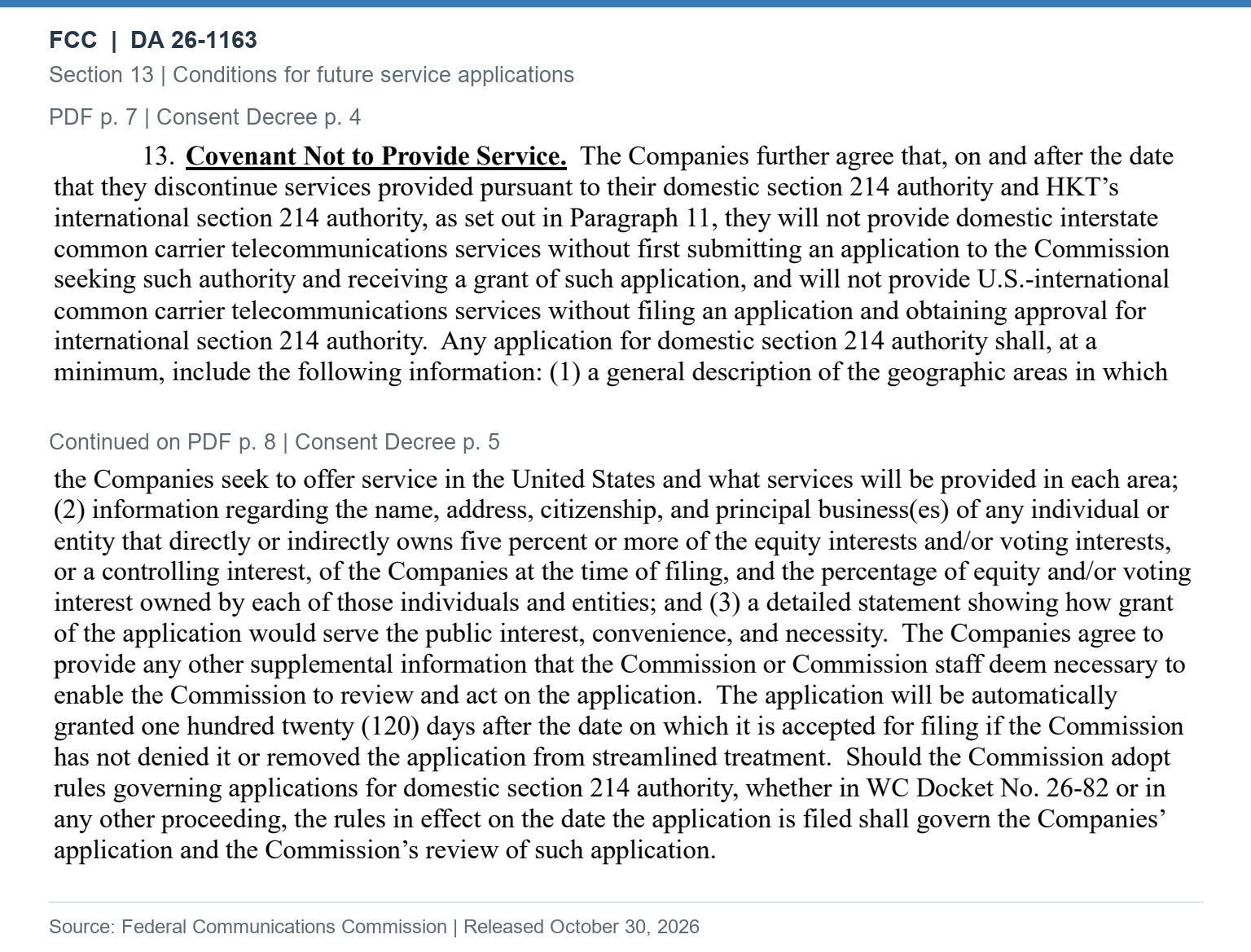
The decree’s general term is five years. Under paragraph 23, the requirement to seek fresh approval continues after that term expires, as do the non-admission provisions and the limits on further FCC action based on the existing record.
Within 30 days of ending the affected services, the companies must file notices surrendering their authorizations. Those notices must give each company’s shutdown date, state whether customers were affected and how many, and confirm whether the required notifications were made.
You read this far. You're not here for noise.
SharpPost delivers one weekly deep dive on geopolitics, finance, and tech — decoded for readers who want signal. Carefully selected, never noisy.