Russian brokers targeted as US, EU and Australia tighten North Korea sanctions
U.S. sanctions target Russian brokers accused of moving money for North Korea, following EU and Australian measures against overseas work and military ties.

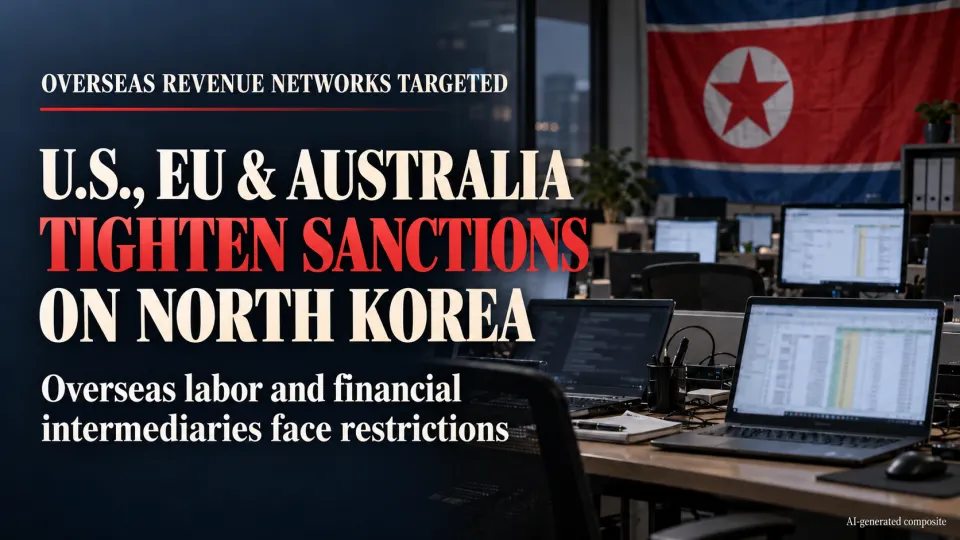
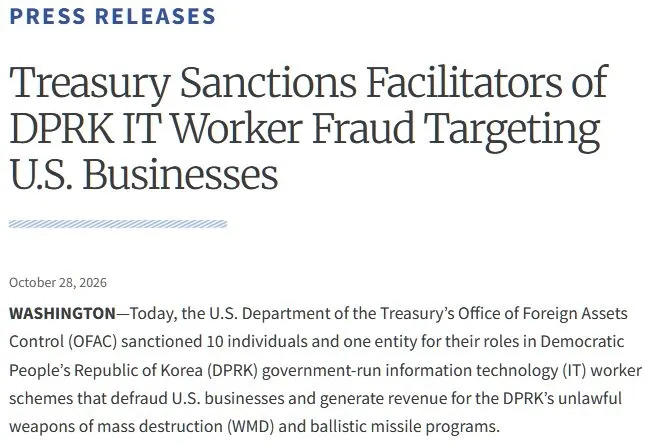
The United States sanctioned two Russian financial intermediaries on October 28, accusing them of helping North Korea move money through its overseas IT worker networks. They were among 10 people and one organization added to the U.S. sanctions list, following separate EU and Australian measures earlier in the month targeting overseas employment, cybercrime and military cooperation with Russia.
In a joint statement issued the same day, 11 countries, including the United States, Japan and South Korea, joined the European Union in backing the measures.
North Korean IT workers use forged documents, stolen identities and fabricated résumés to secure remote jobs at American and other companies, the U.S. Treasury Department said. The department said Pyongyang takes most of their wages and that some workers use their access to employers’ networks to steal data, install malware and extort payments.
The newly sanctioned First Financial and Technical Development Center is a North Korean-controlled organization based in Russia. Treasury said six IT workers it deployed had earned more than $750,000 for the organization since 2025. Australia sanctioned two people and two entities on October 23, accusing them of helping North Koreans pass themselves off as citizens of other countries to secure remote work and raise money for weapons programs.
Treasury accused Russian national Vitold Obertas of converting nearly $2 million in cryptocurrency for North Korean officials since January 2025 and handling at least $1.25 million in other currency transactions. Treasury also accused Ilya Boykov, another Russian, of converting about $3.5 million in cryptocurrency for Alis, an organization employing North Korean IT workers, since 2024. The sanctions entries published by Treasury’s Office of Foreign Assets Control also identify cryptocurrency addresses linked to some of those listed.
The EU’s October 12 sanctions included Russian property developer Samolet Group and its chief executive, Anna Akinshina. The Council of the EU accused the company of employing North Korean workers at construction projects in Vladivostok in violation of UN sanctions.
Between 15,000 and 30,000 North Koreans were working in Russia at the end of 2025, according to an estimate in the Multilateral Sanctions Monitoring Team’s third report, published on September 16. The report said some workers entered on student visas and were then sent to construction sites, farms and logging operations under training or internship arrangements.
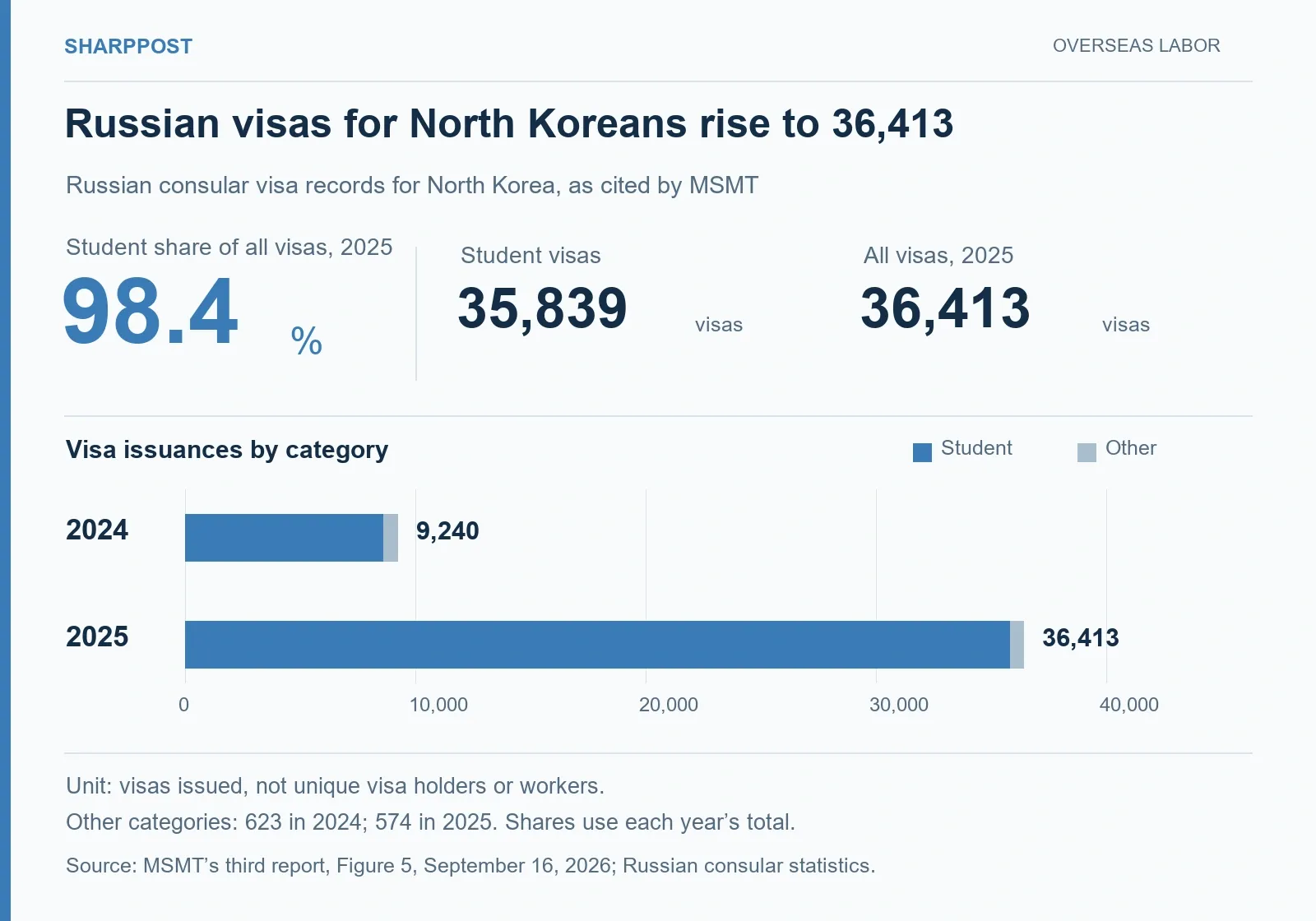
The monitoring team described the use of student visas for such employment as a way to evade labor sanctions. A representative of a labor recruitment agency defended the arrangements as legal on-the-job training for students in comments to Russian media cited in the report.
The EU’s October measures, covering three people and four entities, also targeted North Korean missile technician Ri Song Jin and Paekyangsan Shipping. The Council said Ri had gone to Russia to support its use of North Korean missiles. It accused the company’s tanker, Paek Yang San 1, of carrying refined petroleum products from Russia to North Korea in violation of UN Security Council Resolution 2397.
In 2024, Russia vetoed the renewal of the mandate of the UN expert panel monitoring North Korea sanctions. Eleven countries, including the United States, Japan and South Korea, established the Multilateral Sanctions Monitoring Team that October to investigate suspected breaches of existing UN resolutions outside the UN system. The October 28 joint statement said the new sanctions drew on the team’s reports.
Under the U.S. measures, assets belonging to those listed must be frozen if they are in the United States or held or controlled by U.S. persons. Transactions involving those assets by U.S. persons or through the United States are generally prohibited unless licensed or exempt. The EU freezes the assets of those it lists, prohibits providing them with funds or economic resources, and bars listed individuals from entering the bloc.
You read this far. You're not here for noise.
SharpPost delivers one weekly deep dive on geopolitics, finance, and tech — decoded for readers who want signal. Carefully selected, never noisy.