European Union, Renewable energy, Energy security, Electrification, European economy
Europe's next energy framework faces barriers in grids, energy prices and equipment investment. We examine what its different targets can deliver.
免费微软自然语音 · 推荐使用 Microsoft Edge
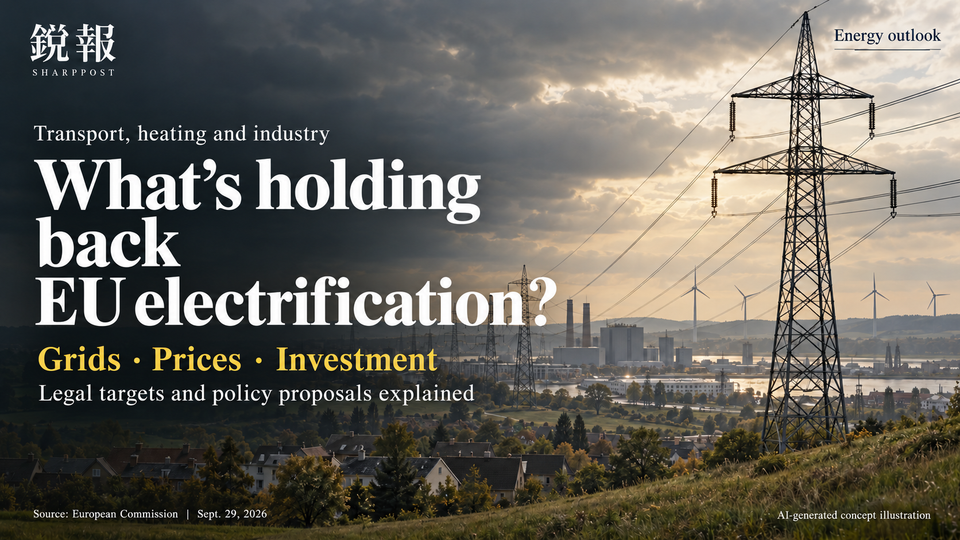
Spain, Portugal and Luxembourg have written to the European Commission seeking a renewable energy target for 2040, Reuters reported on 29 September.
Net imports met about 57% of the EU's energy needs in 2024. Oil and petroleum products accounted for 67% of energy imports by energy content, and natural gas for 24%, according to Eurostat figures released in March. Using less fossil fuel in transport, buildings and industry is one way to cut that dependence.

Renewables accounted for 49.9% of gross electricity consumption in 2025, provisional data show. Yet electricity meets just 23% of final energy demand, the Commission says. More wind and solar power can displace some gas- and coal-fired generation. Using cleaner electricity to replace fuel in transport and heating requires equipment such as electric vehicles and heat pumps.
Renewables supplied 26.2% of gross final energy consumption in 2025, up one percentage point from a year earlier, provisional Eurostat data published in July show. That leaves a 16.3-point gap to the binding 2030 target of 42.5%. Closing it would require an average annual gain of about 3.3 percentage points from 2026 to 2030, roughly three times the latest annual increase.
The Commission's Electrification Action Plan, published on 17 July, proposes raising electricity's share of final energy consumption to 46% by 2040. That is an indicative goal to be assessed under the next energy framework, a different measure from the renewable energy share sought by the three countries.
The Commission identifies high electricity prices relative to gas and grid connections that can take years as barriers. Its accompanying electricity bill proposal would let countries reduce network charges for certain consumer groups and taxes for energy-intensive businesses. Households replacing gas boilers and factories switching equipment need affordable running costs and a grid connection as well as money for the initial investment.
Ministers from France, Spain and Portugal met the Commission in Paris on 6 July to discuss links across the Pyrenees, aimed at increasing electricity exchange between the Iberian Peninsula and the rest of Europe. The Navarra–Landes project, which remains under development, has received €11 million in EU support.

The EU's climate law amendment adopted in March already requires a 90% reduction in net greenhouse gas emissions by 2040 from 1990 levels. At least 85 percentage points must come from domestic reductions; high-quality international carbon credits may contribute up to five points from 2036. The law sets the overall emissions goal without fixing a renewable energy share.
Denmark, France, the Netherlands and Sweden called for both renewable and nuclear power to electrify buildings, transport and industry and reduce fossil fuel imports, in a joint paper dated 25 June. Nuclear power can support electrification but does not count towards a renewable energy share.
SolarPower Europe and national solar associations, meanwhile, called on 24 June for a binding renewable energy target of at least 60% by 2040. They argue that a clear, stable commitment would help companies plan investment. The figure remains an industry demand, not an agreed EU target.
The Commission's timetable, announced in March, calls for a legislative proposal by the end of 2026. That would begin negotiations with member states and the European Parliament over the target, its legal requirements and the measures needed to deliver it.
You read this far. You're not here for noise.
SharpPost delivers one weekly deep dive on geopolitics, finance, and tech — decoded for readers who want signal. Carefully selected, never noisy.