Dong Guangping Reaches South Korea by Rubber Boat
Dong Guangping's reported rubber-boat crossing to South Korea shows how far some Chinese dissidents will go when passports, asylum routes and third-country resettlement fail.

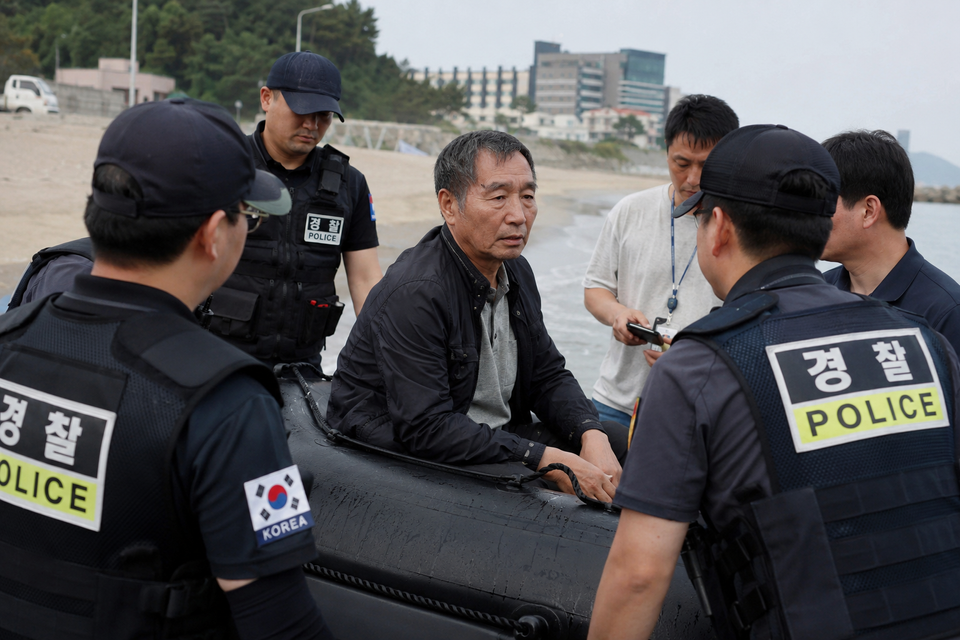
South Korea's Taean Coast Guard said on May 27 that a Chinese man in his 60s was found late Monday off the country's west coast in a 3.3-meter rubber boat fitted with a small outboard motor. The New York Times identified the man as Dong Guangping, a 68-year-old Chinese dissident who had tried for years to reunite with his family in Canada.
The coast guard did not name the man, citing privacy rules. It said he was found inside South Korean territorial waters and was being questioned on suspicion of violating immigration law. The timing, the boat and the location matched the case described by the Times and later reported by Reuters.
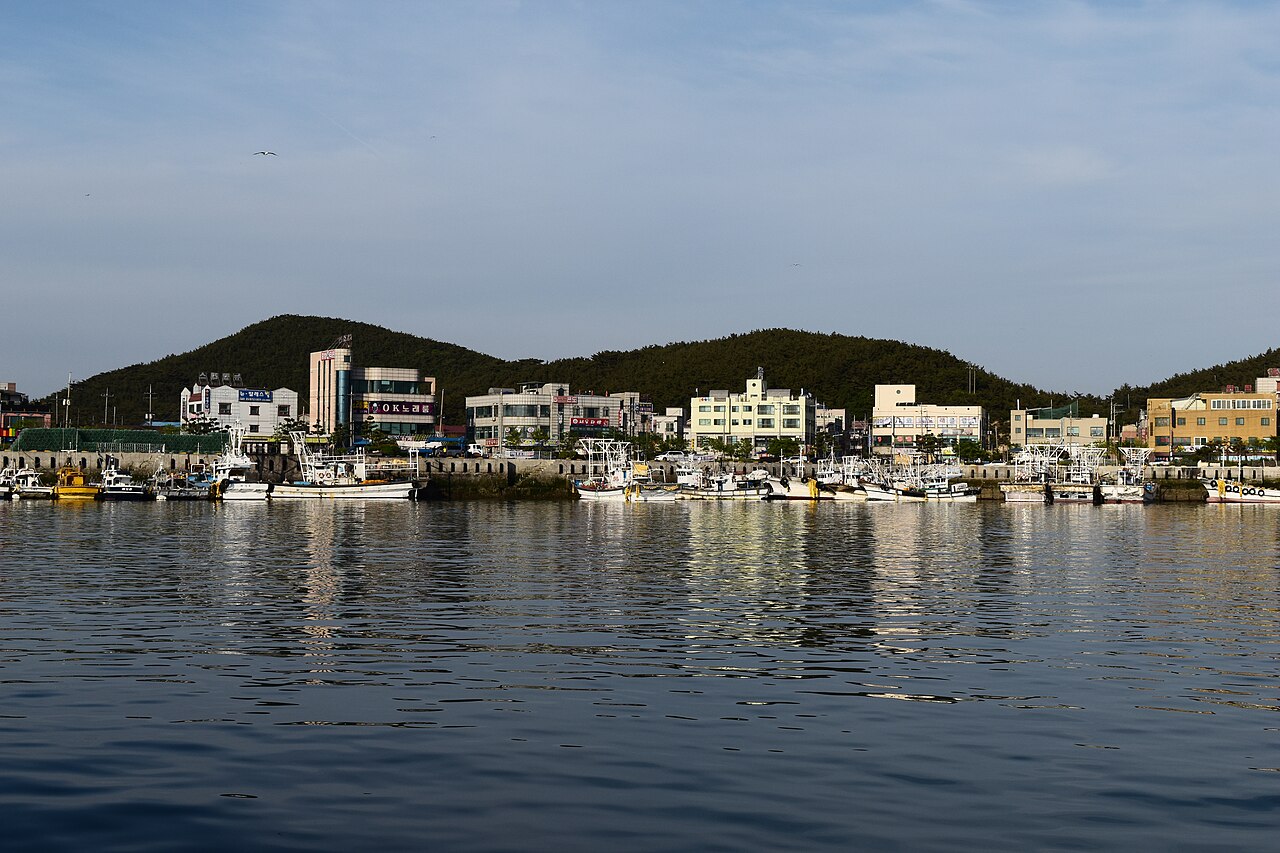
The sea crossing was short compared with Dong Guangping's longer journey through Thailand, Vietnam and the waters near Taiwan. Each attempt ended with detention, return or another legal limbo.
The boat off Taean
Taean sits on South Korea's Yellow Sea coast, roughly across from China's Shandong Peninsula. Reuters, citing the coast guard, said the man was spotted by a fishing vessel about 38 nautical miles off the coast before authorities were alerted.
Dong's lawyer and friends have said he was detained after arriving in South Korea. They want Canada to intervene so he can join his family, which was previously accepted for resettlement there.
Sheng Xue, a Chinese Canadian activist, said she had spoken with Dong after his arrival and had contacted the coast guard through friends in South Korea. She said Dong had been in a confused state by the time he reached Korean waters, after more than 50 hours without sleep and more than 30 hours exposed to wind at sea. According to Sheng, Dong left Weihai in Shandong at about 9:30 p.m. on May 25 and was found the next evening southwest of Taean after a passing fishing boat reported him.

Dong Guangping's attempts to leave China
Dong, his wife and daughter fled to Thailand and received refugee recognition from the UN refugee agency. Dong and Jiang Yefei were later returned to China before they could travel to Canada.
Dong was sentenced to more than three years in prison on charges including inciting subversion and illegally crossing the border.
He tried to reach Kinmen, the Taiwan-controlled island near China's coast, but was rescued at sea and handed to police.
Dong entered Vietnam and lived quietly there. UN experts and rights groups warned that he risked forcible return to China. Friends later said he was again sent back.
Dong was reported to have reached South Korea by rubber boat. South Korean authorities are handling the case under immigration law.
A route used before
In August 2023, Kwon Pyong, another Chinese activist, rode a jet ski from Shandong toward South Korea, carrying fuel cans, a compass and binoculars. South Korean authorities detained him near Incheon.
Kwon had been jailed in China after wearing a T-shirt mocking China's leadership. He later served several months in South Korea and then traveled to the United States to seek asylum. People close to Dong have watched that case closely.
Chen Guangcheng took a different route in 2012. The blind legal activist escaped house arrest in Shandong and made his way to the U.S. Embassy in Beijing, creating a diplomatic standoff before he was allowed to leave for the United States.
Exit controls and asylum gaps
Chinese dissidents who finish prison terms can still face blocked passport applications, police visits, travel limits and pressure on relatives. Some learn of an exit ban only when they apply for a passport or stand at an immigration counter.
Thailand once appeared to offer a way out. Dong and Jiang Yefei had UN refugee recognition there and were expected to go to Canada, but Thai authorities sent them back to China in 2015. Chinese courts later treated parts of their flight as criminal conduct.
Rights groups have documented other cases in Thailand and Southeast Asia in which Chinese nationals with political or religious claims were returned, disappeared or left waiting for resettlement. UN recognition can help, but it does not always stop a government from sending someone back.
South Korea offers courts, allies and public scrutiny that Thailand and Vietnam often do not. It also has strict immigration law. Reaching Korean waters does not itself decide whether a person can stay.
Life after prison
Dong's family is in Canada. He has been jailed several times. Sheng has said that after his release he had no stable income or pension and remained under watch.
The formal charge is only part of the story. Chinese activists often describe a quieter system after release: police summonses, checks before anniversaries, travel restrictions, warnings to relatives and difficulty finding work. A person can be out of prison and still unable to live normally.
For Dong, the rubber boat was not the first escape plan. It was the one left after passports, visas, refugee procedures and third-country resettlement had failed to put him back with his family.
Why Beijing cares
China treats organized dissent, Tiananmen commemorations, rights-lawyer networks and overseas advocacy as political security issues. Dong's background as a former police officer, his activism and his ties to overseas rights groups make his case especially sensitive.
Beijing has often used national-security and border-control charges in these cases. Local police want to prevent one case from becoming a public cause. Diplomats may ask neighboring governments to return people Beijing describes as criminal suspects or illegal border crossers.
Western governments and rights groups look at the same cases through the principle of non-refoulement: a person should not be forced back to a country where they face a real risk of torture, arbitrary detention or an unfair trial.
Seoul's decision
South Korean police are now treating the case as an alleged immigration violation. Dong's lawyer has said he is being held in Taean, but gave few details while the investigation continues.
Seoul has to handle its own immigration process, Beijing may press its view of the case, and Dong's friends are likely to push for protection or transfer to a third country. Dong is 68. That he still chose a small boat across the Yellow Sea says how narrow his lawful options had become.
Sources: Reuters, Korea JoongAng Daily, CNN, The New York Times, Human Rights Watch, Amnesty International, UN human rights mechanisms and public reporting on Kwon Pyong and Chen Guangcheng. South Korean authorities had not publicly named the detained man at the time of writing.
You read this far. You're not here for noise.
SharpPost delivers one weekly deep dive on geopolitics, finance, and tech — decoded for readers who want signal. Carefully selected, never noisy.