UK anti-immigration protests and asylum hotels
London’s May 16 anti-immigration march renewed debate over asylum hotels, small boats and public safety. A wider European pattern shows why asylum backlogs, deportation failures and Islamist violence are now politically linked.
免费微软自然语音 · 推荐使用 Microsoft Edge
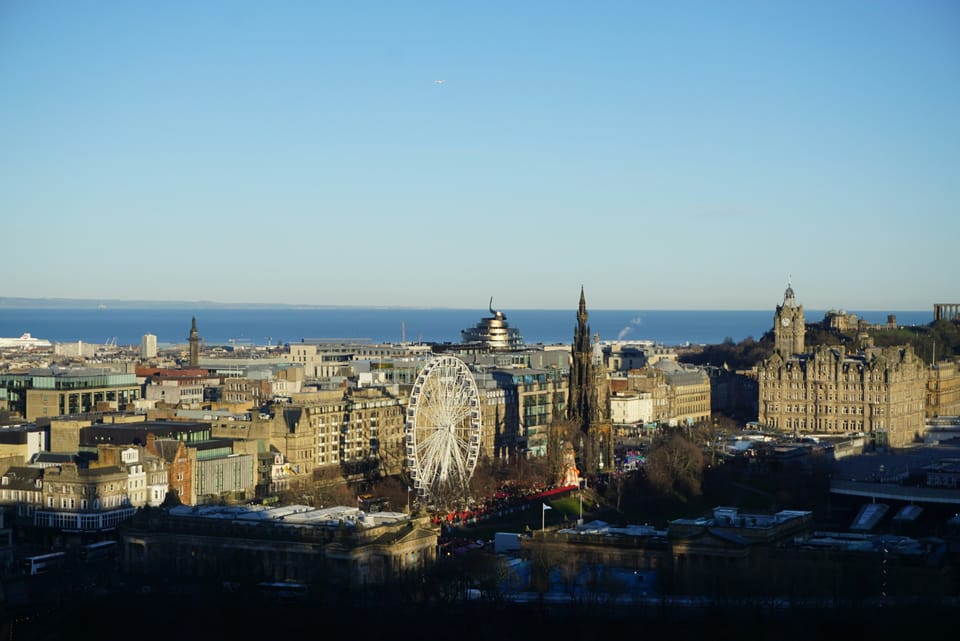
London’s Metropolitan Police said it deployed more than 4,000 officers on May 16 as two large marches and the FA Cup final put the capital under one of its biggest public-order operations in recent years. One march was organised by Stephen Yaxley-Lennon, the anti-Islam activist better known as Tommy Robinson, under the “Unite the Kingdom” banner. Another marked Nakba Day, the annual pro-Palestinian commemoration.
Associated Press reported that police kept the routes apart to prevent the crowds from meeting. British authorities also barred several overseas far-right figures from entering the country, saying their presence risked worsening tensions.
In the year to December 2025, Home Office figures recorded 100,625 asylum claims in the UK. Small-boat arrivals accounted for 41,262 of them, and another 11,190 people entered through other irregular routes such as lorries, containers or travel without documents.
Epping, a town in Essex, became a focus of protest in July 2025 after an asylum seeker housed at the Bell Hotel was charged with sexual offences. AP said rocks and eggs were thrown at police during one protest outside the hotel, and local officials later went to court over the use of the site for asylum accommodation.
Government data put 30,657 supported asylum seekers in hotel accommodation at the end of 2025, down from a year earlier but still 29% of the supported asylum population. Charities working with asylum seekers say many hotel residents are waiting for their cases to be decided, cannot choose where they are placed and often live for months with little control over work, schooling or family routine.

Asylum Hotels
Epping Forest District Council said last year that it had long opposed the central government’s use of the Bell Hotel for asylum seekers. The council described the protests and disruption around the site as unprecedented when it sought a temporary order to block further accommodation there.
Outside the Bell Hotel, protesters framed the site as a risk to women and children. Counter-protesters and refugee groups warned that residents who had no role in the alleged offence were being treated as suspects by association.
Falkirk, in central Scotland, has seen a similar dispute over the Cladhan Hotel. Le Monde reported in May that about 90 asylum seekers were being housed there, with demonstrations and counter-demonstrations continuing for months.
London saw another confrontation near the Barbican in August 2025, when anti-immigration protesters and supporters of asylum seekers gathered outside a hotel used for accommodation. The same arguments appeared there: local safety, costs to public services, the length of the asylum backlog and the rights of people still waiting for a decision.
Rumours and Riots
After three girls were killed at a dance class in Southport in July 2024, social media posts wrongly claimed the suspect was a Muslim immigrant or a small-boat asylum seeker. Police later named the suspect as Axel Rudakubana, who was born in Britain to Rwandan Christian parents.

The UK Parliament’s Home Affairs Committee later said police were constrained by rules protecting a child suspect’s identity and by contempt-of-court law when they tried to correct false claims. That delay left room for a made-up name and a false asylum story to circulate widely before the facts could be put on the record.
British courts have since dealt with rioters who attacked mosques, hotels and police during the unrest that followed. The cases showed another side of the migration debate: legal uncertainty and public anger can endanger people who are already settled in Britain, including Muslim citizens with no link to asylum claims.
Mainland Europe
Germany’s Solingen attack in August 2024 killed three people and injured eight at a city festival. German prosecutors said the Syrian suspect was motivated by Islamic State ideology, and DW reported that opposition politicians renewed calls for tougher deportation rules after it emerged that his asylum claim had been rejected and a transfer to Bulgaria had not taken place.
In Mannheim in May 2024, a police officer died after a knife attack at an anti-Islam rally, and German authorities said they suspected an Islamist motive. Investigators identified the suspect as an Afghan citizen who had lived in Germany for years.
In Mulhouse in February 2025, a knife attack at a market killed one person and injured municipal officers. In Villach the same month, Austrian police said a Syrian asylum seeker was suspected in a fatal stabbing. Each case involved its own evidence and legal process, but all were quickly folded into national arguments over asylum decisions, deportation and radicalisation.
Europol’s TE-SAT reports offer a narrower official lens than the phrase “Muslim crime” often used online. The EU does not publish a continent-wide Muslim crime rate. Europol counts terrorism cases by category; Frontex counts detections of irregular border crossings. Those figures cannot describe Muslims or migrants as a whole, but they help explain why border control and jihadist violence are now discussed together in European politics.

Border Numbers and Public Trust
Frontex said irregular border-crossing detections into the EU fell to just over 239,000 in 2024 and to about 178,000 in 2025, the lowest level since 2021. The fall has not removed migration from politics, partly because asylum applications, local accommodation and removal decisions are felt far from the border itself.
EUAA said EU+ countries, meaning EU states plus Norway and Switzerland, still received more than one million applications for international protection in 2024, down 11% from the previous year. Germany remained the largest recipient, followed by Spain, Italy, France and Greece.
The 1951 Refugee Convention and European law require individual assessment. A person fleeing war or persecution may have a legal claim to protection, while a person with no claim should be removed through a lawful process. Voters lose confidence when the state cannot explain who qualifies, who does not and why decisions take years.
British councils carry much of the pressure when hotels are used for long periods. Residents see changes to policing, school places, health services and town-centre life before they see the outcome of a case file. Ministers see national numbers; towns see a particular building, a particular police deployment and a bill they did not choose.
European law also protects religious freedom while enforcing criminal law on forced marriage, antisemitism, anti-gay hate, threats and incitement to violence. Political disputes become harder to manage when officials avoid talking plainly about the gap between protected belief and conduct that breaks the law.
Attacks on mosques, abuse of Muslim residents and intimidation of asylum seekers have become part of the same public-order problem. A policy that protects refugees but ignores local fears can lose public consent; a movement that treats Muslims or asylum seekers collectively as a threat can push law-abiding citizens into danger.
The May 16 London marches brought that pressure into the centre of the capital. Governments have to process asylum claims faster, remove people with no right to remain, police extremist violence and protect lawful residents. The political argument is no longer confined to border towns or ministry statistics. It is on the streets of capitals.
Sources: Associated Press, UK Home Office immigration statistics for the year ending December 2025, European Union Agency for Asylum, Frontex, Europol EU TE-SAT reports, BBC, Deutsche Welle, Le Monde, UK Parliament Home Affairs Committee and relevant police or court statements. Criminal allegations are described according to public information available at publication time.
You read this far. You're not here for noise.
SharpPost delivers one weekly deep dive on geopolitics, finance, and tech — decoded for readers who want signal. Carefully selected, never noisy.