Taiwan brings Mazu to a Bangkok mall to attract return visitors
Taiwan’s Bangkok travel fair combines temple traditions, regional food and flight deals as tourism officials seek independent and repeat visitors.
免费微软自然语音 · 推荐使用 Microsoft Edge
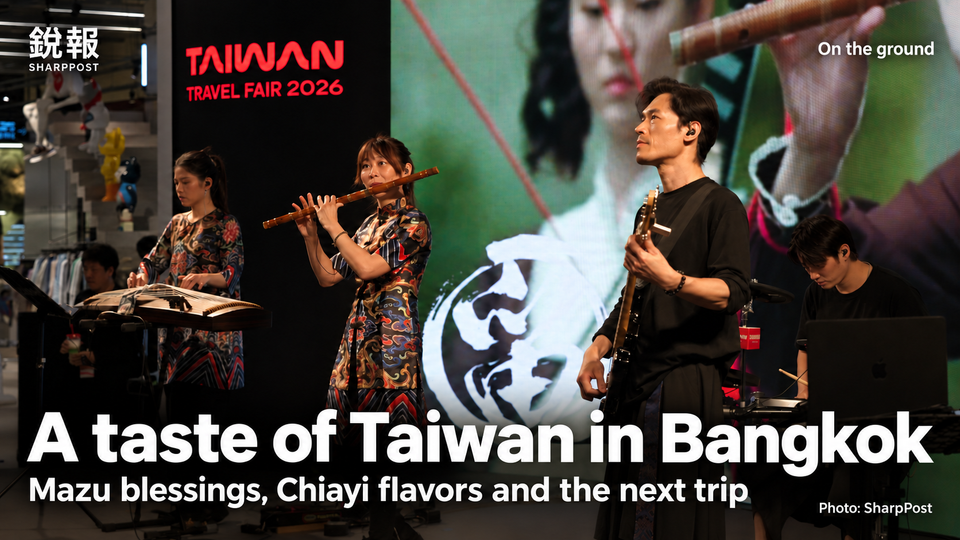
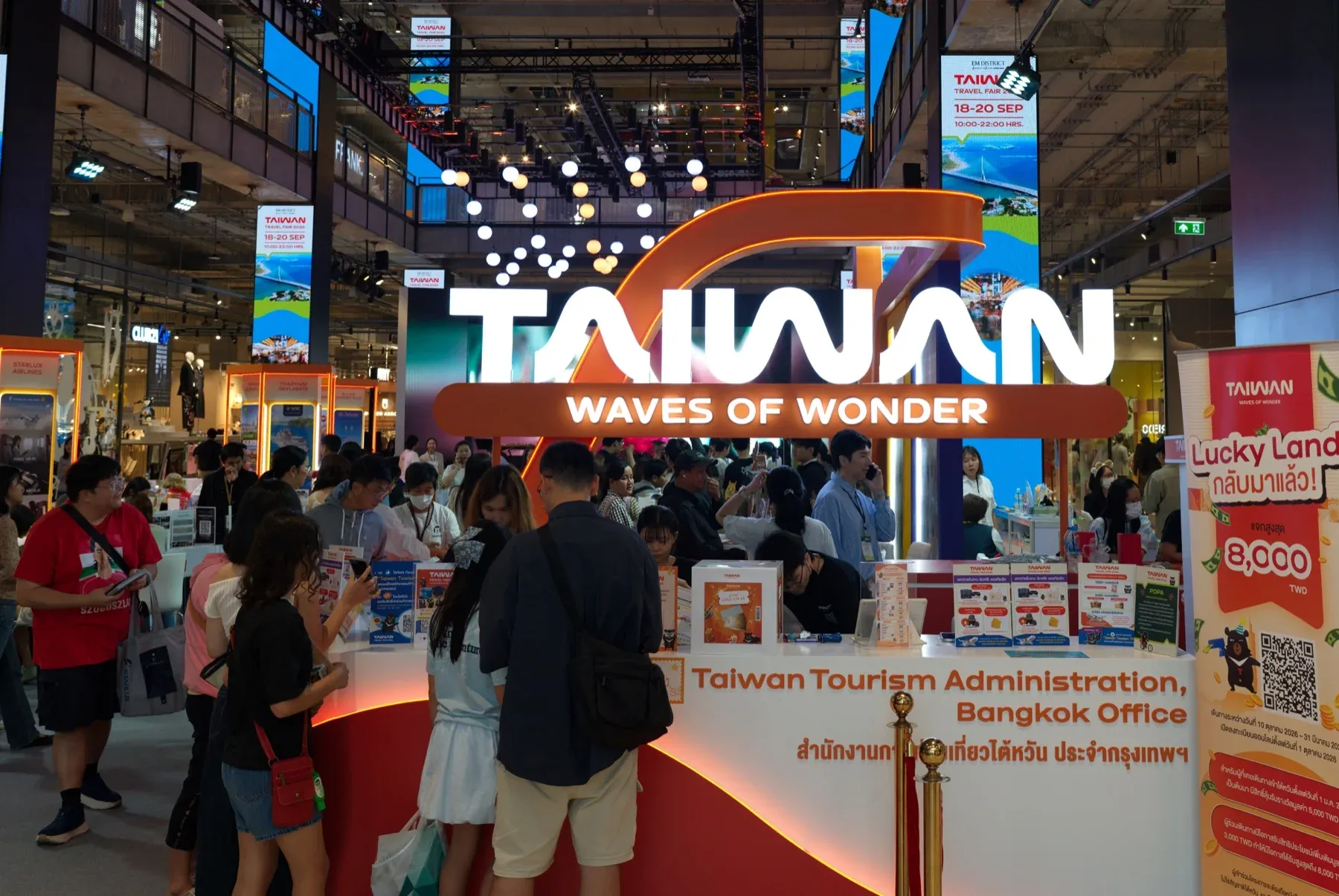
A statue of Mazu, the sea goddess, has been brought from Thailand’s Nan Yao Temple to the Taiwan Travel Fair in Bangkok, where visitors can pray and seek blessings, according to Taiwan’s Central News Agency.
Taiwan Travel Fair 2026 runs from September 18 to 20 at Sphere Gallery 1 on the M floor of Bangkok’s Emsphere mall. The Taiwan Tourism Administration’s Bangkok office told CNA that the event is targeting independent travellers and people who have already visited Taiwan.
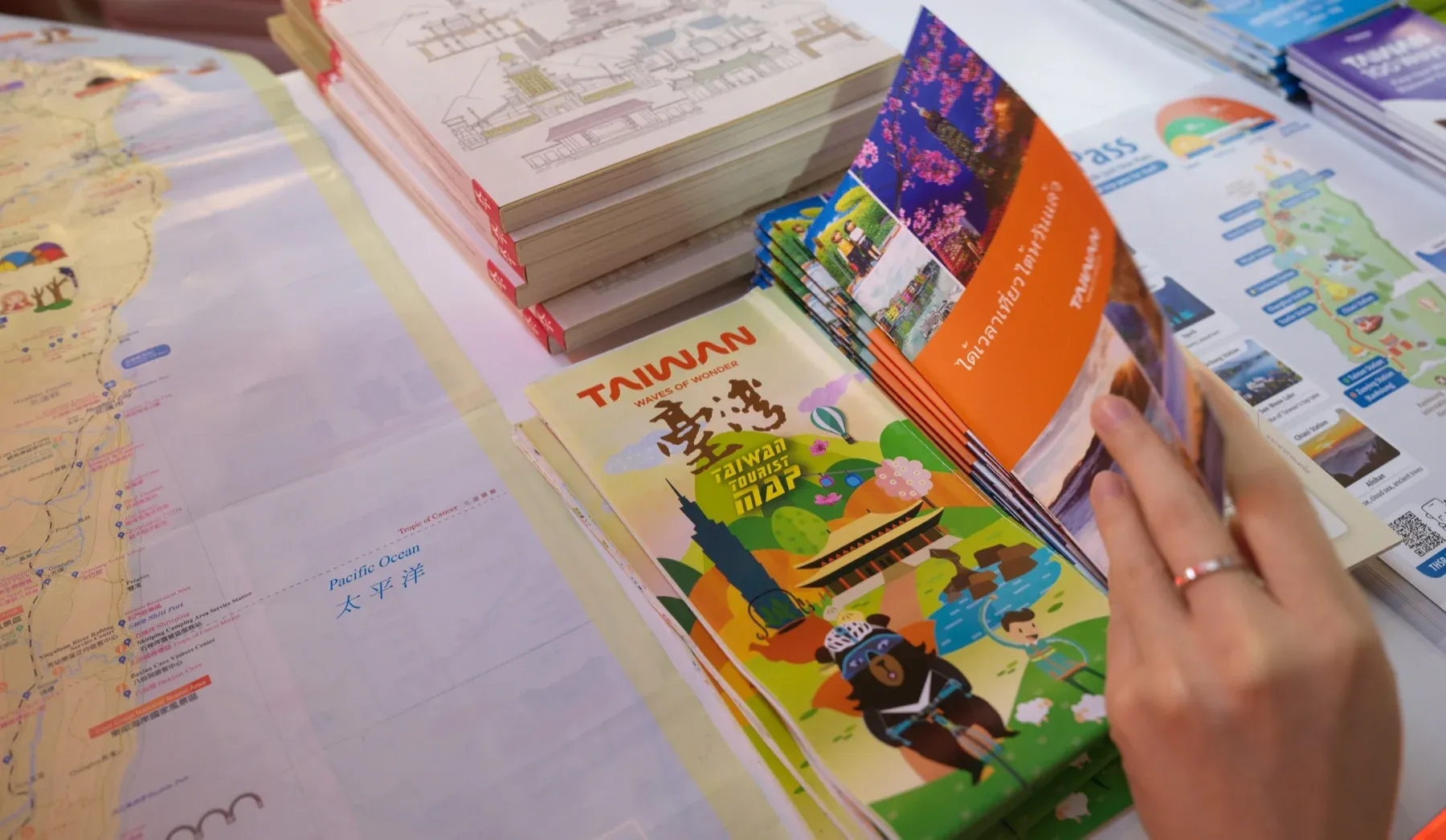
The Tourism Administration’s marketing plans announced on April 21 included working with influencers to promote itineraries featuring temple visits and Michelin-listed dining.
A Thai-language guide to Longshan Temple amulets
Taiwan’s tourism website carries a Thai-language guide to amulets at Taipei’s Longshan Temple. It introduces seven types associated with wishes for health, love, work and other aspects of life, and explains where to obtain them and how to worship at the temple.
Faith-based travel also features in Thailand’s own tourism promotion. In its 2026 tourism strategy, announced in 2025, the Tourism Authority of Thailand identified Mu-Telu—travel centred on spiritual beliefs and seeking blessings—as a priority product alongside wellness and sports tourism.
A separate tourism authority plan, described by Thailand’s Public Relations Department in 2024, targeted younger generations with proposed temple recommendations based on birthdays and zodiac signs, linked to dining and craft markets.
Tourism promotion under the New Southbound Policy
Thailand is also an important market in Taiwan’s efforts to deepen regional ties. After the Democratic Progressive Party took office in 2016, President Tsai Ing-wen’s administration pursued the New Southbound Policy, including cultural and tourism cooperation with Southeast Asia, South Asia, Australia and New Zealand. At a Taiwan–ASEAN dialogue that year, Tsai called for greater two-way exchanges through official and private channels. The policy provided a framework for subsequent cultural and tourism promotion in Southeast Asia.
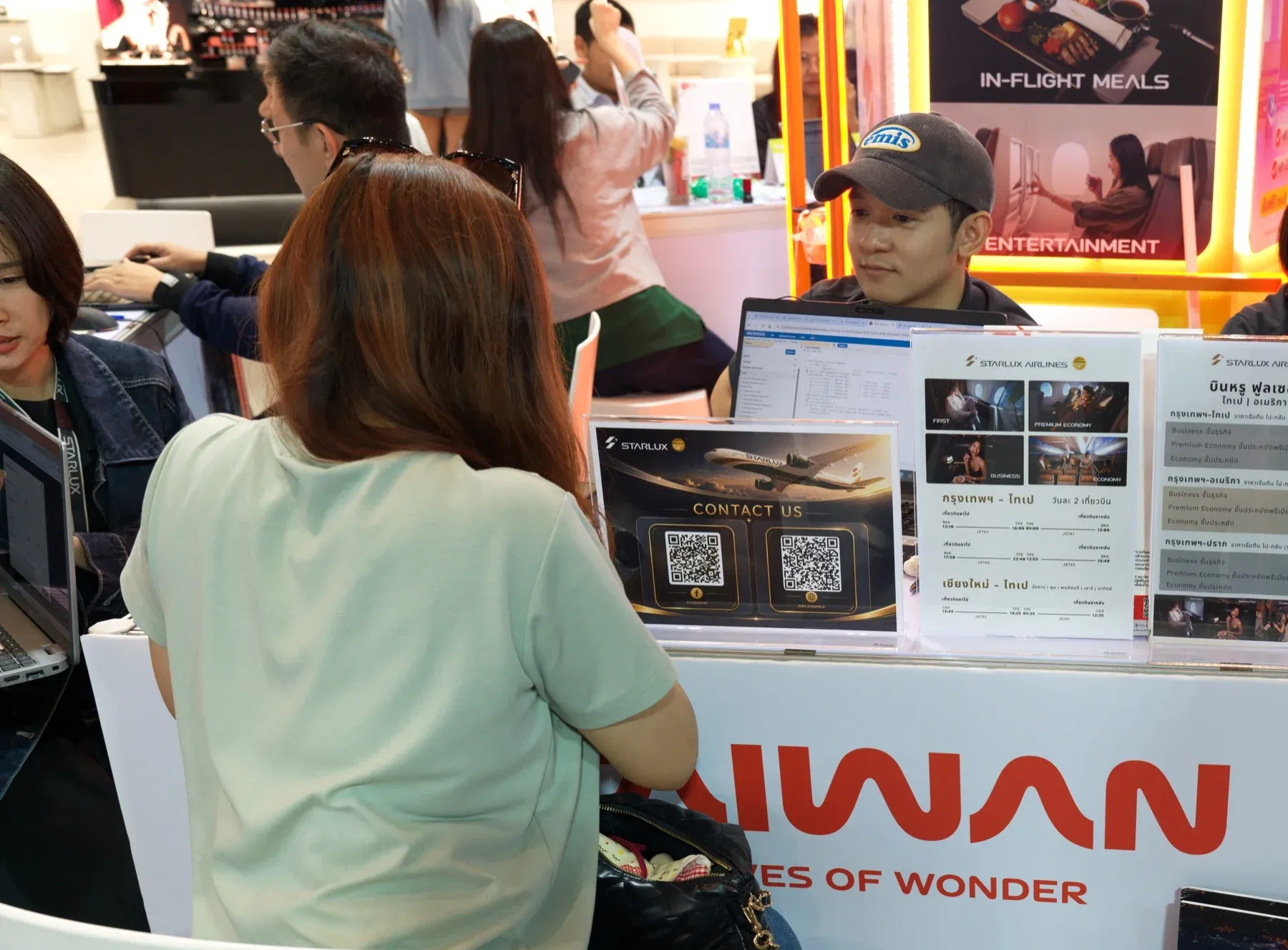
More recent campaigns have sought to reach people during their daily routines. A 2025 initiative by the Tourism Administration’s Bangkok office enlisted a Thai photographer and artist to create advertisements for Bangkok’s BTS and MRT trains and stations. It partnered with Taiwanese airlines and Thai travel agencies, using QR codes to direct passengers to travel offers. The destinations included Chiayi, Tainan and Kaohsiung, as well as Taipei.
The prominent “TAIWAN—Waves of Wonder” logo at this year’s fair comes from a tourism brand refresh launched in 2024. Promotional films were subsequently placed on channels including CNN, BBC, Netflix and social media. Alongside that shared branding, Thai-language materials, local creators and travel agencies help turn the promotion into itineraries visitors can understand and book.
Chiayi food and hands-on activities
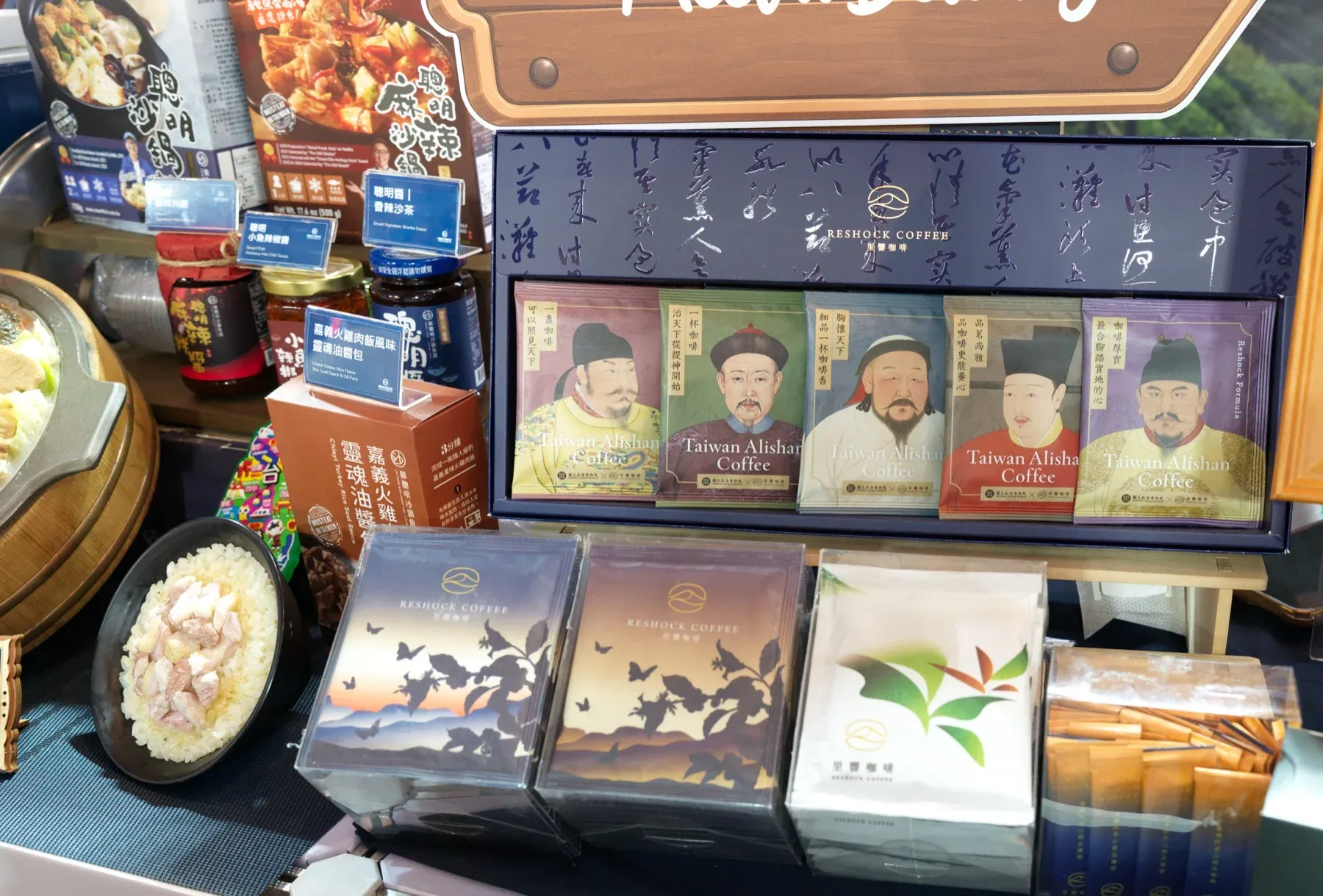
Chiayi restaurant Lin Cong Ming brought its fish-head casserole and chicken rice to the fair and organised a chicken-rice-ball workshop, CNA reported.
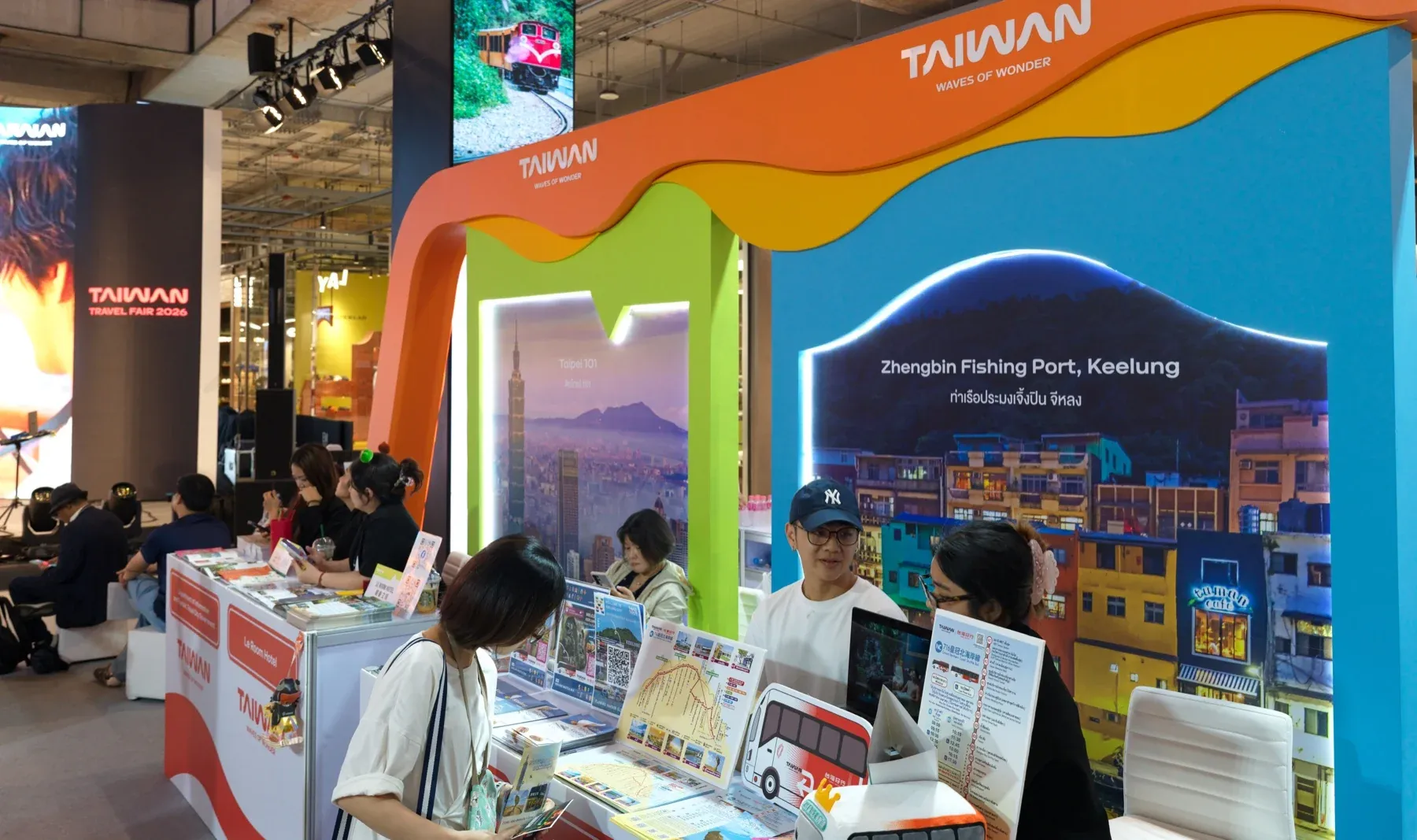
Other activities announced by the Bangkok office include painting sword-lion motifs, making Taiwan-shaped cyanotype fridge magnets, and performances by bands and other groups.
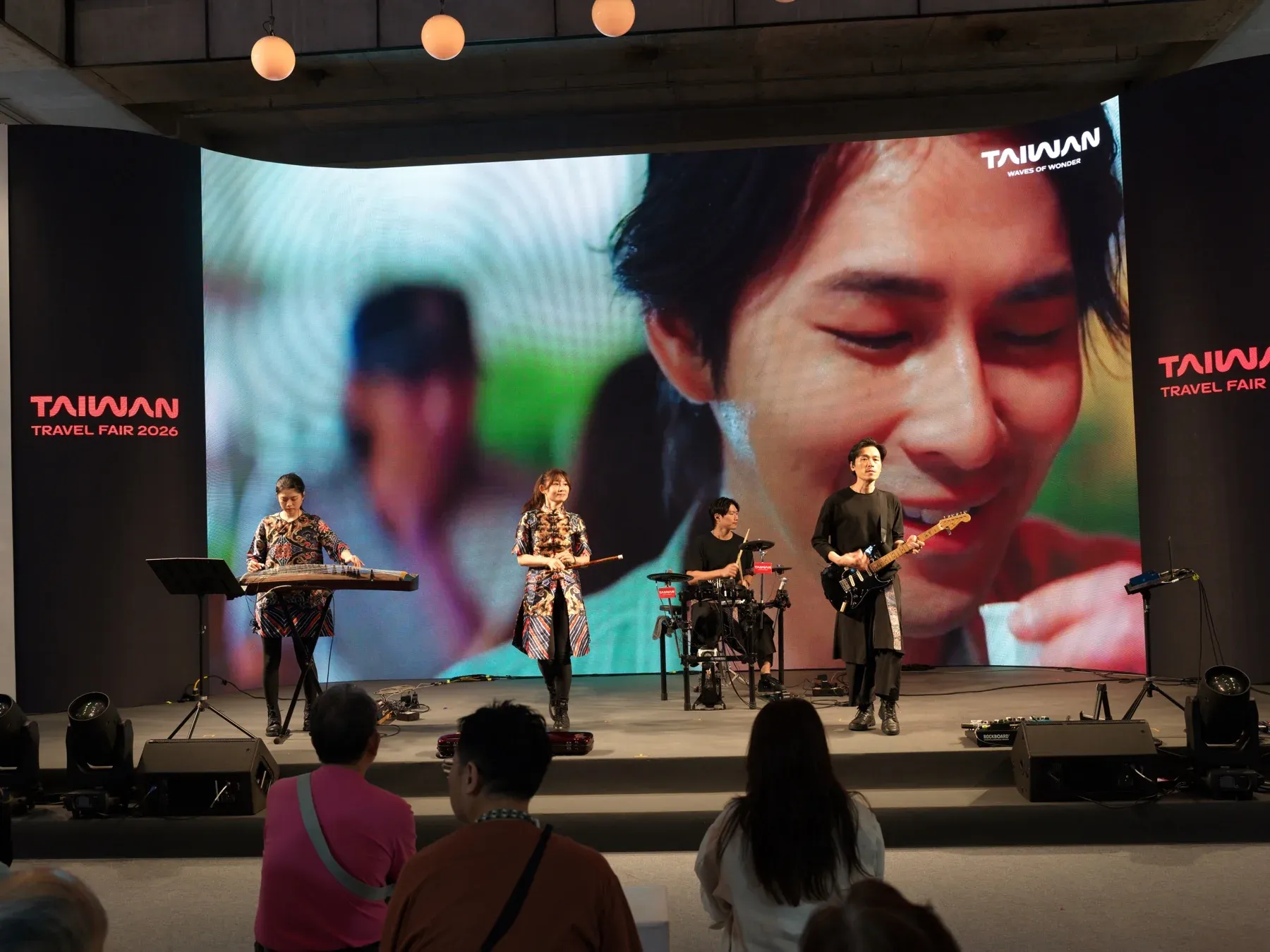
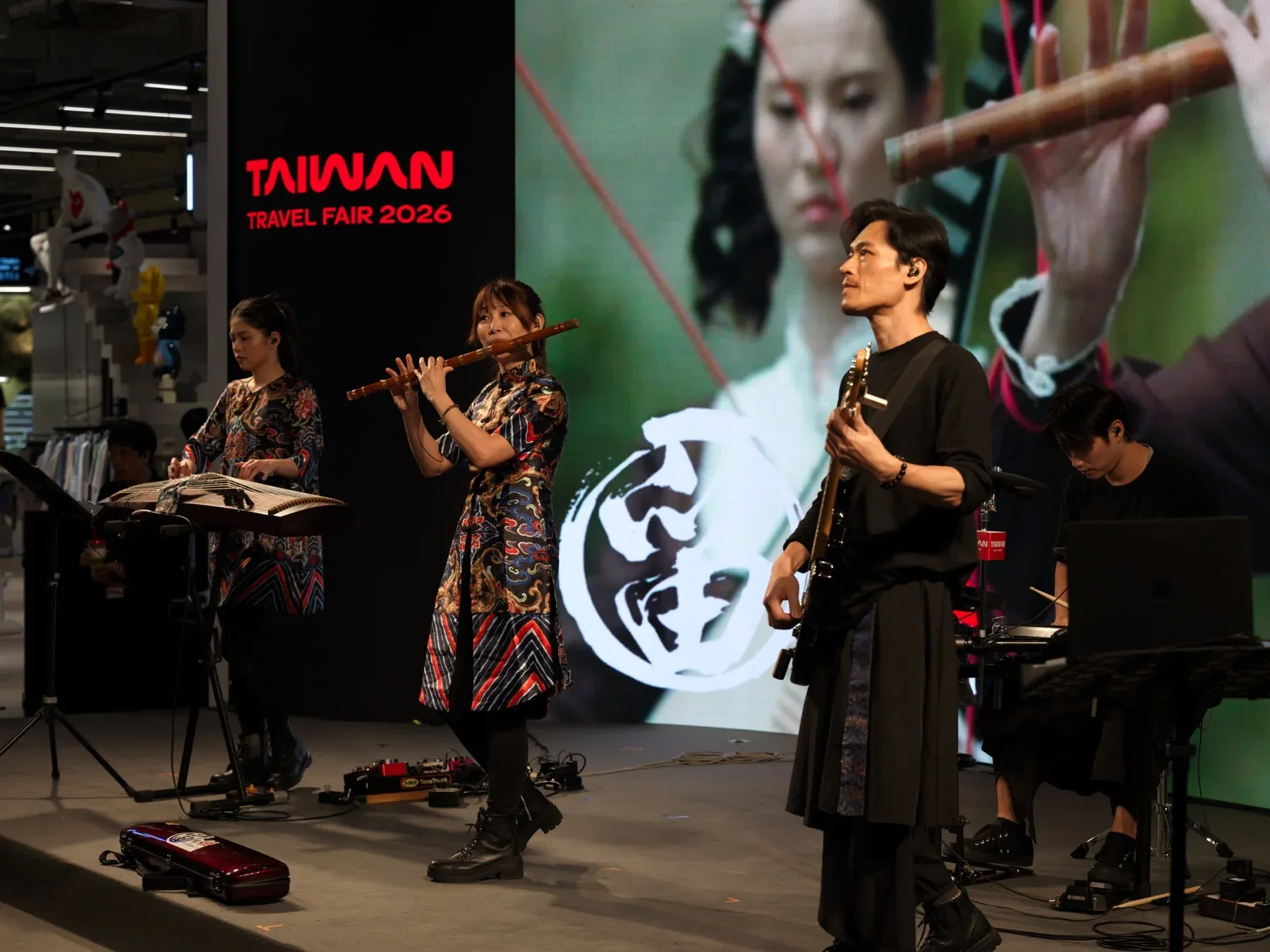
The event page lists discounted flights, Taiwan travel packages and mobile data SIM cards among the products on offer. Under one promotion, visitors who spend at least 8,000 baht at the fair can enter a prize draw for round-trip tickets to Taiwan and other prizes.
Paris audiences and Southbound tourism spending
Taiwan has also used major international events to promote its culture. During the 2024 Paris Olympics, the Ministry of Culture organised a Taiwan pavilion at La Villette as part of the Cultural Olympiad, presenting music, theatre and glove puppetry. According to the ministry’s event summary, 24 groups and 122 arts practitioners took part in 57 performances over 15 days, drawing more than 70,000 visits. It gave participants an opportunity to present their work together in the Olympic host city.
Tourism spending shows the weight of markets covered by the Southbound policy. The Tourism Administration’s 2025 visitor survey, released this August, found that seven priority New Southbound markets accounted for about 30% of arrivals and US$3.725 billion in spending in Taiwan. That represented 33.76% of total inbound visitor spending, excluding international airfares. Arrivals from the Philippines, Vietnam and Indonesia had all exceeded their 2019 levels.
Overall inbound tourism, however, remains below its pre-pandemic scale. Taiwan received about 8.57 million visitor arrivals in 2025, up 9.12% from the previous year but still below the roughly 11.86 million recorded in 2019. Gains in individual markets coexist with a gap in the broader recovery.
The same 2025 survey found that fully independent travellers accounted for 76.4% of arrivals. By bringing temple traditions, food, workshops and flight consultations together, the Bangkok fair caters to people planning their own trips. For someone who has already visited Taipei, a meal in Chiayi, an excursion to Keelung or a temple visit could form part of the next itinerary.
You read this far. You're not here for noise.
SharpPost delivers one weekly deep dive on geopolitics, finance, and tech — decoded for readers who want signal. Carefully selected, never noisy.