Vučić concedes defeat as Serbia’s student-backed movement celebrates election win
Vučić conceded defeat as Serbia’s student-backed movement celebrated. Preliminary counts put its list ahead; a new government needs 126 votes in parliament.

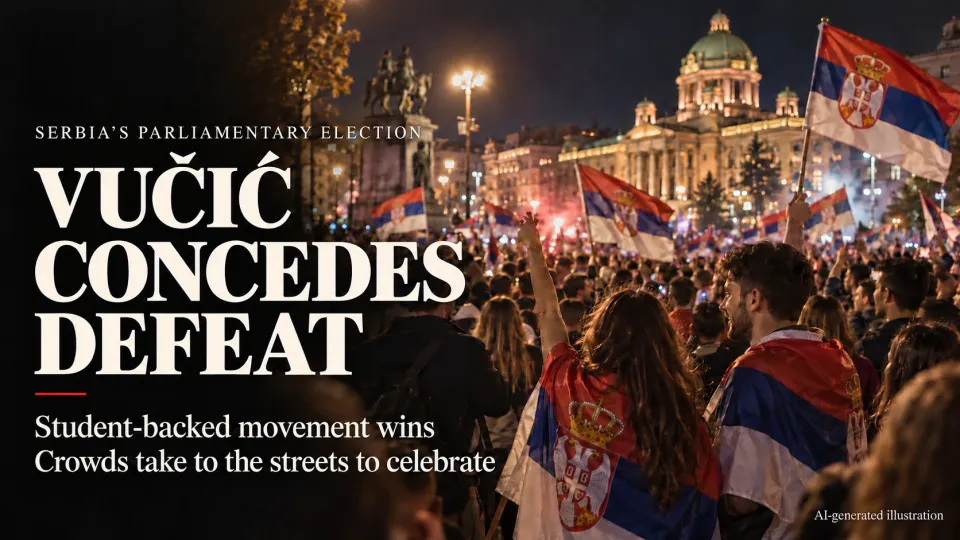
Former Serbian president Aleksandar Vučić conceded defeat at his party headquarters on October 25 after a student-backed movement beat his alliance in a snap parliamentary election.
Tens of thousands of people filled Belgrade’s main streets after the announcement, according to Reuters reporters at the scene. Drivers honked their horns, people danced and students cheered the victory.
The Student List led with 52.73% of votes counted, compared with 39.15% for Vučić’s United Serbia alliance, public broadcaster RTS reported on October 26. The figures came from preliminary election commission results covering 8,155 polling stations.
Ipsos and CeSID projected 141 of parliament’s 250 seats for the Student List and 103 for United Serbia, RTS reported. The election commission had not yet confirmed the final seat allocation.
Vučić resigned as president on September 27 and ran as the Serbian Progressive Party’s candidate for prime minister. Parliamentary speaker Ana Brnabić took over as acting president, according to the Serbian government.
Students began protesting after the collapse of a railway station canopy in Novi Sad on November 1, 2024. The disaster killed 16 people. Students demanded accountability, blaming corruption and poor oversight of public construction projects. Protests continued for nearly two years, including after the government released documents relating to the project.
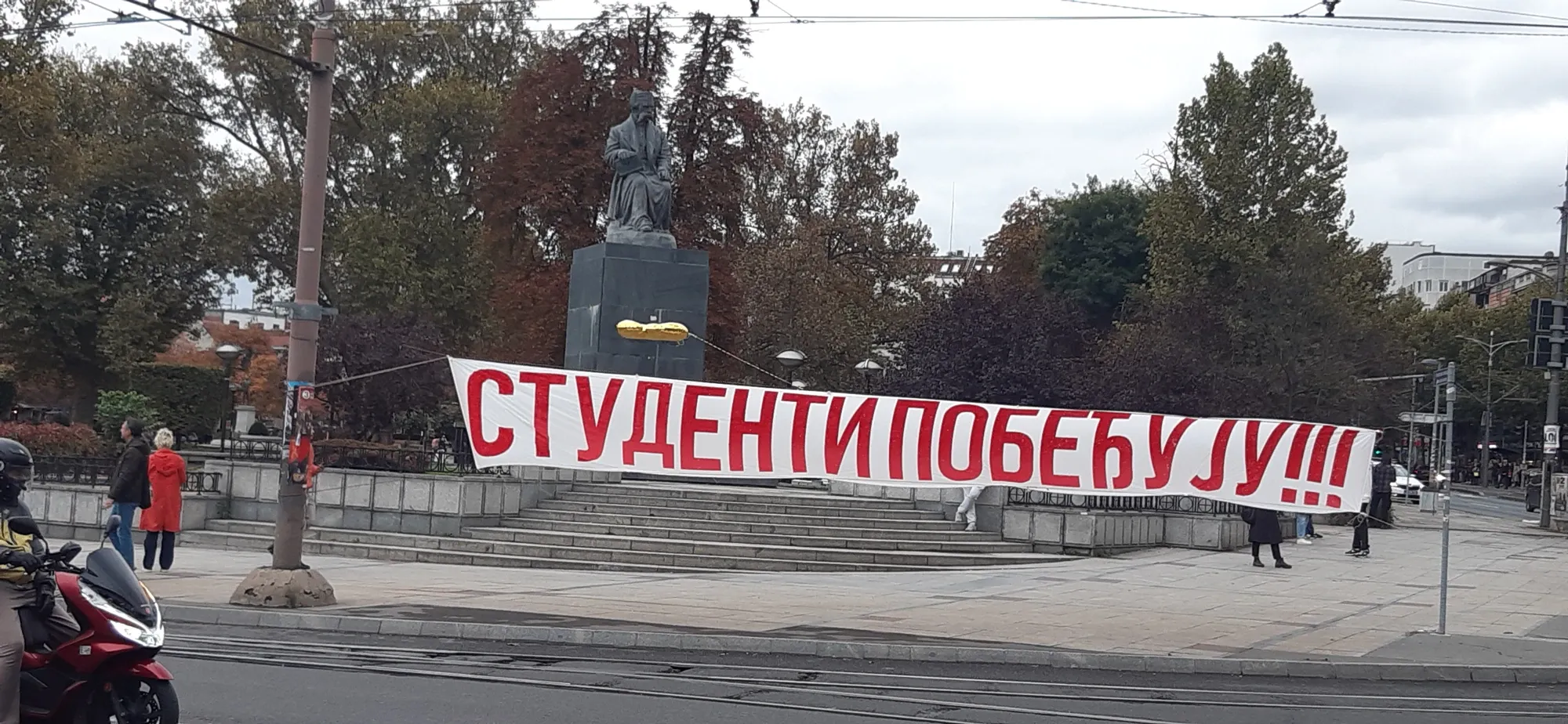
On May 5, 2025, students called for parliament to be dissolved and an early election, according to the Student List’s website. The movement said the authorities lacked independence and were unwilling to hold those responsible to account. It urged voters to back candidates endorsed by students.
The Student List ran as a citizens’ group, with candidates drawn from professions including medicine, teaching, engineering, acting and farming. The group says students selected them through assemblies and other collective discussions.
The list’s platform calls for publication of government contracts and tender documents, along with audits of infrastructure projects where deals lacked transparency, costs were excessive or work was delayed. It also proposes strengthening tax authorities’ ability to investigate officials’ assets and recover illicit wealth, creating a specialist police force to investigate corruption, and shielding judges and prosecutors from political interference.
The group has also pledged to replace party-based appointments in the public sector with open, merit-based recruitment and strengthen financial oversight of state-owned companies.
International election observers said the ruling party misused public resources, voters faced intimidation and pressure, and some campaign events were disrupted. Their preliminary statement, released on October 26, said public and private broadcasters heavily favoured United Serbia, while coverage of the Student List was predominantly negative.
The observers gave voting and counting procedures a positive assessment at the vast majority of polling stations they visited. They also found procedural shortcomings and problems with the transparency of the count. The statement expressed serious concern about violence involving election workers, citizen observers and journalists.
Vučić said in his concession speech that the Progressive Party would continue its work in opposition. He said he would stay in Serbia and that the party remained organised and united.
Ilija Srdanović, who heads the Student List, told Croatian news outlet Index on October 26 that the list included enough qualified candidates for prime minister and cabinet posts. The movement would decide who joins the government through internal democratic discussions, he said.
Under Articles 101, 127 and 128 of Serbia’s constitution, the new parliament must first meet within 30 days of the final election results being announced. The president consults representatives of the elected lists, then nominates a candidate for prime minister. Parliament votes on the candidate’s programme and cabinet together. Approval requires at least 126 of the 250 lawmakers; the government’s term begins when it takes the oath of office.
You read this far. You're not here for noise.
SharpPost delivers one weekly deep dive on geopolitics, finance, and tech — decoded for readers who want signal. Carefully selected, never noisy.