Russian attack kills seven in Kyiv and damages three Dnipro bridges
Russia launched a mass missile and drone attack on Ukraine. Seven people were killed and 17 injured in Kyiv, and two died at a railway station in Lviv. Three Dnipro bridges were damaged, and Ukraine’s air force said 462 aerial targets had been shot down or suppressed by 4:30 p.m. Singapore time.

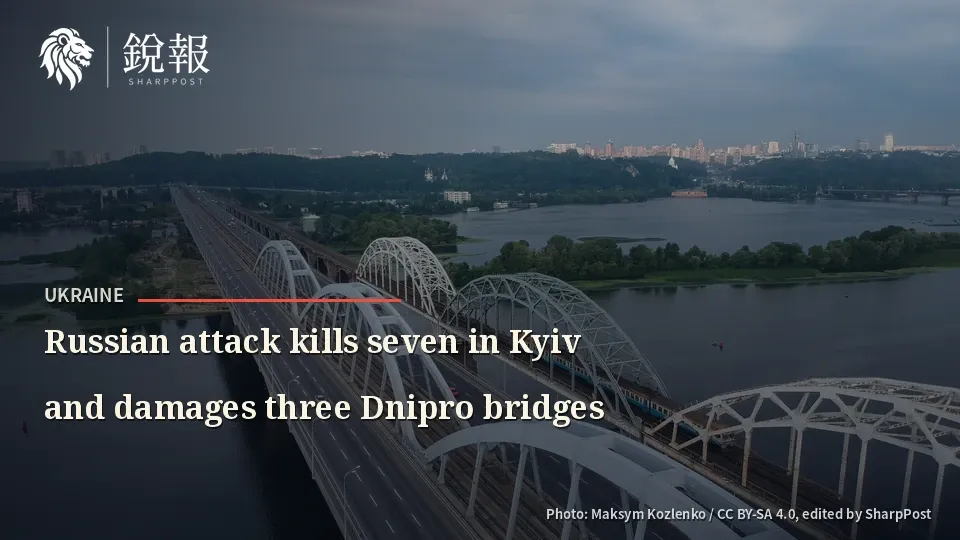

Russia began a large missile and drone assault on Ukraine at 6 p.m. Kyiv time on 19 November, midnight Singapore time on 20 November. Seven people were killed and 17 injured in Kyiv, 16 of them in hospital. In Lviv, two men were killed in a strike on Sknyliv railway station that hit its ticket office, and 10 people were injured across the city and the surrounding region. Three bridges across the Dnipro in Kyiv were damaged, energy facilities were hit in several regions, and large parts of Odesa and nearby districts lost power.
By 4:30 p.m. Singapore time, the Ukrainian Air Force said 462 aerial targets had been shot down or suppressed, the latter by means such as electronic jamming. They included 380 drones, 79 cruise missiles and three missiles listed together as ballistic or Zircon anti-ship missiles. Impacts were recorded at 23 locations and wreckage from intercepted targets at 10 others; the attack was still under way at the time of that tally. The Air Force said Russia had launched 404 drones, including attack drones and decoys meant to tie up air defences, 123 of them jet-powered, and 84 cruise missiles from the air and sea, and had also used ballistic missiles and Zircon missiles. President Volodymyr Zelenskyy put the launch figures as of that morning at more than 400 attack drones and over 110 missiles, 27 of them ballistic.
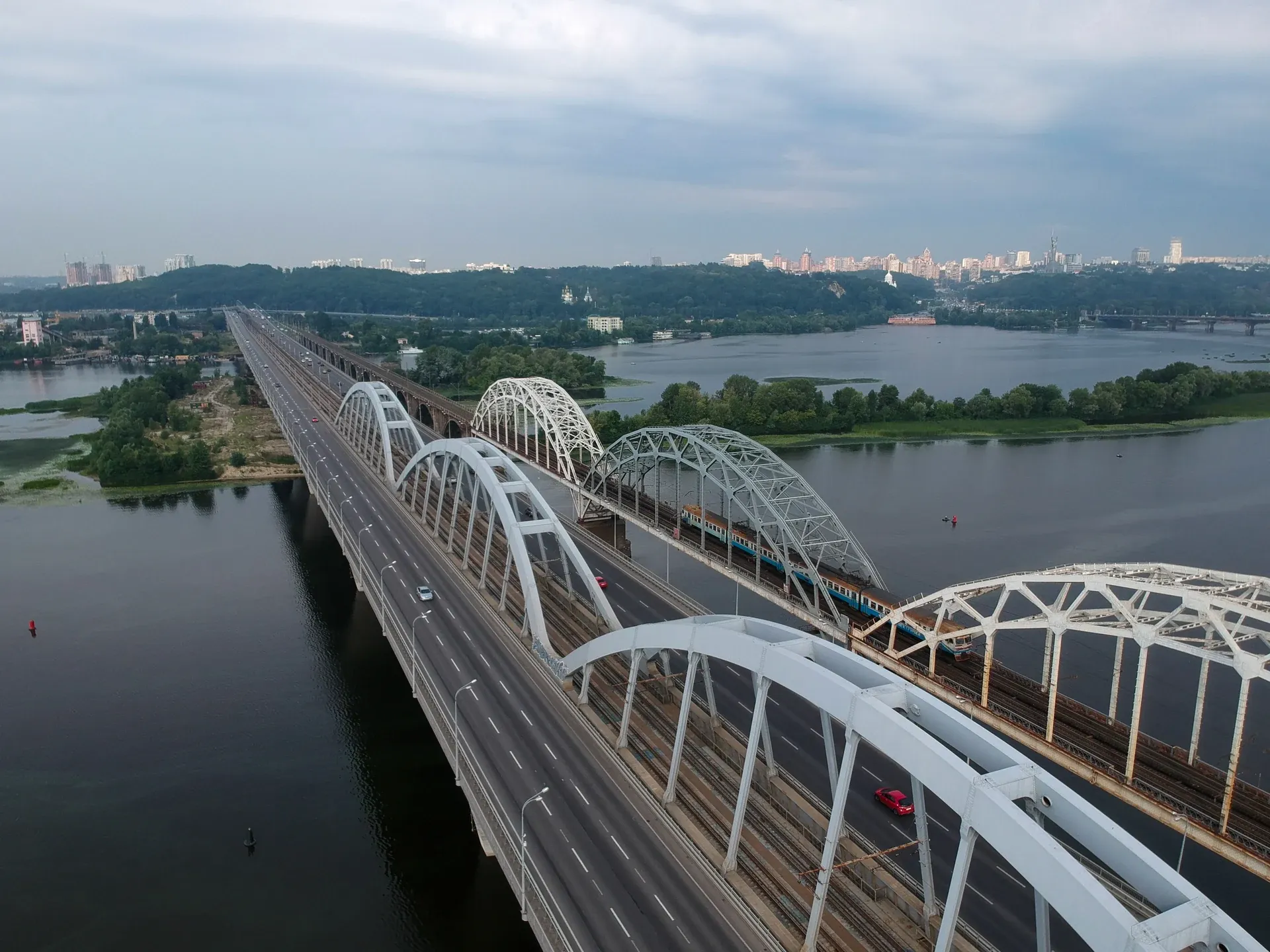
Overnight and into the early morning, local time, strikes hit several parts of Kyiv. Missile debris set a three-storey building on fire in Obolon, an infrastructure site was hit in Holosiivskyi district, setting fire to an office building on its grounds, a non-residential building burned in Podil, and a strike was recorded on open ground near one of the bridges. Ballistic missiles damaged the Podilsko-Voskresenskyi crossing and closed traffic from the right bank to the left. The Darnytskyi Bridge was also damaged. The Pivdennyi, or Southern, Bridge was hit again and was limited at the time to left-to-right traffic for vehicles of up to 10 tonnes and buses of up to 18 tonnes.
A Kyivvodokanal facility was damaged, and water pressure fell in the Holosiivskyi, Sviatoshynskyi, Solomianskyi and Shevchenkivskyi districts. Trolleybuses were temporarily halted in parts of the Pecherskyi, Solomianskyi and Holosiivskyi districts after a loss of voltage on the grid. City officials first reported three deaths at 1:28 p.m. Singapore time, identified preliminarily as utility employees. By 8:46 p.m. Singapore time the toll in the capital had risen to seven killed and 17 injured. An earlier nationwide tally from Zelenskyy put the death toll at eight, with nearly 30 people wounded.
Ukraine’s national grid operator, Ukrenergo, said at 1:55 p.m. Singapore time that emergency power cuts had been imposed in the Lviv, Zakarpattia and Ivano-Frankivsk regions after strikes on energy infrastructure. A 5:29 p.m. update said the attack had caused serious damage, including to Ukrenergo substations. Emergency outages were then still in force in the Poltava and Kharkiv regions, with a large-scale blackout in Odesa and nearby districts, and customers also without power in Kyiv and 10 regions: Vinnytsia, Dnipropetrovsk, Donetsk, Zaporizhzhia, Kirovohrad, Odesa, Kharkiv, Kherson, Cherkasy and Chernihiv. Some damaged sites could not yet be repaired because of the risk of further strikes, and facilities that had already been restored were hit again.
The damaged energy sites included substations and power lines that Zelenskyy said were tied to the operation of nuclear plants and to electricity links with Ukraine’s EU neighbours. He said Russia used missiles with cluster warheads, which scatter small submunitions over a wide area, and launched successive groups of missiles 20 to 30 minutes apart, making it harder to fight fires, clear debris and carry out repairs.
Russia’s Defence Ministry said the strikes had targeted energy and transport infrastructure in Kyiv and other regions. It said it had hit road bridges and a combined road-and-rail bridge in Kyiv and the Kyiv region that, it claimed, were used to move Ukrainian weapons and equipment toward the Donbas front, as well as the road-and-rail bridge at Zatoka in the Odesa region.
A Kyiv city traffic notice issued at 9:31 p.m. Singapore time said movement had been restored on the Podilskyi crossing and that the Darnytskyi Bridge was operating normally. Weight limits remained in force on the Southern Bridge, and traffic from the right bank to the left stayed closed.
You read this far. You're not here for noise.
SharpPost delivers one weekly deep dive on geopolitics, finance, and tech — decoded for readers who want signal. Carefully selected, never noisy.