Trump pledges Greenland buildup; Denmark stresses sovereignty
Trump promises a larger U.S. military presence in Greenland. Denmark stresses sovereignty as troop numbers, new bases and costs remain undisclosed.
免费微软自然语音 · 推荐使用 Microsoft Edge
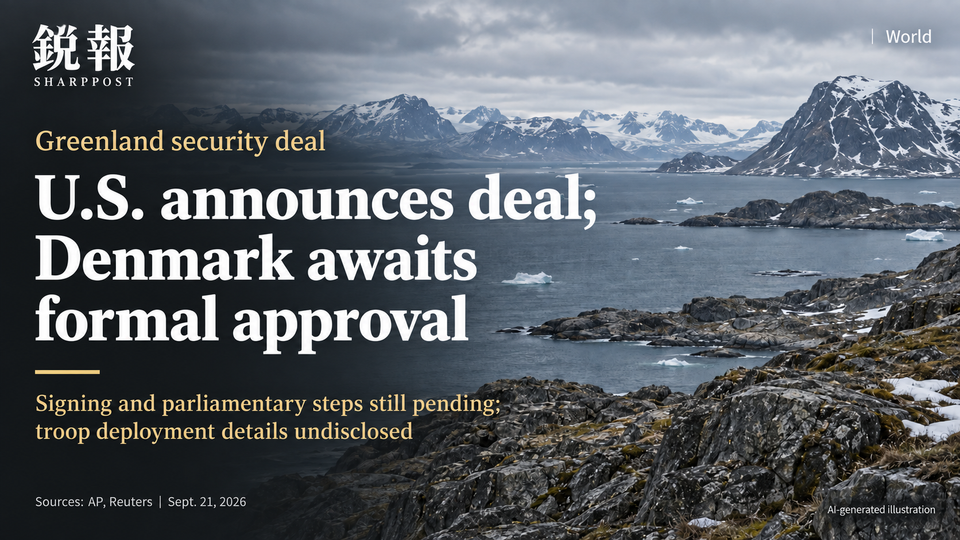
US President Donald Trump announced a security deal with Denmark and Greenland on 18 September, saying Washington would begin expanding its military presence on the Arctic island. Denmark and Greenland said in a joint statement that day that they expected the agreement to be signed during the UN General Assembly in the week beginning 21 September. The necessary parliamentary procedures would have to be completed before it could take effect.
Trump said the agreement would have no expiry date and would permanently preserve the US ability to take necessary defence measures in Greenland, Reuters reported. He said US adversaries would be barred from establishing bases on the island, while sensitive investments by those adversaries would require US approval.
Danish Prime Minister Mette Frederiksen said in the joint statement that the agreement recognised the Kingdom of Denmark's sovereignty and territorial integrity, as well as Greenlanders' right to self-determination. Greenland's prime minister, Jens-Frederik Nielsen, said it recognised the island's interests and its role in international cooperation.
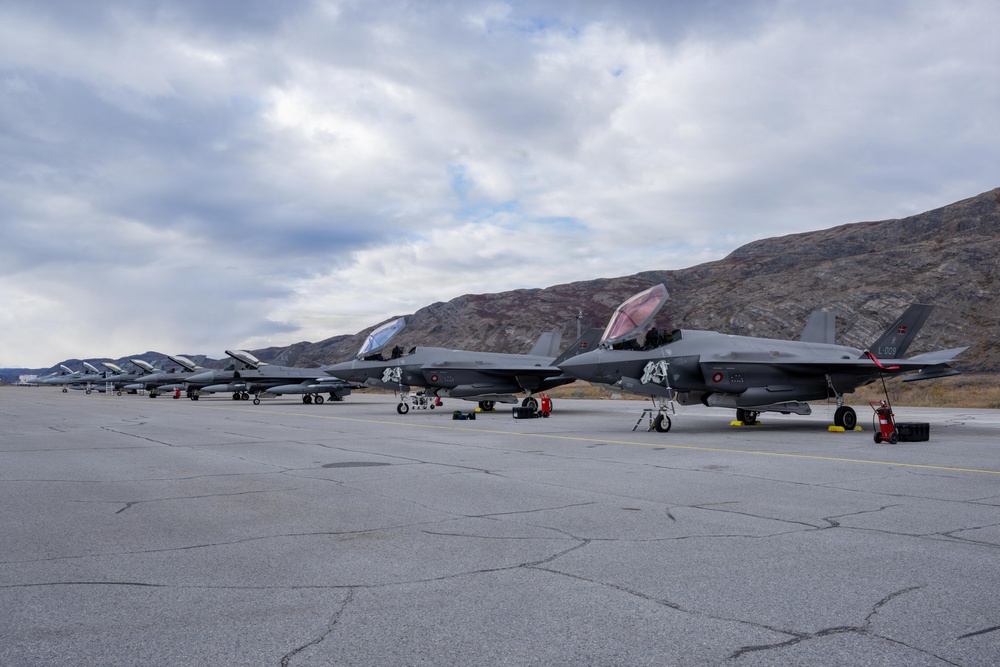
US forces were already operating in Greenland before Trump's announcement. A US military video release posted on DVIDS on 16 September describes the Wisconsin Air National Guard's 115th Fighter Wing operating from Pituffik Space Base on 10 September as part of Operation Arctic Vanguard.
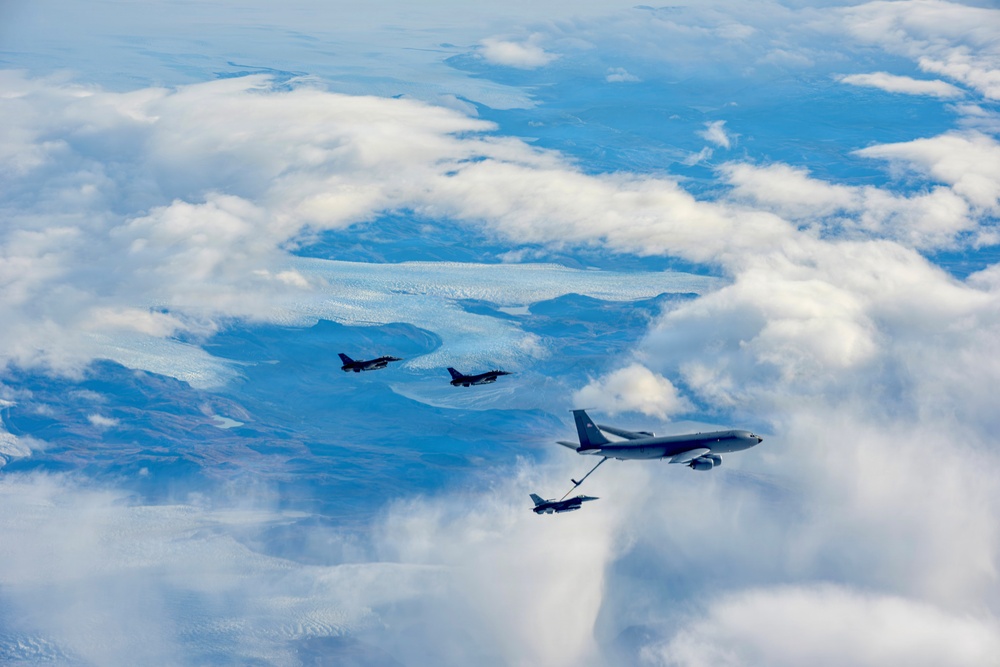
Two Danish F-35s landed at Kangerlussuaq airport in western Greenland on 16 September, marking the first landing on the island by Danish aircraft of that type. They trained with four US F-16s, two Canadian F-18s and support aircraft, according to a Danish military account published the next day.
The Danish jets flew from Keflavik Air Base in Iceland; the US and Canadian fighters flew from Goose Bay in Canada to meet them over Greenland. A French tanker refuelled the Danish aircraft, while a NATO airborne warning and control aircraft monitored and coordinated the airspace. The Danish account did not announce a new permanent fighter deployment to Greenland.
Ground forces were training on the island too. More than 400 military personnel from 11 NATO countries took part in Arctic Shield, an exercise lasting nearly two weeks, the Danish military said on 18 September. Most trained around Narsarsuaq in southern Greenland, with some activities near Kangerlussuaq. The training covered operations and survival in Arctic conditions. The Danish military described the exercise as part of NATO's Arctic Sentry and did not link it to the new agreement in its account.
The US has long maintained forces in Greenland. Pituffik was formerly known as Thule and was renamed in April 2023. In a written parliamentary answer dated 22 April 2025, Danish Foreign Minister Lars Løkke Rasmussen said the US presence was governed by the 1951 defence agreement and subsequent agreements. Under those arrangements, expanding or establishing defence areas required agreement among the US, Denmark and Greenland.
A 2004 agreement separately requires the US to consult and inform the Danish government, including Greenland's home-rule government, before making significant changes to its military operations or facilities in Greenland. That consultation requirement is distinct from the agreement needed to establish or expand defence areas.
Denmark and Greenland's 18 September statement gave no figures for additional troops, locations for new bases or construction timetable. It also did not specify whether the new deal would alter the procedures for changes to military operations or facilities.
You read this far. You're not here for noise.
SharpPost delivers one weekly deep dive on geopolitics, finance, and tech — decoded for readers who want signal. Carefully selected, never noisy.