Eight suspected K-8 aircraft seen at Laos airfield as China–Laos training centre opens
Reuters reports suspected K-8s at Ban Keun. China and Laos confirm a joint training centre, while aircraft ownership and long-term PLA deployments remain unconfirmed.

 SharpPost
Commercial satellite images of Ban Keun airfield in Laos show eight suspected K-8 aircraft and more than two dozen support vehicles, Reuters reported on October 6. Vantor captured the images on September 30, while work on the runway and surrounding facilities continued. China and Laos had opened a joint support and training centre there a day earlier.
China’s Defence Ministry confirmed in a September 29 announcement that the centre and the China–Laos Friendship Aviation College had begun operating. The facilities will help train Lao air force pilots and will be jointly maintained by the two sides. The ministry said their construction and use complied with domestic and international law and did not target any third party.
The Lao News Agency, KPL, reported the following day that Deputy Prime Minister and Defence Minister Khamlieng attended the opening alongside a People’s Liberation Army delegation. Both sides unveiled a commemorative stone and said they would expand joint training, exercises, aviation personnel development and humanitarian assistance.
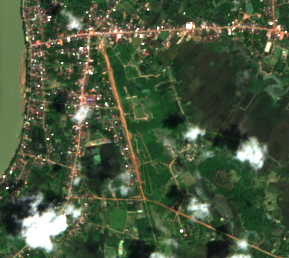
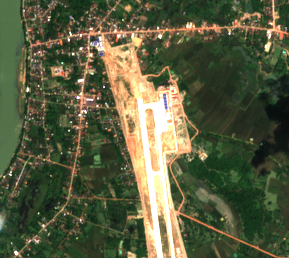
Security researchers Collin Koh and Alexander Neill, along with Vantor specialists consulted by Reuters, identified the aircraft as likely Hongdu JL-8s, also known as K-8s. The two-seat aircraft is used mainly for training but also has a light-attack capability. Both the Chinese and Lao air forces operate the type. The available material does not establish who owns or operates the aircraft in the images.
Joint operation gives Chinese personnel a role in the centre’s continuing training and support work. In SharpPost’s assessment, a long-term deployment, or rotations that maintain a continuous military presence, could make Ban Keun a standing PLA outpost in Laos. Neither government’s announcement specified personnel numbers, deployment periods or access rights. Joint operation does not establish independent Chinese control of the airfield.
Neill told Reuters that the layout appeared to allow a runway extension that could eventually accommodate larger aircraft, including signals-intelligence and electronic-surveillance planes. Diplomats and analysts are also watching for air-defence systems, ammunition and fuel storage, and surveillance facilities to assess whether the airfield serves military purposes beyond training.
During the Vietnam War, Ban Keun was known as Lima Site 44 and was used by Air America, an airline secretly owned by the CIA. Reuters, citing historical material supplied by a Library of Congress researcher, reported that the airline transported US-backed troops and supplies. China and Laos have now opened a joint military aviation facility at Ban Keun.
China’s Defence Ministry, the Lao embassy in Bangkok and Laos’s Foreign Ministry did not immediately respond to Reuters’ requests for further comment before its report was published.
You read this far. You're not here for noise.
SharpPost delivers one weekly deep dive on geopolitics, finance, and tech — decoded for readers who want signal. Carefully selected, never noisy.