S&P 500 and Dow fall into correction as AI sell-off deepens
The S&P 500 and the Dow closed in correction territory as chipmakers led a deepening AI sell-off. Chip stocks accounted for nearly half of the S&P 500’s 3.7% drop, while the equal-weighted index fell only 2% and remains up 8% for the year.

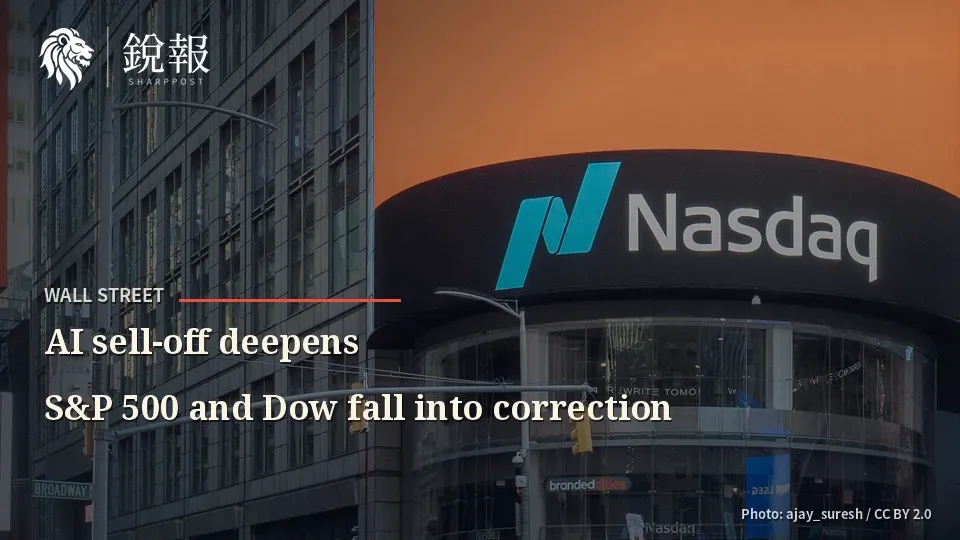

The S&P 500 and the Dow Jones Industrial Average closed in correction territory on Friday as a sell-off in chipmakers and other artificial-intelligence stocks gathered pace. The S&P 500 fell 3.70% to 6,910.39, and the Dow lost 949.73 points, or 1.93%, to 48,147.33, leaving both more than 10% below their record closes. The Nasdaq Composite slid 5.28% to 22,617.73 and is now down 2.7% for the year.
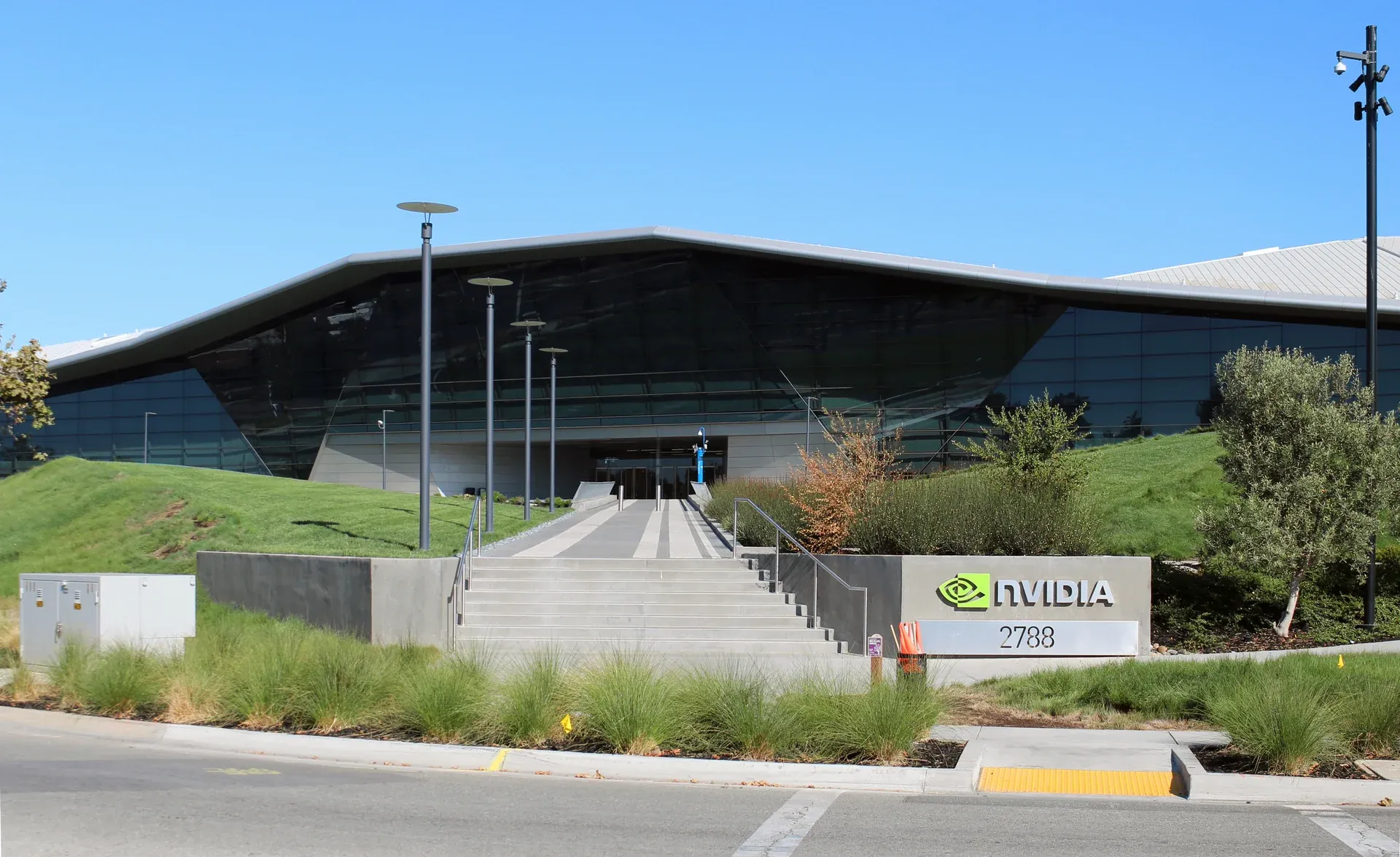
Nvidia dropped 14.01% to $125.53, its seventh straight decline. Advanced Micro Devices, Broadcom and Micron each lost more than 12%, and the Philadelphia Semiconductor Index sank 10.7%. Anthropic, in only its second session as a public company, fell 8.5% to $88.91, still above its $83 offering price.
The damage was concentrated in a handful of large companies. Using the weights in the SPDR S&P 500 ETF's holdings as of Thursday, chip and memory stocks made up about 14.6% of the index and accounted for roughly 1.8 percentage points of Friday's decline, close to half of it. Nvidia alone took off about 0.8 point. The equal-weighted S&P 500, which gives every member the same weight, fell only 2.0%. It is still up 8.1% this year and 7.2% below its Nov. 4 high, short of a correction.
Those same companies had carried the year's gains. When the S&P 500 set its record on Oct. 6, it was up 14.2% for 2026, and a Reuters analysis of LSEG data in mid-October found that technology stocks accounted for more than 10 points of the advance. After Friday, the index's gain for the year stands at 0.9%.
On Nov. 12, Nvidia said Jensen Huang had resigned as president, chief executive and director and named Chief Financial Officer Colette Kress interim CEO. Huang had acknowledged an affair on Nov. 8 after reports of his relationship with Alice Huang, whom U.S. authorities suspect of being a Chinese spy; China denies that she is. On Nov. 17, Nvidia reported third-quarter revenue of $115.8 billion, up 103% from a year earlier, and forecast about $130 billion for the current quarter. The release also referred to an ongoing investigation by an independent committee of its board. The stock has closed lower in every session since.
Anthropic priced its shares at $83 on Nov. 18, above the $70 to $78 range it had set, selling 980 million shares for $81.34 billion. That made it the largest initial public offering on record, ahead of SpaceX's listing in June. Trading on Nasdaq began at 12:50 a.m. Singapore time on Nov. 20. The stock opened at $111.50 and closed at $97.17, 17% above the offering price, on a day when all three major indexes fell more than 2% and the Dow closed below 50,000 for the first time since June.
On Friday, Anthropic said the offering had closed after underwriters bought all 147 million additional shares available to them, lifting the total to 1.127 billion shares and gross proceeds to about $93.5 billion. A further $26 billion of Class N stock went, at the same $83 price, to seven strategic partners: about $10 billion each to Nvidia and Google, $2.5 billion to AMD, about $1 billion each to Broadcom, Micron and Microsoft, and the rest to a TSMC affiliate. Anthropic's prospectus says it trains and runs Claude on chips from Amazon, Google, Nvidia and AMD, and lists about $900.9 billion of purchase and lease commitments, nearly all for computing power and infrastructure, with $70.7 billion due within 12 months. The money raised is earmarked in part for compute. Nvidia, AMD, Google, Broadcom and Microsoft are now both suppliers to Anthropic and its shareholders. The stock fell as much as 12.5% during Friday's session.
Dan Ives, an analyst at Yorkville, listed the Anthropic listing among the causes of the tech sell-off in a note on Friday, arguing that its success had drawn some money away from other technology shares. More supply is on the way. The 1.127 billion shares sold to the public are less than a tenth of Anthropic's stock. The prospectus allows up to 315 million more shares to be sold from the first day of trading and up to 3.4 billion to be released early before the main lockup ends, roughly six months out; co-founders and holders of more than 0.5% are locked up for as long as a year. Under a fast-entry rule Nasdaq adopted this year, Anthropic's seventh trading day, Nov. 30, falls on the ranking date for the Nasdaq-100's annual reshuffle, putting it on course to join the index at the open on Dec. 21 if it qualifies, at which point funds tracking the index must buy. The S&P 500 requires 12 months of trading and a record of profits. Anthropic lost $104 billion in the first nine months of this year, $94.3 billion of it from changes in the fair value of convertible notes and similar instruments.
The Wall Street Journal reported on Tuesday that the Securities and Exchange Commission was investigating Nvidia. On Friday, Reuters, citing two people briefed on the matter, reported that SEC enforcement staff were examining potential accounting issues at the company. Nvidia had been down more than 6% before the report and fell further afterward. The SEC declined to comment to Reuters, and Nvidia did not immediately respond. Nvidia has invested in AI companies and cloud providers and guaranteed data-center projects that use its equipment; on Tuesday's earnings call, Kress said the company would be far more selective about such financing. The stock is now about 48% below its Oct. 6 record close, yet on Thursday's weights it was still the S&P 500's third-largest member, at about 5.7%.
Investors moved into bonds and defensive shares. The 10-year Treasury yield fell about 14 basis points to 4.91%, still above the 4.16% at the end of last year. Walmart rose 1.5%, and Johnson & Johnson, Procter & Gamble and Costco gained about 1%. The Cboe Volatility Index, which tracks expected swings in the S&P 500, jumped 32% to 37.66, its highest close in a year. That is in line with the peaks of February 2018 and March 2022, and well below the 52.33 reached during the tariff shock of April 2025 and the 82.69 of March 2020.
This correction is unfolding while the Federal Reserve is raising rates. The Fed lifted its target range to 3.75% to 4% in September and held in October. In a speech in Santiago, Chile, on Friday, Governor Lisa Cook argued for further increases, saying current policy did not appear to be curbing the AI build-out and that stock prices were still supporting consumer spending.
For the week, the S&P 500 lost 8.6% and fell for a seventh straight session, while the Nasdaq Composite dropped 10.0% and the Dow 8.0%. Based on daily closes, the S&P 500 has fallen more than 10% from a record 26 times since 1950, not counting this one, and 11 of those declines went on to exceed 20%. The index now stands 11.6% below its record. The Nasdaq-100 closed at 25,028.98, 19.8% below its Oct. 6 record close and close to the 20% decline commonly used to define a bear market.
You read this far. You're not here for noise.
SharpPost delivers one weekly deep dive on geopolitics, finance, and tech — decoded for readers who want signal. Carefully selected, never noisy.