DLSS 5 Leaks Early, Bringing Sharper Visuals and a Heavy Frame-Rate Cost
An unofficial port has put Nvidia’s unreleased DLSS 5 into Control. Skin, hair and lighting changed visibly, while one incompletely documented RTX 5070 Ti test fell from 71 to 35 frames per second.

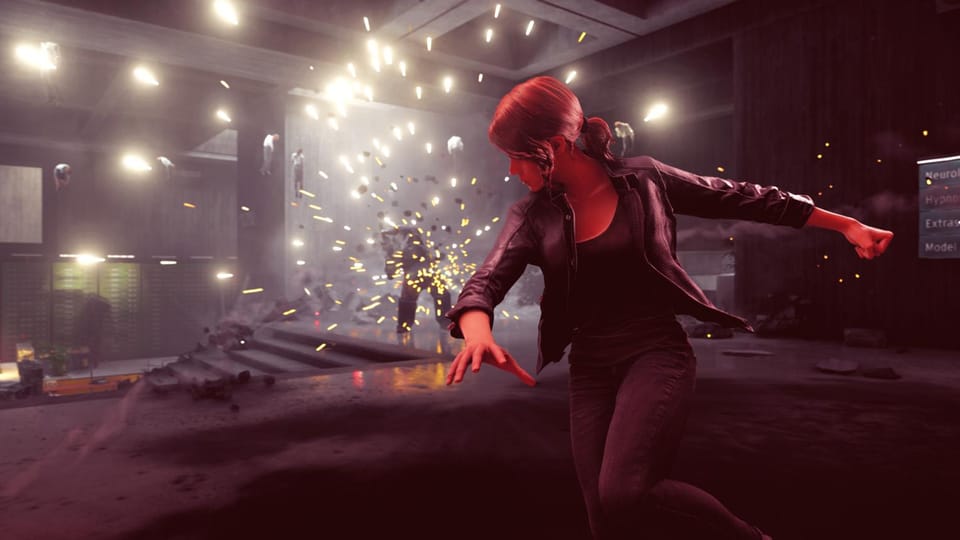
An application file named “DLSSNR” was found in the early-access build of NBA 2K27. Mod-tool developers subsequently brought it into Control, putting Nvidia’s unreleased DLSS 5 on a consumer graphics card ahead of its official debut. Skin, hair, shadows and transmitted light changed visibly. Frame rates also fell sharply.
Tom’s Hardware cited a developer test in which an RTX 5070 Ti fell from 71 frames per second to 35 at 4K after the feature was enabled. The internal rendering resolution, model setting and full configuration were not disclosed. Because the leaked file was injected into a game without native support, the result does not represent final performance.

Earlier versions of DLSS used super resolution and frame generation to improve performance. Super resolution reconstructs an image from a lower rendering resolution, while frame generation inserts new frames between rendered ones. DLSS 5 reads color and motion vectors, identifies materials such as skin, hair, fabric, metal and foliage, and recalculates how light interacts with them. The original geometry remains in place, but a neural network processes the pixels shown on screen.
When Nvidia unveiled DLSS 5 at GTC in March, the demonstration machine used two RTX 5090 cards, with one dedicated to the neural network. By SIGGRAPH in July, Nvidia had compressed the model to run on a single GPU. The RTX 5070 Ti test lowers the demonstrated hardware threshold again, although the near-halving of frame rate leaves considerable room for optimization.
Game publishers are interested in what the system could change during production. Developers may be able to reduce some individually authored material-lighting work, then use intensity, color and masking controls to decide where neural rendering appears. Bethesda, Capcom, Tencent, NetEase, Ubisoft and Warner Bros. Games are among the announced partners. Planned titles include Starfield, Hogwarts Legacy and Resident Evil Requiem.
Some players called the March demonstration a beauty filter for games. Their concern extends beyond faces: the model could smooth skin excessively or alter shadows, color and the original art direction of an older title. Nvidia provides controls for intensity, grading and masks, leaving the finished result in the hands of each development team.
DLSS 5 also gives the RTX 50 series a feature that is easy to demonstrate. Nvidia has not said whether RTX 40-series or earlier cards will be supported, and the quality settings available in launch titles remain unknown. If acceptable frame rates require top-end hardware, the technology may encourage upgrades without reaching a broad installed base. A smaller model that runs well on older cards would extend the reach of the DLSS ecosystem.
Nvidia still says only that DLSS 5 will arrive this fall. Once the company releases a driver and hardware support list, independent tests of frame rate, input latency and motion stability in native games will provide the first results suitable for a buying decision.
Sources: Nvidia’s March 16 DLSS 5 announcement and GTC demonstration; public information from SIGGRAPH 2026; Tom’s Hardware reporting on the unofficial late-August port; and hands-on accounts from Digital Foundry and TechSpot. Nvidia’s comparison images and publisher comments are company materials. The leaked build is not release software. Information checked through August 31, 2026.
You read this far. You're not here for noise.
SharpPost delivers one weekly deep dive on geopolitics, finance, and tech — decoded for readers who want signal. Carefully selected, never noisy.