Trump Puts New Russia Sanctions on Hold, Waives 500% Tariff
Trump put new Russia sanctions and a 500% tariff on hold under a waiver in the law he signed in September. Earlier sanctions remain in force.

President Donald Trump on Oct. 16 put new Russia sanctions on hold, including a 500% tariff on Russian goods, two days before some of the measures were due to take effect.
Sanctions imposed under earlier executive orders remain in force. The new waivers do not lift those restrictions on banks, businesses or transactions.
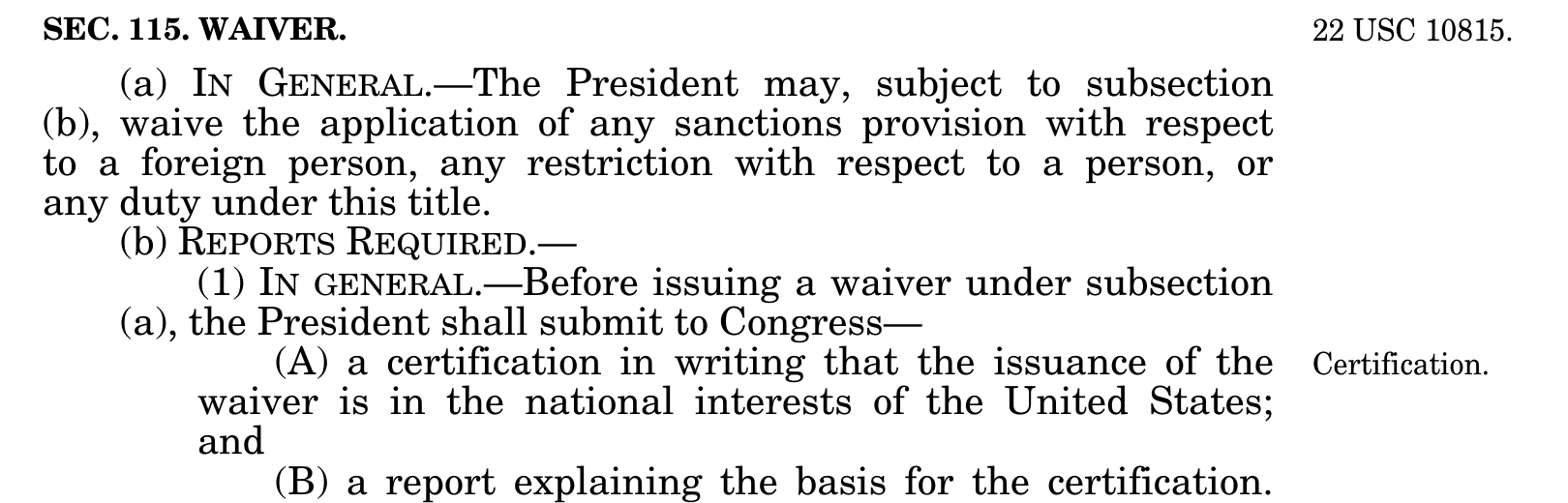
Trump signed the Lindsey O. Graham Sanctioning Russia and Iran Act of 2026 on Sept. 18. He used Section 115, which allows him to waive the law's Russia sanctions, restrictions and tariffs if he first certifies in writing to Congress that doing so serves U.S. national interests and submits a report explaining why.
To formally end the measures against Russia or Russian individuals and entities, Section 117 requires the president to certify that Russia has signed a peace agreement accepted by Ukraine's free and independent government. Russia must also have stopped military hostilities against Ukraine and efforts to overthrow, dismantle or subvert its government. Congress would normally have 30 days to review the decision before it could take effect, or 60 days in certain circumstances.
The waiver provision requires neither those peace conditions nor the same congressional waiting period. The order sets no expiration date for the waivers. They remain in place until the president or the secretary of state decides further action is needed; the secretary must consult the Treasury secretary and U.S. trade representative as appropriate.
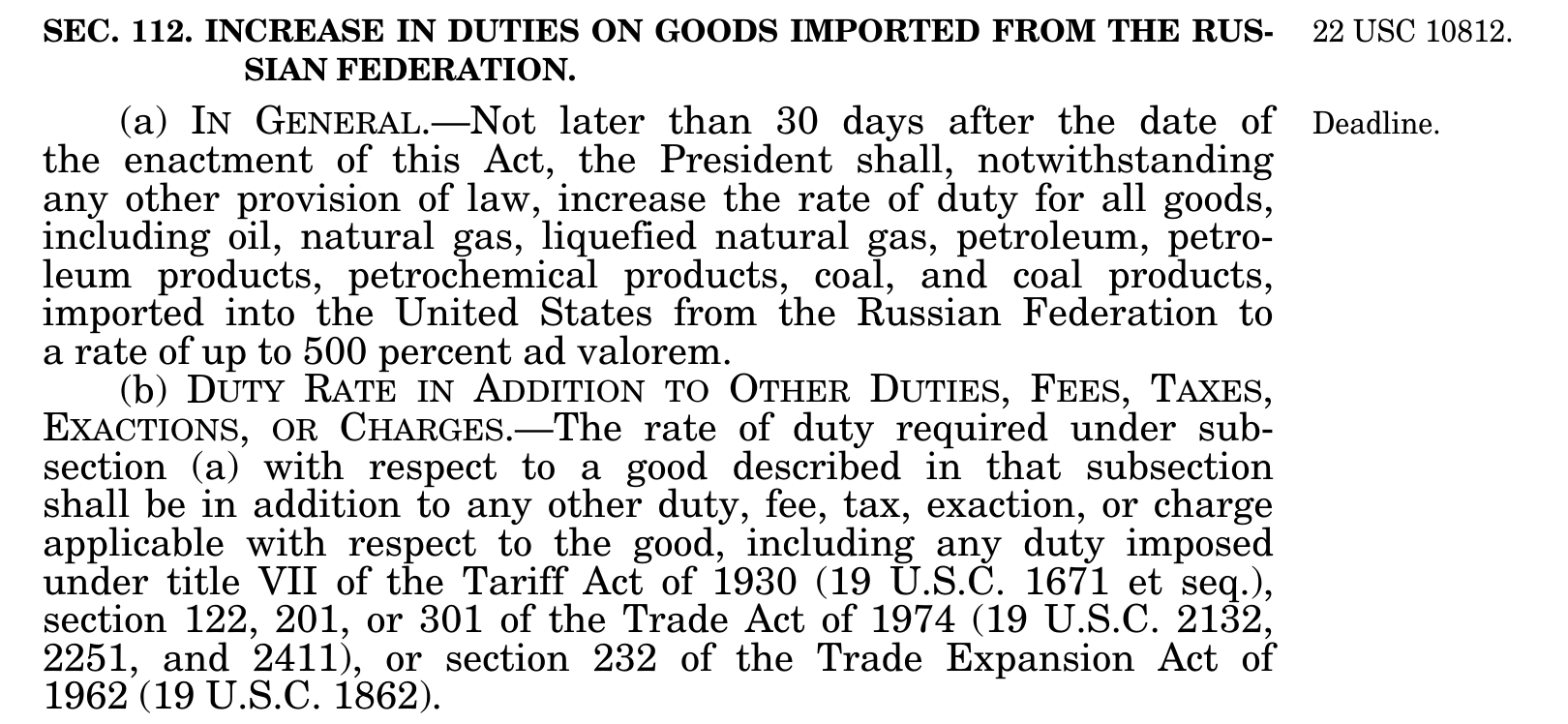
The law authorizes additional tariffs of up to 500% on Russian goods and up to 100% on goods from qualifying third countries, on top of other applicable duties and charges. Trump's order sets those rates and then waives them.
The 100% duty would cover countries that ranked among the five largest importers of Russian crude oil or natural gas by volume in the 12 months before the law was enacted, if they knowingly make new purchases on or after Oct. 18. It would also cover the five countries that did the most to facilitate evasion of Russian oil sanctions during that period.
The duties would apply to goods from those countries, not just oil or products from companies that buy it. The law makes exceptions for certain natural gas purchases and humanitarian activities, among others. The order identifies no countries in either group and grants no separate exemption to China or India. Existing U.S. tariffs on their goods are unaffected.
Trump also waived the law's sanctions on Russian financial institutions and restrictions on money transfers involving Russia. The waivers extend to bans on U.S. individuals and businesses investing in Russia or buying its sovereign debt, as well as measures covering energy, financial messaging services and uranium. Some provisions had already taken effect: the sovereign-debt purchase ban applied from Sept. 18, rather than Oct. 18.
Congress had also used Section 102(d) to require the government to keep certain existing sanctions in place. Trump waived that requirement but explicitly left the sanctions themselves intact.
The order also includes Section 117, the termination provision, in its list of waivers for sanctions and restrictions on individuals and entities. It does not explain how that waiver would affect future decisions to lift sanctions.
The U.S. trade representative must keep tracking purchases of Russian oil and gas and efforts to evade sanctions, and tell the president about developments that could justify revising the waivers.
The White House says the required certifications and reports have been sent to Congress. SharpPost has not obtained the reports, and the order gives no detailed explanation for the waivers. Under Section 115(b)(3), the reports must be submitted in unclassified form, though they may include classified annexes.
You read this far. You're not here for noise.
SharpPost delivers one weekly deep dive on geopolitics, finance, and tech — decoded for readers who want signal. Carefully selected, never noisy.