US jury convicts Huawei of trade secret conspiracy and Iran sanctions violations
A Brooklyn federal jury convicted Huawei on 10 of 12 counts, including trade secret conspiracy, bank fraud and Iran sanctions violations, and acquitted it of racketeering and obstruction conspiracies. Three subsidiaries were each convicted on two counts. Sentencing is set for Sept. 14, 2027.

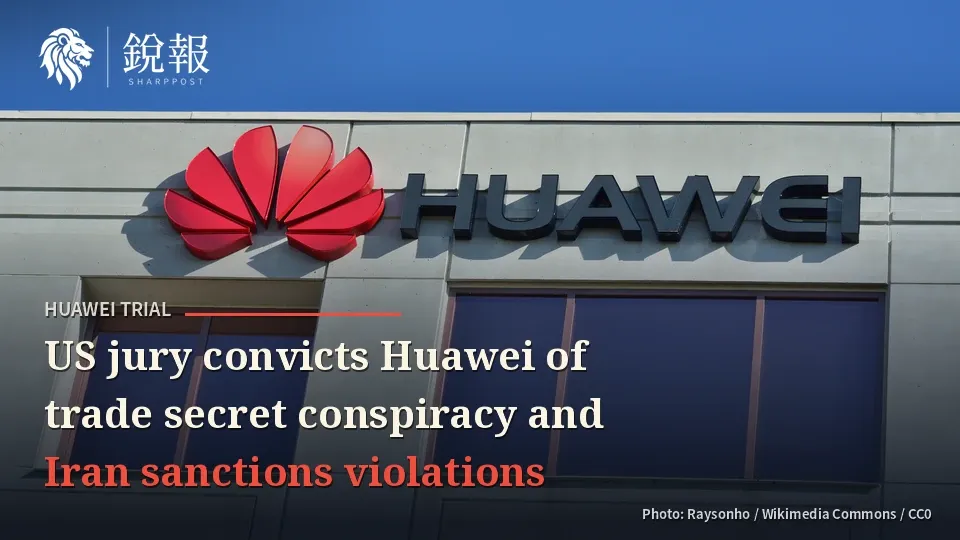

A federal jury in Brooklyn on Nov. 24, New York time, convicted Huawei Technologies Co. on 10 counts, including conspiring to steal trade secrets from US companies, defrauding banks and violating US sanctions on Iran, and acquitted it of racketeering conspiracy and conspiracy to obstruct justice. Three subsidiaries tried alongside it, Huawei Device Co., Futurewei Technologies and Huawei Device USA, were each convicted of conspiring to steal trade secrets and conspiring to commit wire fraud.
US District Judge Ann M. Donnelly, who will decide the penalties, has set sentencing for Sept. 14, 2027. The Justice Department said the companies face financial penalties including criminal fines, forfeiture and restitution. No individual was on trial. "We fully expect to appeal," Huawei lawyer Brian Heberlig told reporters.
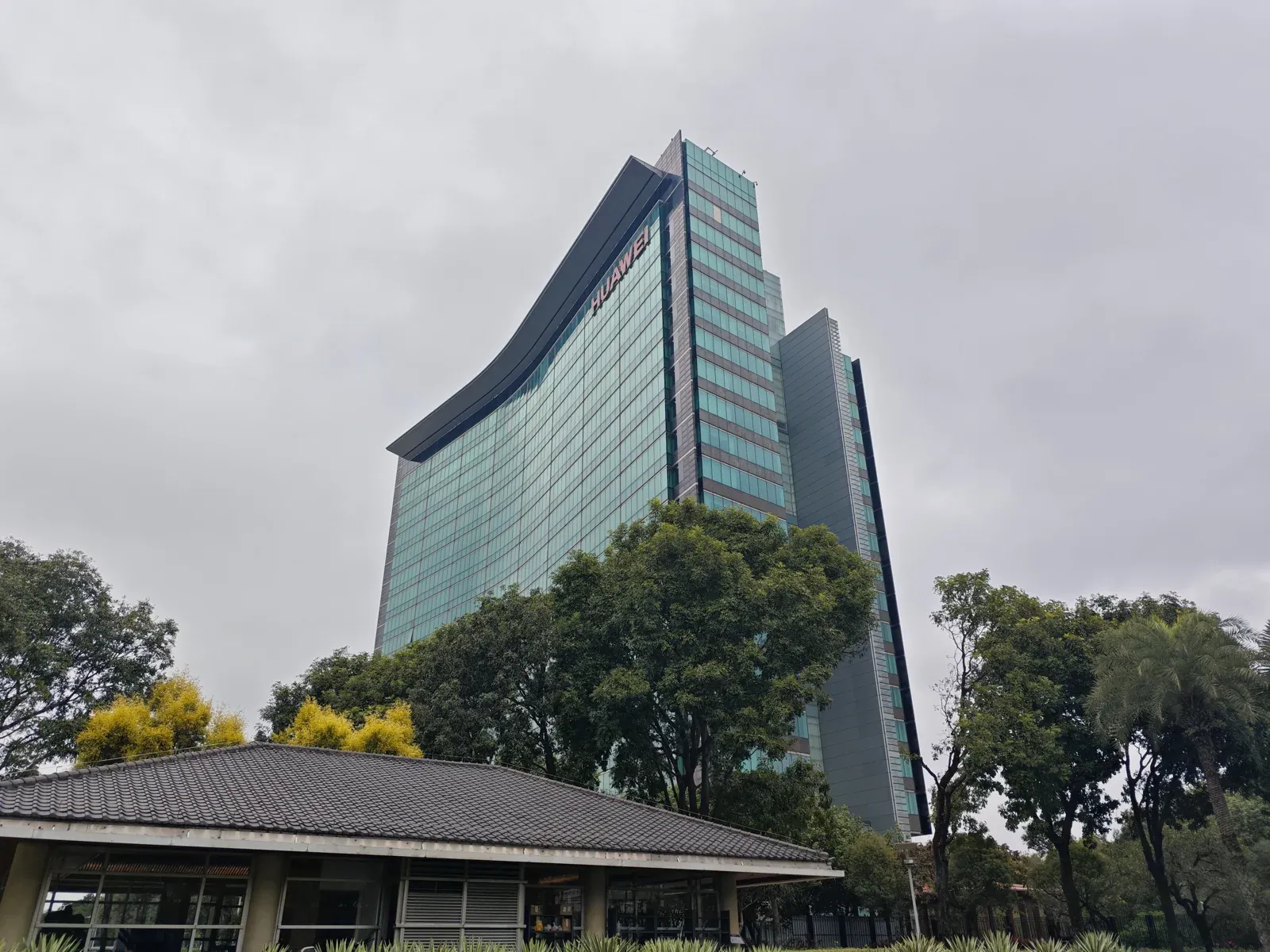
The count-by-count verdict
Jurors acquitted Huawei Technologies, Futurewei and Huawei Device USA on Count One, according to the verdict sheet released by the court. That count, brought under the Racketeer Influenced and Corrupt Organizations Act, or RICO, a law often used against organized crime, accused the three of running a "Huawei Enterprise" with income from crimes such as trade secret theft, fraud and money laundering. Huawei Technologies and Huawei Device USA were also acquitted on Count Twelve, which accused them of conspiring between 2017 and 2019 to obstruct an investigation by a federal grand jury, the panel that decides whether to bring charges, in the Eastern District of New York.
All four companies were convicted on Count Two, conspiracy to steal trade secrets, and Count Three, conspiracy to commit wire fraud. Wire fraud is fraud carried out through interstate or international communications such as phone calls, emails or wire transfers; Count Three accused the defendants of conspiring from 2009 to 2020 to obtain money and property from US companies by deception. Huawei Technologies was convicted on all of Counts Four through Eleven, which named it alone. They covered bank fraud, wire fraud and related conspiracies aimed at banks including HSBC, Standard Chartered and BNP Paribas; conspiracy to defraud the United States by obstructing the Treasury Department's sanctions office; conspiracy to violate and violation of the International Emergency Economic Powers Act (IEEPA), the law underpinning US sanctions on Iran, by causing banking and other financial services to be exported from the United States to Iran without a Treasury license; and money laundering conspiracy.
The case and the trial
The case was filed in Brooklyn federal court in 2018. That December, Huawei's chief financial officer, Meng Wanzhou, was detained in Canada. In September 2021 she entered a deferred prosecution agreement with the Justice Department, under which prosecutors held off on pursuing the charges as long as she kept to its terms. She did not plead guilty, but admitted in an attached statement of facts that she had misled a senior HSBC executive about Huawei's business in Iran. She returned to China, and the charges against her were later dropped. Meng was not a defendant at this trial and did not testify.
The trial began in September, shortly after prosecutors dropped two sanctions counts, leaving 12. Prosecutors called more than 60 witnesses and the defense 15, according to Reuters.
According to the Justice Department's announcement on the day of the verdict, prosecutors argued at trial that Huawei had operated in Iran through an entity called Skycom, helped Iran's government build out an internet backbone and helped it monitor and censor users' internet access, and lied about that business to banks, journalists and the US government, in part to obtain billions of dollars in credit and access to US dollar clearing, the processing of dollar payments through US banks. On trade secrets, the department cited T-Mobile's touch-screen testing robot, Tappy, source code from Cisco routers, and technology belonging to US companies CNEX and Quintel.
The HSBC witness, Meng's statement of facts and closing arguments
On June 16, Donnelly ruled that prosecutors could use Meng's statement of facts at trial. According to Reuters, she found that Meng was, and still is, Huawei Technologies' chief financial officer, that the statement concerned her conduct in her job and that the company had adopted it, so Huawei could not object that its use violated the company's rights.
On Sept. 30, Alan Thomas, the former HSBC executive who met Meng in Hong Kong in 2013, testified. He told jurors that after Meng's assurances at the meeting he thought Huawei's business in Iran was aboveboard, Law360 reported. On Oct. 7, Leigh Ann Sweeney, a former FBI agent who worked on the investigation in 2017, read the statement of facts to the jury, according to MLex.
According to the statement of facts, Huawei controlled Skycom, and Meng's statements to the bank's executive in August 2013 that Skycom was merely a Huawei business partner, that Huawei had sold its Skycom shares and that Huawei complied strictly with sanctions in Iran were untrue; the shares had in fact gone to another company Huawei controlled. The statement says Meng knew at the time that the first two claims were untrue. From 2010 to 2014, it says, Huawei caused Skycom to conduct about $100 million in US-dollar transactions through the bank that cleared through the United States.
In her closing argument on Nov. 16, Assistant US Attorney Meredith Arfa told jurors that Meng had admitted that she, meaning Huawei, repeatedly lied to HSBC, and called that indisputable evidence of a conspiracy to defraud Huawei's banks. Courthouse News Service described the agreement as being at the heart of the charge that Huawei deceived its banks. In his closing argument on Nov. 17, Heberlig countered that the banks were well aware of Huawei's work in Iran and its relationship with Skycom. He asked jurors to read the agreement's language closely, arguing that Meng learned during the government's investigation that her statements to HSBC were misrepresentations but did not know it at the time, and said the agreement was no shortcut to a guilty verdict. He also accused prosecutors of cherry-picking a handful of disparate incidents to support their claim of a 20-year conspiracy, Reuters reported, and said much of the material allegedly stolen was already public, according to the Associated Press.
The judge instructed the jury on the law on Nov. 18, and deliberations began that day. The verdict came on Nov. 24.
Reactions and next steps
After the verdict, Heberlig said Huawei was disappointed by the convictions but that the racketeering acquittal vindicated its "good-faith compliance culture." Asked how much the company might have to pay, he said it was premature to comment, but that the acquittal could make a significant difference. At 6:40 a.m. Singapore time on Nov. 25 (5:40 p.m. on Nov. 24 in Washington), the Justice Department posted on X that Huawei and several of its subsidiaries had been convicted of offenses including sanctions violations, fraud, conspiracy to steal trade secrets and money laundering. Under the verdict sheet, the three subsidiaries were convicted only of conspiring to steal trade secrets and conspiring to commit wire fraud. The US Mission to China reposted the message in Chinese on X at 3:30 p.m. Beijing time.
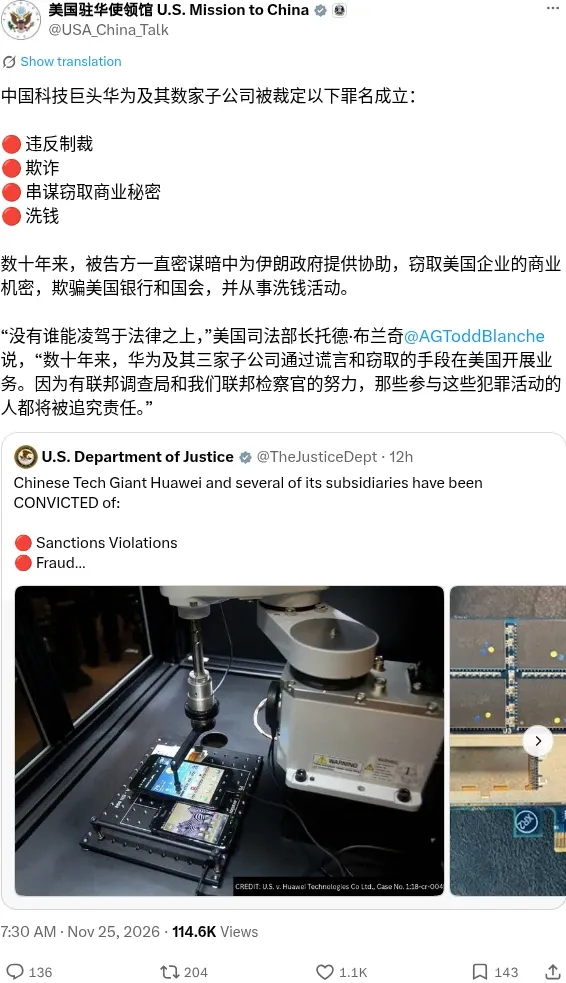
In a statement dated Nov. 25 in Shenzhen, Huawei welcomed the RICO acquittal and said the remaining charges also lacked legal or factual merit. The five trade secret disputes cited by prosecutors were civil matters resolved over the past two decades, it said, and no court had found Huawei liable for willful misappropriation or ordered it to pay damages. The company said it would review the verdicts and take all necessary legal action. In Beijing the same day, Chinese foreign ministry spokesperson Guo Jiakun said at a regular briefing that China firmly opposed US suppression and containment of Chinese companies and firmly supported them in protecting their legitimate rights, Reuters reported.
At sentencing next September, Huawei could be made to pay billions of dollars in penalties, according to the AP. The defense twice asked the judge to enter judgments of acquittal under Rule 29 of the Federal Rules of Criminal Procedure, on Oct. 28 and Nov. 16, after the government rested; she has not yet ruled. Before sentencing, the defense can also seek to set aside the guilty verdicts or request a new trial.
You read this far. You're not here for noise.
SharpPost delivers one weekly deep dive on geopolitics, finance, and tech — decoded for readers who want signal. Carefully selected, never noisy.