Former Samsung Engineer Testifies About CXMT's Early Recruitment Drive
Court testimony offers new details about recruitment, 600 copied DRAM process steps and noncompete arrangements in the Samsung–CXMT technology leak case.

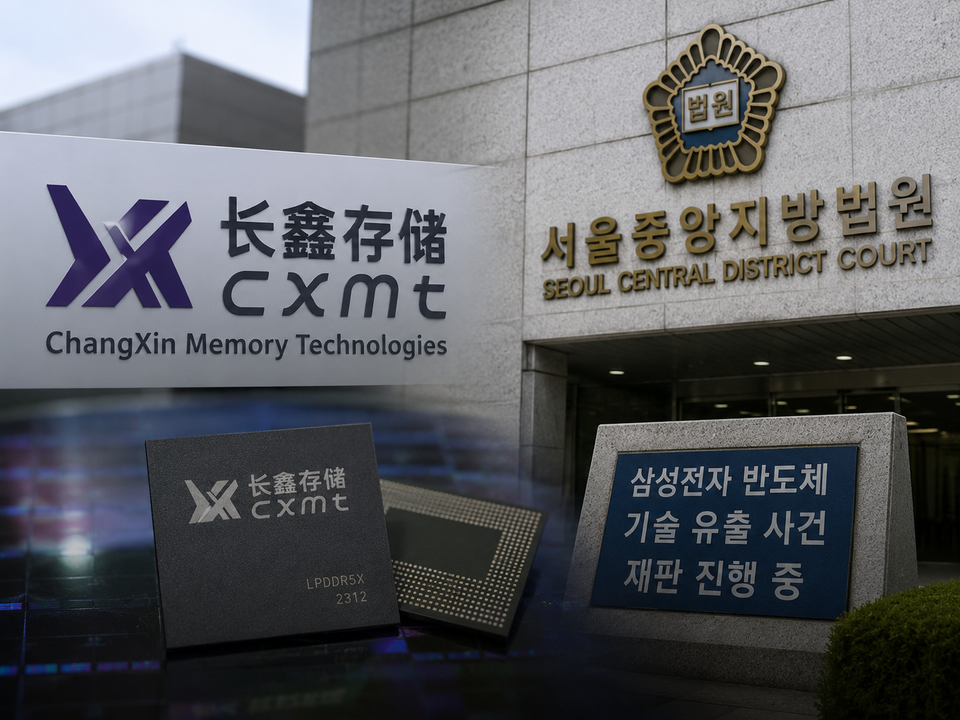
Jeon, a former employee of both Samsung Electronics and ChangXin Memory Technologies, told the Seoul Central District Court on August 25 that an engineer identified as Park had been seen working at CXMT a month before the start date on his employment certificate. The document listed October 26, 2016, but Jeon said Park was already at the company in September. Korean prosecutors allege that Park removed Samsung's 18-nanometer DRAM process information that same month.
Jeon said CXMT's Korean team classified engineers still working in South Korea's semiconductor industry as “A-grade” recruits. A candidate's résumé would be requested and translated into Chinese after a recommendation to the hiring decision-maker. Jeon testified that few people would have opposed hiring a PhD-level engineer such as Park, who had Samsung 18-nanometer and process-integration experience.

According to the prosecution's account, Park spent four days copying Samsung's 18-nanometer DRAM Process Recipe Plan into a company-issued notebook. The 12 handwritten pages covered roughly 600 manufacturing steps, including equipment and process conditions. Investigators later identified Park through handwriting analysis. Korean media report that he is now the subject of an Interpol Red Notice.
CXMT hired another former Samsung executive in 2018 to lead a second development phase. Prosecutors say the team adapted the process information to local equipment, materials and operating conditions. Materials submitted by the prosecution put the similarity between the two sets of process information at 98.2%, up from 56.7%. The court has yet to rule on that evidence.
Prosecutors said recruits were offered two to four times their previous Samsung salaries, with compensation for a development chief reaching 3 billion won. Some recruits were first placed at what prosecutors described as a nominal fertilizer company before moving to CXMT after their noncompete periods expired. Team members were also told to assume that South Korea's National Intelligence Service was nearby and to send four heart symbols if they were detained or barred from leaving the country.
At an earlier hearing on August 11, Jeon testified that CXMT had no research institute or manufacturing facilities when it was established in 2016, but management was already preparing to obtain Samsung process information for DRAM development. Prosecutors estimate that Samsung spent five years and 1.6 trillion won developing the 18-nanometer process. The court has not determined whether CXMT management joined such a plan at the company's inception.
Jeon also said he did not know whether other members of the Korean team believed Park had copied the material from Samsung or reconstructed it from memory. His testimony did not establish that every recipient knew the source was illicit.
In a separate case, the Seoul Central District Court sentenced Jeon to seven years in prison in April. The first-instance court found that the PRP qualified as national core technology under Korean law and that Jeon conspired to acquire and use it unlawfully. Prosecutors have indicted ten people who worked on CXMT development, but CXMT itself has not been convicted in this proceeding.
The Suwon High Court dealt with another memory-chip case in May 2025. A Chinese former SK hynix employee had printed about 4,000 pages of semiconductor troubleshooting material before moving to Huawei in 2022. The appeals court sentenced the former employee to five years in prison and imposed a 30 million won fine, increasing the original 18-month sentence.
South Korea's Supreme Court in 2023 upheld convictions in a Samsung Display technology case. Former executives and employees of equipment maker Toptec transferred specifications and drawings for Samsung's curved-screen lamination process to a separate company, sold some of the documents to two Chinese firms and built production equipment from the drawings. The former chief executive received three years in prison, two executives received two years each, and the company was fined 100 million won.
The SK hynix case has an appellate ruling and the Toptec case is final. Proceedings linked to CXMT remain unresolved. The Seoul court must still decide whether Jeon's account is supported by employment records, communications and process documents.
Sources: Public reporting on proceedings at the Seoul Central District Court, South Korean prosecution disclosures, SBS, The Korea Economic Daily, Seoul Economic Daily and Yonhap News Agency. Allegations concerning Park's handwritten notes, CXMT recruitment and process-data similarity are attributed to prosecutors or witness testimony. The first-instance judgment applies only to the defendant tried in that case and does not constitute a conviction of CXMT. Information reviewed through August 26, 2026.
You read this far. You're not here for noise.
SharpPost delivers one weekly deep dive on geopolitics, finance, and tech — decoded for readers who want signal. Carefully selected, never noisy.