Global Times demands BBC apology over Shenzhen report, citing 'underworld filter'
On the evening of 23 November, Beijing time, the Global Times demanded that the BBC apologize to Shenzhen residents over Laura Bicker's APEC-eve dispatch, citing an 'underworld filter.' As of 05:22 Singapore time on 27 November, the Chinese YouTube video had 1,303,373 plays.

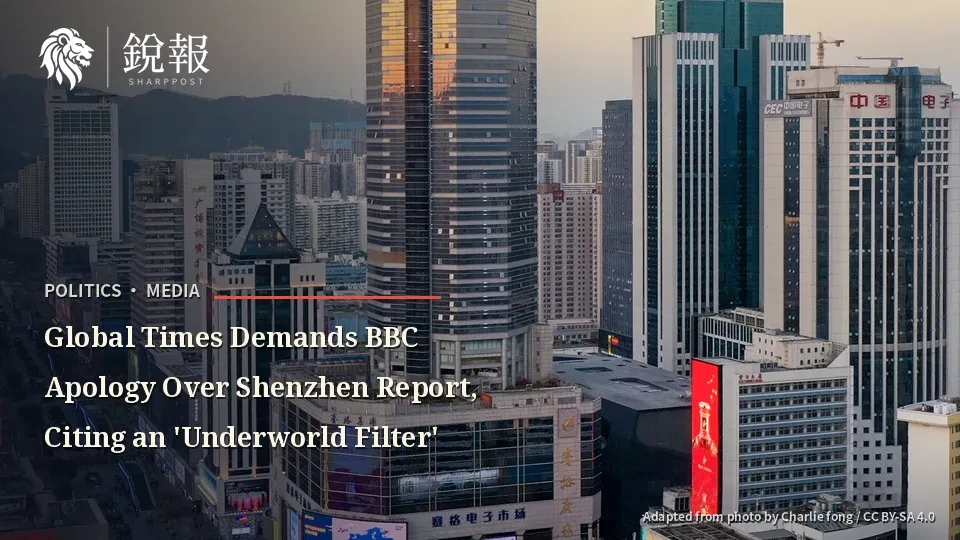

On the evening of 23 November, Beijing time, the state-run Global Times published a commentary demanding that the BBC "apologize to the Shenzhen residents who have been offended." The piece took aim at a dispatch by the BBC's China correspondent, Laura Bicker, filed just before leaders gathered in Shenzhen for the Asia-Pacific Economic Cooperation (APEC) meetings. It said ordinary people's lives had been made "dark and eerie" under what it called an "underworld filter" (阴间滤镜), Chinese internet slang for footage graded to look grim and ghostly, and accused the BBC of selective editing.
Bicker's English article, "China is hosting the world's leaders in its AI wonderland. Here's what they won't see," went online at 07:07 Singapore time on 17 November. The Chinese-language version was published at 13:49 Singapore time the same day. Alongside the text was a news video of 9 minutes and 11 seconds, released in Chinese as "Shenzhen APEC: the two worlds behind an 'AI wonderland'." The APEC leaders' meetings were held in the city on 18 and 19 November. As of 05:22 Singapore time on 27 November, the Chinese-language video on the BBC News Chinese YouTube channel had been played 1,303,373 times, and the English version on BBC News 605,681 times.
How common is what the BBC filmed, and how many people does it involve?
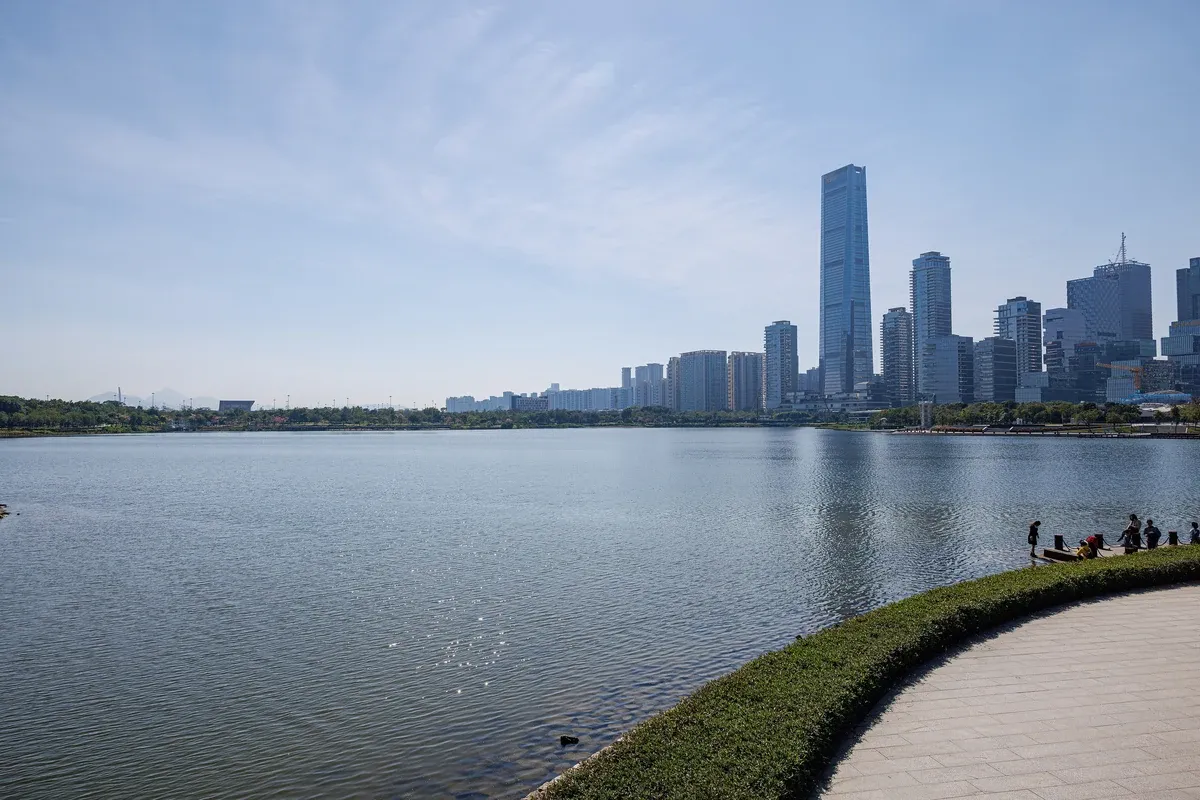
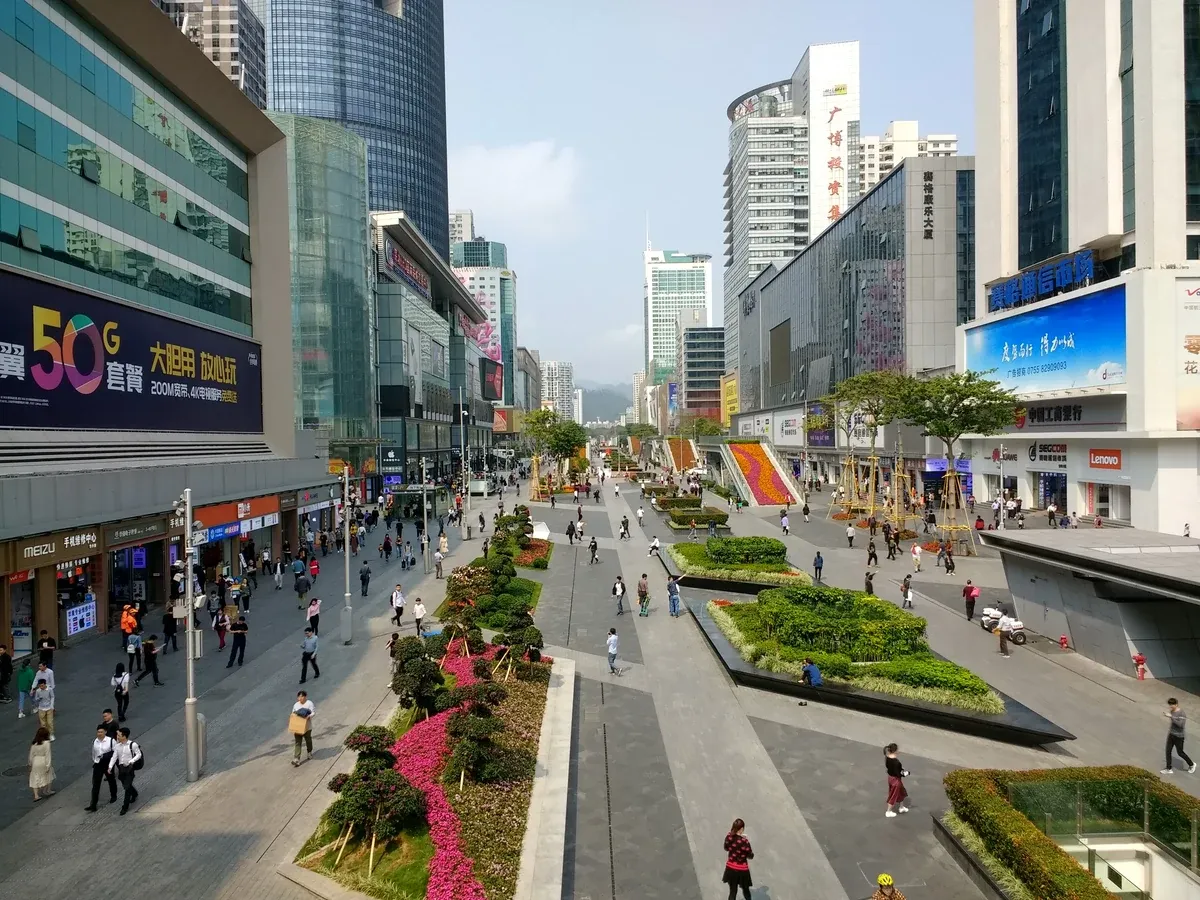
BBC reporters spent several days in Shenzhen. At DexForce Technologies, a humanoid-robot company, 27-year-old engineer Huang Shihua says he and his peers have created "a miracle in Shenzhen." In a purpose-built waterfront "talent park," drones deliver meals to a dedicated platform, though such deliveries are available only in certain places and stop at 20:00 local time, while driverless taxis must be booked through a separate app. Leaving those scenes behind, the camera moves to Shajing and Songgang, once a source of much of the world's electronics, and to the lunchtime rush outside SEG Plaza, where a new layer of gig work has appeared.
Outside SEG Plaza, 50-year-old Ms Lu used to sell circuit boards on the second floor. She told the BBC that business had become harder and rents had risen. She now carries food from the entrance up to office floors for 2 yuan a drop, paid by delivery drivers who themselves earn 4 to 8 yuan an order. "But the market is bad. These days I only earn around 200 yuan per day." A delivery driver in his 40s, who declined to be named, said Shenzhen was "not a magic place" and that the days when people spoke of gold everywhere were gone. Mr Wu, 58, a construction worker who came from Sichuan in the 1990s, said his pay "dropped by at least a third" after Covid; the BBC adds that wages never fully recovered. A taxi driver told the BBC his home was now "only worth a third of its original price." A restaurant owner said business was "down by more than 70%" because workers were hesitant to splurge on dinner. The BBC wrote that everyone it spoke to had come from elsewhere, often labouring up to 14 hours a day and living in shared dormitories.
The BBC wrote that about 200 million Chinese workers, roughly 40% of the urban labour force, "now depend on some form of gig work," without citing a source for the figure.
Chinese official documents use a different term, "flexible employment" (灵活就业): work in which hours, pay, workplace or the employment relationship are less fixed than in a traditional job at a work unit, covering more than food delivery or ride-hailing and including self-employment and freelance work. In a report delivered to the National People's Congress Standing Committee on 22 December 2025, Wu Xiuzhang, a vice-minister of human resources and social security, said official estimates put China's flexible-employment workforce at more than 200 million, adding that their numbers were still rising quickly and that unstable incomes and weak labour protection "still exist to a certain extent." On 28 August 2026, the National Bureau of Statistics' population and employment department told a member of the public that the bureau "has not published statistics on the number of people in flexible employment." Set against the 475.35 million urban workers recorded at the end of 2025 in the bureau's 2025 statistical communiqué, more than 200 million comes to a little over 40%.
When the count is limited to people who take jobs through internet platforms, official documents usually speak of "new forms of employment" or the "new employment group" (新就业形态 / 新就业群体), including food-delivery riders, couriers, ride-hailing drivers and truckers. In a January 2025 People's Daily interview, Zhao Shitang of the Central Social Work Department put that group at about 84 million, including about 12 million registered platform delivery workers; the same month, Xinhua and the ministry's China Employment site put food-delivery riders at more than 10 million. Separately, the statistics bureau's 2025 migrant worker survey counted 301.15 million rural migrant workers — people whose household registration remains rural and who spent at least six months in local non-farm work or work away from home — including 180.06 million working away from home, with average monthly pay of 5,075 yuan overall and 5,774 yuan for those working away. On social insurance, Wu's report said 70.57 million people in flexible employment were enrolled in the urban employees' basic pension scheme and 66.159 million in basic medical insurance as of the end of 2024, a share it described as "not high."
For Shenzhen's housing market as a whole, the statistics bureau's 70-city survey showed that in October 2026, Shenzhen's secondary-home prices were down 0.5% from a year earlier and up 0.1% from the previous month.
Why official media denounced an 'underworld filter'
After the Global Times commentary appeared on 23 November, the Beijing Daily website reprinted it; that night the Global Times posted a follow-up by its own correspondent through its account on The Paper's platform, citing an X user who joked that the BBC had "left its grey filter in London"; China Daily's new-media unit released a video commentary. As of 05:22 Singapore time on 27 November, the foreign ministry's regular briefings had not named the report, and no public comment from the Shenzhen municipal government had been found.
The Global Times commentary said that while "leaders and public opinion from many countries were praising Shenzhen's development," the BBC had used "what they will not see" as a hook and, "through malicious cutting and an 'underworld filter,' pieced together a false picture set in advance." That approach, it said, "not only offended Shenzhen residents but also offended the BBC's global readers. The BBC should apologize for this." The article also recalled an earlier case in which the BBC's Panorama programme spliced remarks by U.S. President Donald Trump and later apologized, and argued that on China-related stories there had been "no apology to be seen." The problem, it said, was no longer just double standards or bias but "naked racism." A China Daily new-media commentary on 23 November placed the package in a familiar "but at what cost?" narrative.
In early 2021, the phrase "underworld filter" entered Chinese online debate to criticize the BBC's footage of Wuhan as too dark in tone, and has since been used to accuse Western outlets of gloomy color grading in their China coverage. This time, the Global Times also argued that in the BBC's eyes, any Chinese achievement had to come with a "cost" or a "hidden danger," noting that China was using Shenzhen to show off its technology while the BBC's headline pointed readers to "what they will not see."
Voices on the Chinese internet that diverged from the official line
On 26 November, a self-media account on NetEase's user-publishing platform compiled several Weibo comments: one read, "I am a Shenzhen resident, I don't need an apology"; others said the material was "too real" to attack, leaving critics to "only talk about the filter," or called the report fairly neutral, with both praise and criticism. In the author's own summary rather than a quoted comment, some members of the public were wary of foreign outlets using "real fragments" of daily life to package bias. The post also said many users had not paid attention to the BBC package until the Global Times article appeared, and only then went to watch the original video.
In the early hours of 24 November, Singapore time, an X account named Reporter Xiaowu posted the 9-minute-11-second video and asked whether the BBC really needed to apologize to Shenzhen residents; as of 05:22 Singapore time on 27 November, the post had drawn about 870,000 views. The same day, "Teacher Li Is Not Your Teacher" shared related clips, reaching about 820,000 views by then. Another account, Wang Ju's Case Files, wrote that many viewers who watched the original saw it as filming ordinary people's daily lives. By then, the BBC News Chinese YouTube video had 5,100 comments, mixing criticism of the filter and the report's stance with comments that the footage felt close to everyday life.
A 25 November item in the Taiwan magazine Mirror Media's "China on WeChat" column said some users wanted the full original film released, and that the BBC report and video had been "quickly deleted from China's major media platforms." As of 05:22 Singapore time on 27 November, no statement on the matter from the major platforms had been found.
You read this far. You're not here for noise.
SharpPost delivers one weekly deep dive on geopolitics, finance, and tech — decoded for readers who want signal. Carefully selected, never noisy.