Fourteen Days in Islamabad: The Game-Theory Matrix Behind the US-Iran Ceasefire
On 7 April 2026, Washington and Tehran agreed to a fourteen-day ceasefire. SharpPost maps the five-player matrix behind the pause and projects three branching paths for the next six months.
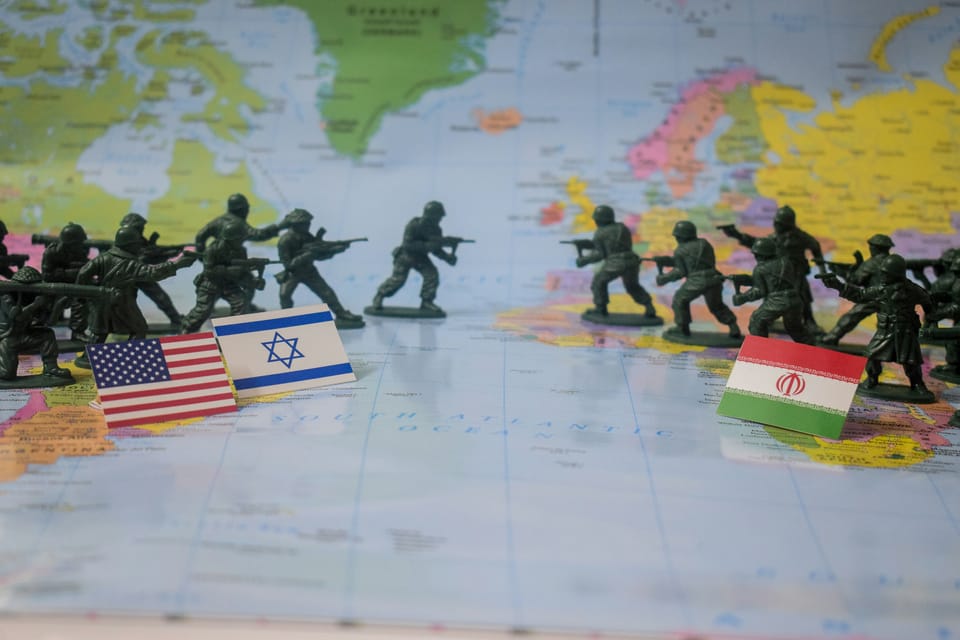
On the night of 7 April 2026, Washington and Tehran agreed to a fourteen-day ceasefire brokered by Islamabad. Iran committed to restoring safe passage through the Strait of Hormuz for the duration; President Donald Trump suspended large-scale strikes. Both delegations will convene in Pakistan on 10 April, with Vice President JD Vance leading the American side and Foreign Minister Abbas Araghchi fronting Iran's. Thirty-nine days into a war that began on 28 February with a joint US-Israeli campaign, this is the first clear diplomatic window — and the first direct contact between the Islamic Republic and Washington since the death of Supreme Leader Ali Khamenei and the hasty succession of his son Mojtaba.
A Ceasefire in Name, a Breathing Spell in Substance
Two weeks is neither an accident nor a concession. It is short enough to let Trump brandish the stick again, and long enough for Iran's new leadership to consolidate internally and assess the damage to its nuclear facilities. Hours after the announcement, Trump publicly reiterated that "no enrichment" would be tolerated inside Iran and vowed to "dig out the nuclear dust." Iran's ten-point proposal, tabled ahead of the Islamabad talks, demands the withdrawal of US forces from the Middle East, the lifting of all sanctions, war reparations, and sovereign control of Hormuz. The two lists barely overlap. The pause, then, is less a prelude to peace than diplomacy dressed as a tactical timeout.
The Five-Player Matrix
A game-theoretic reading makes clear that this is not a two-player duel but a five-sided matrix: Washington, Tehran, Tel Aviv, the Gulf Arab states, and — standing at a distance — Beijing and Moscow. Each actor's payoff function is distinct and mutually corrosive. Washington's priority is to dismantle the nuclear threshold, keep Hormuz open, and avoid a ground war. Tehran's survival calculus is to preserve Mojtaba's legitimacy, retain latent nuclear capability, and extract partial sanctions relief. Israel, the most hawkish at the table, seeks a military end-state; Netanyahu has already made clear that the ceasefire does not extend to Lebanon, where Israeli operations against Hezbollah continue. The Gulf monarchies, led by Riyadh, want energy lanes restored and regional order re-anchored — yet resist an unchecked Israel. Beijing and Moscow prefer the Iranian regime alive as a counterweight to American power, though China has publicly rebuked Tehran for its earlier closure of the strait.
| Actor | Primary Objective | Red Line | Internal Constraint |
|---|---|---|---|
| United States | Dismantle nuclear threshold · keep Hormuz open | No withdrawal from Mideast | Domestic oil-price pressure |
| Iran | Preserve Mojtaba's legitimacy | Retain enrichment latency | Factional consolidation incomplete |
| Israel | Military-led end-state | No Lebanon ceasefire | Netanyahu's political survival |
| Gulf Arabs | Restore energy lanes | No unchecked Israel | Saudi-Iran détente unravelling |
| China / Russia | Iranian regime survival | No war endorsement | No tolerance for chaos |
A Structure Without Equilibrium
The core instability of this matrix is the absence of a stable equilibrium. Direct US-Iran negotiating room is compressed into fourteen days. Israeli strikes in Lebanon continue at dozens of sorties per day — more than 1,530 Lebanese, including 130 children, have been killed since 2 March. The Houthis confine themselves to rhetoric, but that owes more to depleted capability than to political restraint. Brent crude surged past $100 on 8 March and peaked at $126; Dubai crude briefly touched $166, marking the deepest supply shock since the 1970s. Any disturbance prices itself in within hours. In other words, the ceasefire does not resolve the structural contradiction — it merely postpones its detonation by fourteen days.
Three Branching Paths Over Six Months
SharpPost models the next six months along three branching paths. Path one, at roughly 35 percent: Islamabad produces a framework deal trading Hormuz access for partial sanctions relief, with the nuclear file frozen but not rolled back. Trump repackages this as victory at home; Iran preserves a covert enrichment track. Path two, at roughly 45 percent and the most likely outcome: talks lapse into low-intensity attrition, the two-week window rolls over indefinitely, and limited military actions continue at the periphery, with oil oscillating in a $90–$120 band. Path three, at 20 percent: the ceasefire collapses within sixty days, triggered by Israel's Lebanon campaign spilling over, intelligence discovery of Iranian covert enrichment, or a hardline gambit by Mojtaba to consolidate power. Conflict resumes and risks escalation toward a Gulf ground war.
| Scenario | Probability | Key Features | Trigger Conditions |
|---|---|---|---|
| Framework Freeze | 35% | Signed but not rolled back · covert enrichment | Mojtaba stabilises factions |
| Low-Intensity Attrition | 45% | Rolling extensions · oil $90–$120 | No decisive upside for any actor |
| Ceasefire Collapse | 20% | Reignition within 60 days · Gulf ground escalation | Lebanon spillover / covert enrichment exposed |
Three Structural Nodes
The variables that decide which branch prevails sit not on the negotiating table but at three structural nodes. First, whether Mojtaba Khamenei can stabilise his legitimacy before the forty-day mourning period expires; any factional rupture between hardliners and reformists inside Tehran will directly determine Iran's ability to honour the deal. Second, whether Netanyahu's government can be pressured into contracting its Lebanon front, which will in turn determine whether Hezbollah is forced to escalate. Third, Beijing's posture on Hormuz. In early March China uncharacteristically criticised Iran's closure of the strait while continuing to import Iranian crude — a hedged stance of "no rupture with Tehran, no tolerance for chaos" that will weigh more heavily on Iranian compliance than any Western ultimatum. Reverse any one of these three, and the equilibrium breaks.
Fourteen Days From Now
Is fourteen days peace, or delay? The answer is written on each side's cards. Trump needs a declarable victory to offset the domestic cost of the oil shock. Mojtaba needs a non-loss to cement his fragile throne. Israel needs a grey zone in which to finish the Hezbollah campaign. Beijing and Moscow need only the Iranian regime's survival. Four objectives nested and cancelling. Any attainable equilibrium will be fragile, short, and conditional. SharpPost's judgement is this: Islamabad will likely produce a signable framework document, but that document will not prevent the next round of fire. The true meaning of the ceasefire is not to end the conflict but to move it from the overt into the semi-overt, from total confrontation into targeted attrition. What remains unknown is only the timetable. What is known: fourteen days from now, the Middle East will not return to the world of February 2026.
读到这里,说明你关注真正重要的事
锐报每周深度分析直送邮箱——财经、地缘、科技,穿透表象。零广告,零废话。