Taiwan's GDP Per Capita Surpasses Japan and South Korea: The Code Behind a Semiconductor Island's Rise
In 2025, Taiwan's GDP per capita reached $39,477—overtaking both Japan and South Korea for the first time in 22 years. How did a resource-poor island under constant military threat build an economy that the world's AI industry cannot function without?
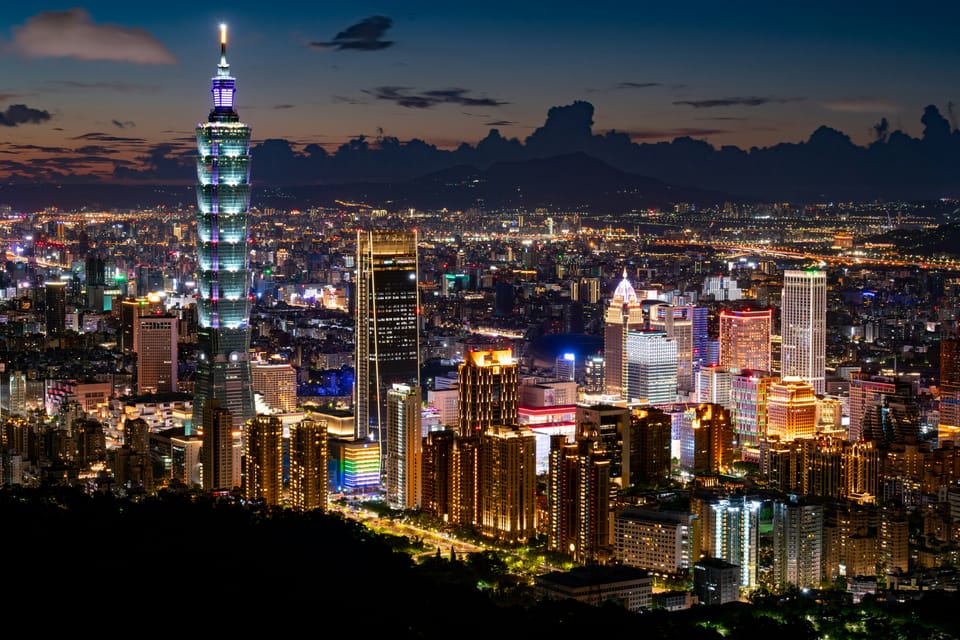
$39,477. That is Taiwan's GDP per capita in 2025, according to the International Monetary Fund—higher than Japan's $34,720, higher than South Korea's $35,960. For the first time in 22 years, this island of 23 million people has overtaken both of its East Asian neighbors on the metric that best approximates individual prosperity. In the same year, Taiwan's economy expanded 8.63%, a fifteen-year high, with technology exports surging nearly 35%. An island smaller than Hainan delivered these numbers during a year of intensifying trade friction and elevated geopolitical risk.
The numbers themselves are not the mystery. The mystery is the structure behind them—how an economy with no natural resources, no strategic depth, and a persistent military threat on its doorstep arrived at this point. Four threads weave together: historical path, political system, industrial bet, and social character. Industry is the main axis, but the other three supplied the soil in which that bet could take root.
From sugar colony to foundry powerhouse: a century of path selection
Taiwan's economic starting point was not auspicious. During fifty years of Japanese colonial rule, the island functioned as an agricultural supply base—sugar and rice fed Tokyo, but no heavy industry took root locally. When the Kuomintang government relocated to Taiwan in 1949, it brought gold reserves, a cohort of technocrats, and an authoritarian system. The costs of authoritarianism took decades to repay, but land reform and export-oriented industrialization began generating returns by the 1960s.
Two opposing industrial strategies diverged in the 1970s. South Korea chose a chaebol-driven path—concentrating state resources into Samsung, Hyundai, and SK, betting on scale effects in heavy chemicals and electronics. The payoff was substantial: Korea became a global manufacturing power on the strength of DRAM and consumer electronics. Taiwan went the other way, fostering a flexible network of small and medium enterprises. Each path had its merits, but their risk profiles differed sharply. Korea's economy rises and falls with a handful of conglomerates; a single point of failure can become a systemic shock. Taiwan's industrial ecology resembles a mixed forest—one tree falling does not shift the treeline.
Another decision from that same decade proved even more consequential. In 1987, the Taiwan government backed the creation of Taiwan Semiconductor Manufacturing Company. Morris Chang, carrying twenty-five years of experience at Texas Instruments, returned to the island with a business model no one had tried: pure-play foundry. Make chips for others, design none of your own. At the time, it looked like a cautious compromise. Thirty-eight years later, it stands as the most penetrating strategic choice in the history of the semiconductor industry.
Democratization as economic dividend, not economic burden
Taiwan is one of the few postwar economies to achieve political democratization and economic acceleration simultaneously. Authoritarian Taiwan posted impressive growth rates, but the transition that began with the lifting of martial law in 1987 did not interrupt the growth curve—it unlocked capacity that had been bottled up.
Judicial independence and an enforceable intellectual property regime made Taiwan one of the few Asian economies where multinational corporations felt safe handing over their most sensitive chip designs. Apple entrusts all A-series chip manufacturing to TSMC. The surface reason is process leadership. The deeper reason is that Taiwan's rule-of-law environment gives Apple confidence that blueprints will not leak to competitors. That kind of trust does not appear in any trade agreement, but its commercial value probably exceeds any tariff reduction. Trust is infrastructure.
Democratic institutions also serve an underappreciated economic function: policy correction. The reversals on the Fourth Nuclear Power Plant, the Sunflower Movement triggered by the cross-strait services trade agreement, the suspension of the digital ID card—these episodes look like efficiency losses. In practice, they prevented the kind of irreversible policy errors common under authoritarian systems. South Korea's chaebol-driven overcapacity, mainland China's local-government investment binges—both stem partly from inadequate feedback loops and weak public constraint on decision-making. Viewed this way, democracy's apparent inefficiency functions as a risk discount over longer time horizons. Sometimes the cost of delay is the price of a safety margin.
TSMC's moat: not just an industry, a geopolitical currency
In 2025, TSMC posted annual revenue of $122.54 billion, a 36.1% year-over-year increase. Its share of the global foundry market approached 70% (TrendForce data). Samsung trailed at 7.2%. Advanced processes at 7nm and below accounted for 74% of TSMC's wafer revenue—3nm contributed 24%, 5nm another 36%. The global foundry market as a whole reached a record $320 billion.
Behind these figures lies a simple fact: more than two-thirds of the world's AI hardware infrastructure runs through factories in Taiwan. Nvidia's H100 and B200, Apple's M-series, AMD's MI-series, Qualcomm's Snapdragon—the chips defining the current technology competition are almost all produced on TSMC lines. Monopoly is an accurate description. Semiconductors have ceased to be merely Taiwan's pillar industry. They are Taiwan's geopolitical currency—any military adventurism against the island must price in the destruction of the world's chip supply chain. No government has yet figured out how to absorb that cost.
Taiwan's economic fragility and its strength share the same root: extreme industrial concentration. According to preliminary calculations by Taiwan's Directorate-General of Budget, Accounting and Statistics, net exports contributed approximately 6.63 percentage points of the 8.63% GDP growth in 2025—technology exports almost singlehandedly drove the year's expansion. Strip out semiconductors, and Taiwan's growth drops below 2%. A single supply chain, a technology window that will eventually narrow—Taiwan's exposure is not unique among advanced economies, but its degree of concentration sits at an extreme end of the spectrum.
Twenty-three million people, an engineers' republic
Taiwan has the highest R&D intensity in Asia: R&D expenditure exceeded NT$1 trillion for the first time in 2024, reaching 4.10% of GDP, with over 310,000 full-time researchers—one for every 76 people (Taiwan Ministry of Science and Technology data). On an island with less than half of South Korea's population and a fifth of Japan's, that density is extraordinary.
This talent density did not emerge by accident. National Tsing Hua University and National Yang Ming Chiao Tung University, both in Hsinchu, form a Silicon Valley-style loop with TSMC and its supply chain, producing a steady pipeline of semiconductor engineers. MediaTek's ascent is another case in point: in 2025, it captured 34% of the global smartphone chip market and partnered with Nvidia to design the GB10 Grace Blackwell superchip, targeting 10–15% of the data center ASIC market by 2027. Taiwan's semiconductor advantage extends from foundry through design to advanced packaging—a full vertical stack.
The engineers' republic carries its own burdens, though. Taiwan's total fertility rate fell to 0.695 in 2024, replacing South Korea at the bottom of the global rankings. In 2025, the island crossed the "super-aged society" threshold, with more than 20% of the population over 65. Prosperity and demographic decline are happening simultaneously: the generation that built the economic miracle is aging out, and the birthrate offers no replacement pipeline. A society with the highest R&D density in Asia is also the society least willing to reproduce. The tension between those two facts runs deep.
The TAIEX's next chapter: certainty and bubble risk in the AI wave
The Taiwan Capitalization Weighted Stock Index (TAIEX) closed 2025 at 28,963, a record, extending its streak to three consecutive years of 20%-plus annual gains. TSMC's stock rose 44.18% over the year, accounting for the bulk of the index's advance. In early 2026, the TAIEX broke through the 30,000 mark, with analyst targets for the year reaching as high as 35,000.
Opportunities in Taiwanese equities extend well beyond TSMC. MediaTek is mid-pivot from mobile chipmaker to AI infrastructure supplier—its cloud ASIC business is projected to generate $1 billion in revenue in 2026, scaling to multiple billions by 2027. ASE Technology controls full-scale production of CoWoS advanced packaging, the critical bottleneck step that turns bare wafers into finished AI chips. Add Hon Hai Precision's roughly 40% global share in AI server assembly, and the Taiwanese supply chain covers every layer from design to packaging to finished systems, with a local company occupying each chokepoint.
The investment thesis for Taiwanese equities compresses into a single sentence: every dollar of global AI capital expenditure flows, in significant proportion, through Taiwan's supply chain. The certainty lives there, and so does the fragility—single-industry concentration means that any slowdown in AI spending or escalation in geopolitical tensions would hit the TAIEX harder than more diversified markets. This is a high-payoff, high-volatility hand.
Dissecting the mainland narrative: who pays the cost of belittling Taiwan
A vast gap separates Taiwan's economic performance from its portrayal in mainland Chinese media. State-affiliated outlets have long applied a fixed set of labels to Taiwan's economy: "dependent on the mainland market," "America's pawn," "GDP grossly inflated," "ordinary people's lives are far worse than the data suggest." Examined one by one, none of these claims survive contact with the numbers.
The "dependent on the mainland" claim rests on an outdated picture of cross-strait trade. TSMC's 2025 annual report shows revenue from mainland Chinese clients at roughly 7% of total sales. The actual relationship is better described as asymmetric interdependence: Taiwan holds advanced-process capacity that the mainland cannot replace in the near term, while the mainland provides raw materials and scale in certain mature-node markets that Taiwan needs. On the technological high ground, the tilt of the balance is unambiguous.
"GDP inflation" conflates nominal figures with purchasing power parity (PPP). Taiwan's 2025 PPP-adjusted GDP per capita exceeded $76,000 in international dollars, placing it in the global top fifteen. The data does not lie. The claim that "ordinary people feel nothing" has a kernel of truth—Taipei's price-to-income ratio for housing exceeds 34, and engineer salaries in Taiwan lag behind global peers—but these are distribution problems, not fabrications of output.
The real purpose of persistently belittling Taiwan's economy has little to do with economics. It serves a political need: the legitimacy of the reunification narrative rests partly on the premise that Taiwan cannot survive without the mainland. Once Taiwan's economic achievements are presented objectively, that premise loses its persuasive force. The belittling is not analysis. It is demand. And demand-driven narratives eventually pay a credibility cost for their distance from reality.
After the rise: where the next chapter leads
Taiwan's 2025 scorecard belongs in the textbooks. An island of 23 million, with no natural resource advantage and geopolitical security that has never been assured, spent four decades pushing its GDP per capita from under $3,000 past $37,000, overtaking Japan and South Korea—two economies that once seemed permanently out of reach. This was no accident. It was the product of institutional choices, an industrial bet, sustained human-capital investment, and a democratic transition that released rather than destroyed economic energy. In the sweep of postwar economic history, Taiwan ranks among the most instructive cases of small-economy transformation.
What makes the story forward-looking, rather than retrospective, is that Taiwan's growth engine is far from spent. The AI wave remains in its early expansion phase. Capital expenditure by global technology giants continues to accelerate, and Taiwan's supply chain sits across every critical step—from advanced-process fabrication to packaging to finished server systems. MediaTek's cloud ASICs, ASE's advanced packaging, Hon Hai's AI servers: these companies are upgrading Taiwan from "chip foundry island" to "AI infrastructure hub." As long as this technology cycle continues—and there is no sign of a slowdown—Taiwan's upward channel remains open.
Challenges exist, plainly. The world's lowest fertility rate, extreme housing unaffordability, prosperity concentrated heavily in a single industrial chain—these are real structural pressures. But Taiwan's resilience under pressure is precisely what the last four decades have demonstrated, repeatedly. The transition from authoritarianism to democracy came without bloodshed. The industrial upgrade from labor-intensive manufacturing to technology-intensive production was never interrupted. The leap from peripheral contract assembler to globally indispensable supplier was accomplished without any great power's charity. An economy accustomed to finding a way through adversity should not be underestimated.
读到这里,说明你关注真正重要的事
锐报每周深度分析直送邮箱——财经、地缘、科技,穿透表象。零广告,零废话。