China’s pension surplus relies on state support as retirement rules tighten
Government support helps fund China’s pensions. Wider enrolment and later retirement shift the burden, while workers with irregular earnings may struggle to pay.

China’s anti-corruption authorities said on October 19 that Wang Wenling, a former vice-chair of the National Council for Social Security Fund, had been expelled from the Communist Party and dismissed from public service. The suspected bribery case was referred to prosecutors to decide whether to bring charges.
The Central Commission for Discipline Inspection and National Commission of Supervision said Wang had taken large bribes in exchange for helping others with corporate restructuring, fundraising and stock-market listings, and with securing jobs at financial institutions. The statement did not disclose the amount of the alleged bribes or any losses to the fund, or say that pension money had been embezzled.
The council manages a national reserve intended to help meet the costs of population ageing. Under the regulations governing the National Social Security Fund, its main sources of funding are central government allocations, transfers of state capital and investment returns. It is managed separately from the basic pension insurance funds that collect employer and worker contributions and pay monthly pensions.
China’s urban employee basic pension funds received 5.45 trillion yuan and spent 4.85 trillion yuan in the first eight months of 2026, leaving a surplus of 602.93 billion yuan, according to Ministry of Human Resources and Social Security data. Revenue includes government subsidies as well as contributions.
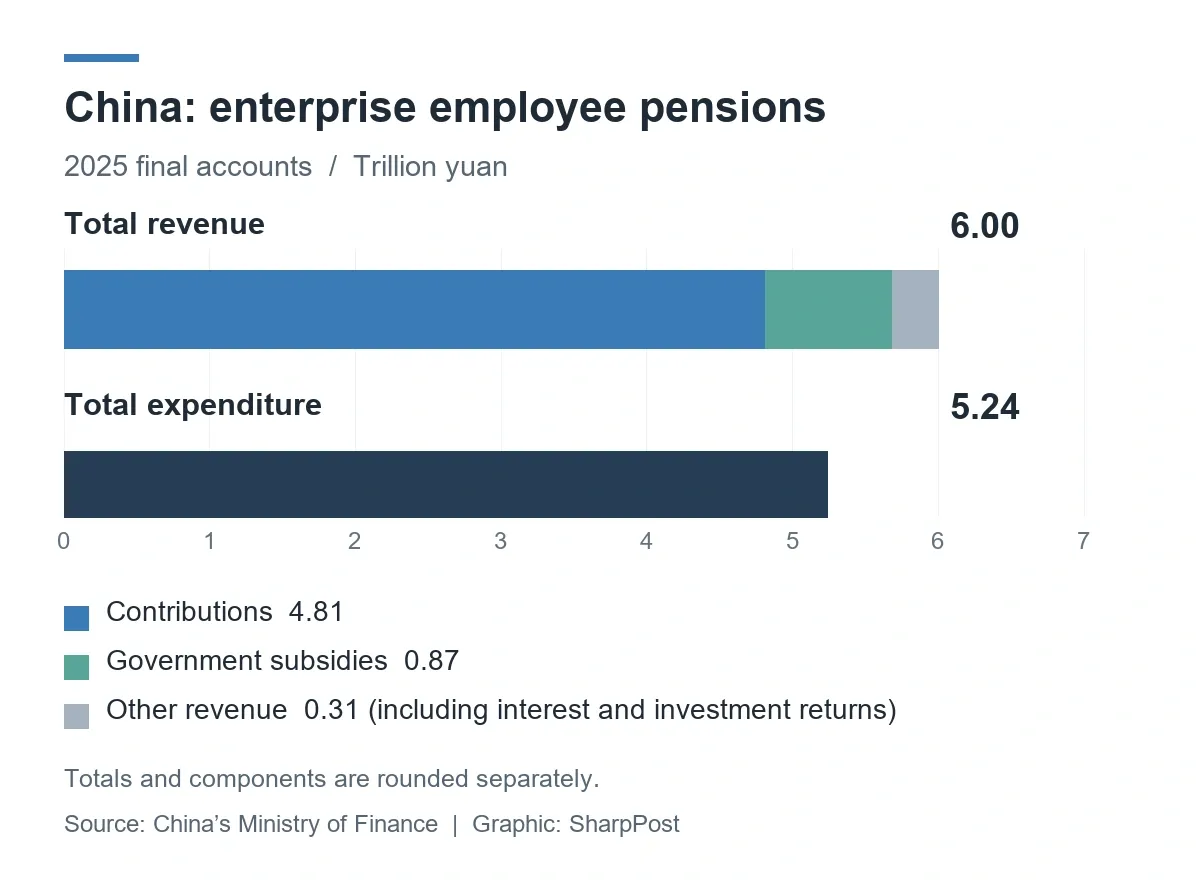
Pension funds for enterprise employees collected 4.81 trillion yuan in contributions in 2025 and spent 5.24 trillion yuan, a gap of 426.7 billion yuan. Government subsidies contributed another 872.9 billion yuan. Including those subsidies, interest, investment returns and other income, revenue exceeded expenditure by 759.7 billion yuan. The figures come from the Finance Ministry’s final revenue accounts and expenditure accounts, published in September.
The Finance Ministry had allocated about 1.2 trillion yuan in pension fund subsidies for 2026, according to its report on fiscal policy in the first half of the year, published on October 9. If expenditure persistently exceeds contributions and other income, maintaining payments requires additional budget support or a drawdown of accumulated balances. What employers and workers pay depends on contribution rates, the earnings on which payments are calculated, and the number of years they contribute.
China had about 323 million people aged 60 or over at the end of 2025, up 13.07 million from a year earlier, National Bureau of Statistics data show. Pension spending depends on the number of recipients, their benefits and how long they receive them. Steady employment and rising wages can increase the contributions available to meet the costs of an ageing population.
At an October 10 government briefing, Vice-Minister Li Zhong called for officials to use administrative records to identify people without social insurance. The enrolment drive focuses on self-employed and other workers outside regular employment, migrant workers, and people working through platforms or in other nontraditional jobs. According to a report of the briefing published on the ministry’s website, Li also proposed sharing contribution costs among workers, platforms and other businesses that engage their services.
Lushi county in Henan described its approach on September 22: officials matched business registration, employment and tax records against insurance enrolment data. They identified 1,371 businesses that had filed personal income tax declarations but were not enrolled, along with 5,914 newly employed people without coverage, and contacted them by text message, telephone and workplace visits. Separately, nine businesses confirmed to be operating without enrolment were ordered to register within a deadline.
Under Article 10 of the Social Insurance Law, employers and employees must contribute jointly to basic pension insurance. Self-employed people without employees, and other eligible workers outside regular employment, may enrol and pay for themselves. A judicial interpretation effective since September 2025 also makes clear that an agreement to forgo social insurance, or a worker’s waiver, does not release an employer from its contribution obligations.
Recovering unpaid contributions can strengthen employees’ pension entitlements and requires employers to settle what they owe. People who enrol on their own must pay from their income and may miss contributions when earnings fall. Sharing contributions with platforms or the companies hiring them could reduce that burden. The size of any reduction will depend on who is covered and how the contributions are divided.
A retirement reform introduced in 2025 is raising retirement ages gradually over 15 years. Men’s statutory retirement age will rise from 60 to 63. For women, the age rises from 50 to 55 or from 55 to 58, depending on their existing retirement category. Each worker’s timetable depends on their date of birth. Those who work longer and keep contributing add revenue and start drawing their pensions later.
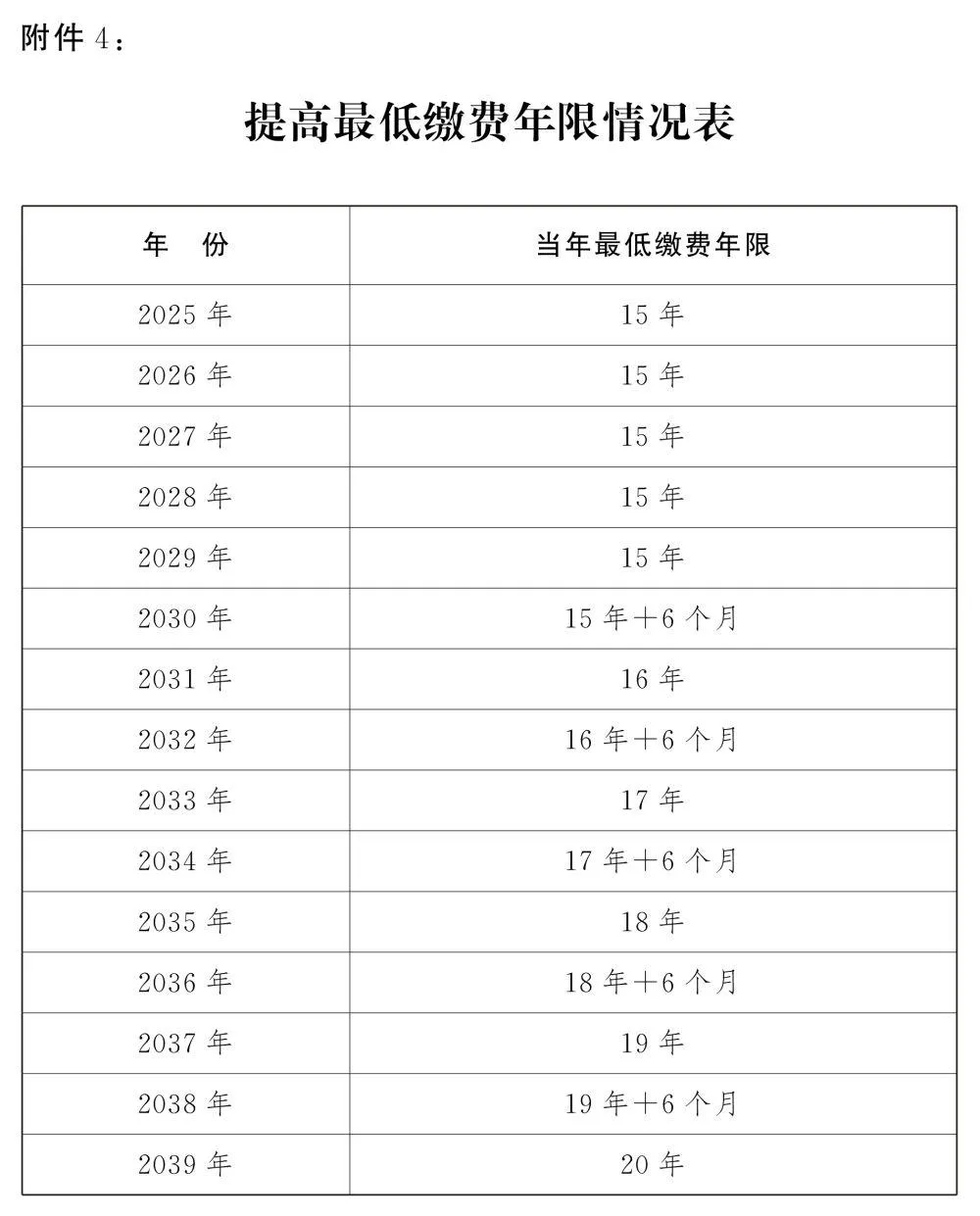
Workers currently need a total of 15 years of contributions to qualify for a monthly pension under the employee scheme. From 2030, the minimum will rise by six months a year until it reaches 20 years. Those who reach statutory retirement age without enough years can continue paying or, if eligible under the rules, make a lump-sum contribution to qualify.
Under the flexible retirement rules, workers who meet the contribution requirement may retire up to three years before their adjusted statutory age, but not below the minimum age that applied before the reform. With their employer’s agreement, they may also work for up to three years beyond their statutory retirement age, remaining employed and continuing to contribute.
People who can keep working have wages to support them; those unable to find work may need other income. The retirement reform allows people receiving unemployment benefits who are less than a year from statutory retirement age to keep receiving those benefits until retirement age. The unemployment insurance fund pays their pension contributions under the rules.
New members pay contributions while working and draw benefits after retirement. When irregular earnings interrupt their payments, pension funds receive less income and workers take longer to accumulate the years needed to qualify.
The separate national reserve held about 3.81 trillion yuan in assets at the end of 2025, with net assets of 3.35 trillion yuan after liabilities, according to the council’s annual report. The reserve is intended to supplement social security spending as population ageing peaks. Investment losses reduce the resources available for that purpose.
The reserve fund’s regulations require risk assessments and collective approval of major investments. The National Audit Office must audit the fund at least once a year and publish its findings. The council must disclose annual revenue, expenditure and investment activity. Those responsible for losses caused by violations must compensate the fund.
Urban employee pension revenue still exceeded expenditure in January–August 2026, while the 2025 surplus for enterprise employees included government subsidies and other income. The financing burden is shared by government, employers and individuals. Enrolling more workers and requiring longer contribution periods can improve the funds’ finances, but cannot make contributions affordable for someone whose income is unstable. Sustained revenue also depends on steady jobs and on businesses paying their share.
You read this far. You're not here for noise.
SharpPost delivers one weekly deep dive on geopolitics, finance, and tech — decoded for readers who want signal. Carefully selected, never noisy.